




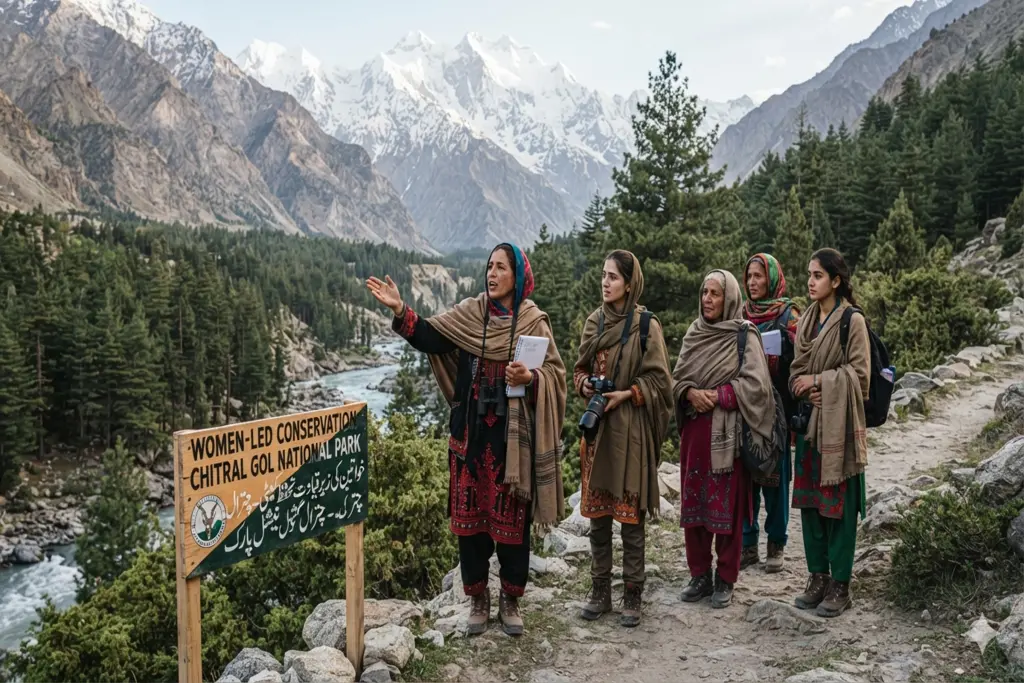
The Khyber Pakhtunkhwa (K-P) Wildlife Department has formally made the first women-led conservation groups around the edges of Chitral Gol National Park in northern Pakistan.
The initiative has been a historic one that brings about a structural shift from erstwhile predominantly male run conservation mechanisms in rural districts. The province’s formal integration of local women into natural resource management looks to encourage grassroots ecological responsibility, to help combat illegal deforestation, to help protect vulnerable wildlife, and to help introduce sustainable alternative livelihoods in the ecologically sensitive Hindu Kush range.
Ecological and Strategic Significance of Chitral Gol National Park
Chitral Gol National Park is a vast area of rugged terrain, high altitude valleys and thick oak forests and is internationally recognised as an important wildlife sanctuary for endangered and vulnerable species. The protected area is a key natural habitat of the national animal of Pakistan, Kashmir Markhor, rare species of migratory birds and the elusive Snow Leopards (Panthera uncia) of Ladakh.
The natural riches of the park have been an important source of livelihood for communities in the immediate vicinity of the park for a long time. Women in these mountain communities are mainly in charge of the energy management of the household and the domestic livestock, and they thus have direct and daily access to the forest ecosystem. The K-P Wildlife Department understood that it was not possible to achieve these goals with a top-down approach without a bottom-up cooperative effort—the involvement of local households turned into real protectors of the environment.
Structural Mandate and Key Conservation Objectives
Systematically, the newly formed women-led committees have been set up in all the border villages including the villages in Chitral Gol, Rumbur and Bumburet valleys. These committees function on the basis of institutional training and technical software given by the department and have a very precise mandate with regard to the environment.
Control of Timber Extraction: Management of the wood cutting practices of the community and prevention of valuable local timber species being cut illegally for commercial use.
Anti-Poaching Surveillance: Training women in communities to keep an eye on buffer zones and reporting the sighting of illegal hunters, trappers and/or any unusual non-resident movement within the community to a wildlife warden.
Eco-Awareness and Waste Management: Training of young school girls and mothers about climate change mitigation, sustainable utilization of grazing and about community level waste management to remove plastic pollution from mountain streams.
Empowering Mountain Communities Through Eco-Tourism
The conservation framework is designed to be sustainable by directly linking environmental protection to the local economic incentives. The dedicated training programmes of the sponsoring organizations are delivering specialized training to members of the committees in the new handicrafts, bee-keeping (sustainable honey production) and organic kitchen gardening.
Moreover, these bodies will be the main actors of the growing eco-tourism in the region. Domestic and international visitors to Kalash valleys will be guided by trained female guides in authentic cultural interactions and nature trails. This is a clear, sustainable and weather-proof means of earning a living which directly benefits local families. When there is an apparent gain for the community to preserve the ecosystem, they will in turn become guardians of the nature and forests of the park.