




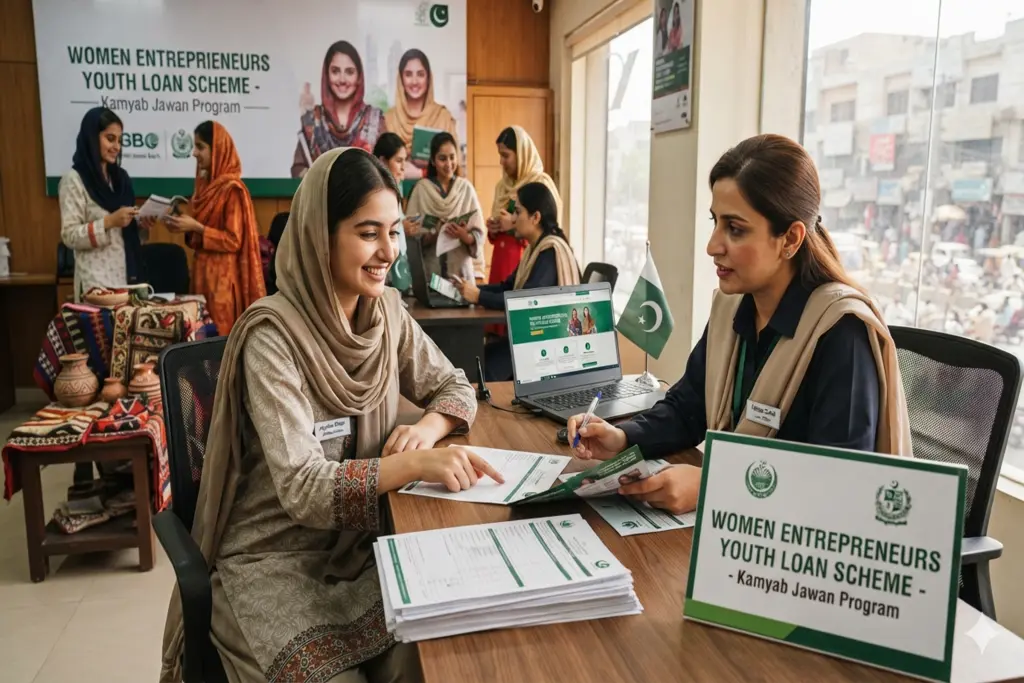
Pakistani women who run small businesses have long been unable to get loans from banks. Limited access to banking services, lack of collateral and heavy paperwork kept many talented women away from formal credit. The picture is changing, but it is changing slowly. The government’s Youth Loan Scheme has empowered more than 104,000 Pakistani women entrepreneurs, providing them with Rs. 29 billion in funding and opening doors to new opportunities for small business expansion throughout the country.
The youth loan scheme benefits women
In January 2023, the Prime Minister’s Youth Business and Agriculture Loan Scheme was introduced to help young Pakistanis who want to start or grow a business. The scheme has a single unique rule for women: that at least 25 percent of all loans should be given to women entrepreneurs. Finance Minister Senator Muhammad Aurangzeb said that the scheme has facilitated financing for 104,237 women till May 2026.
Why this matters for women’s financial inclusion
Women’s financial inclusion in Pakistan has increased to 55 percent by December 2025, and the gender gap in ownership of bank accounts has decreased to 29 percent. Women now make up 13 percent of all commercial loans. That’s not just a number. This has resulted in more women opening bank accounts in cities and villages, using mobile wallets such as JazzCash and Easypaisa and becoming formal business owners for the first time.
How young women might use
•Check your eligibility on the official Youth Loan Scheme website or in a branch of a participating bank.
•Please bring your CNIC, business plan and basic financial documents along with you.
•Ask about the State Bank of Pakistan’s Women Inclusive Finance Program, which has so far disbursed over Rs. 46 billion to more than 546,000 women borrowers.
•Track applications via mobile banking apps and avoid long bank queues.
•Check with local chambers of commerce or women’s business associations.
A Big Difference, A Little Loan
These loans are not just a number on a piece of paper. For a woman running a home-based tailoring unit in Multan or a small grocery shop in Karachi, a small loan can mean new equipment, extra stock and a steady income. The banking sector is opening up more to women borrowers, and the gap between formal and informal finance is narrowing.
Closing Thoughts
The Rs29 billion disbursed under the Youth Loan Scheme is an indication that women’s financial inclusion in Pakistan is moving from policy to practice. Young women with a business idea should consider this the right time to look into formal financing and take your first steps to financial independence.