


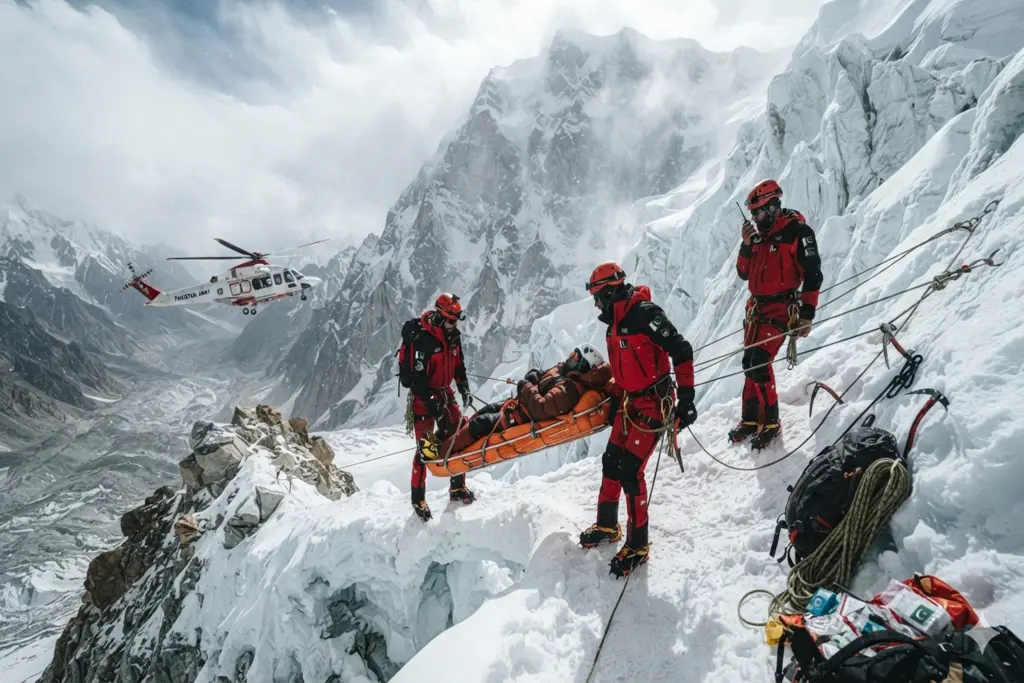
Good news finally came from the mountains this week. The Spantik mountain rescue mission is moving again after being stuck for days because of bad weather. Federal Minister Attaullah Tarar told the public that the recovery team has left Base Camp and is now on its way to Camp 2 in the Karakoram range. For the family of Asma Mushtaq, a doctor and mountaineer from Lahore, this is the update they have been waiting for since her death on the mountain.
Who Was Asma Mushtaq
Asma worked in the UK as an obstetrics and gynaecology doctor, but climbing was her other life. She loved documenting her trips online and had built a small following of people who watched her adventures. She made it to the top of Spantik, a peak standing at 7,027 metres, but things went wrong on the way down. Near 6,400 metres, she suffered a severe medical emergency. Her guides stayed with her and did what they could, but at that altitude, in that weather, there was only so much anyone could do.
Why the Recovery Mission Faced Delays
The team had actually gotten close to Camp 3 once before, but heavy snow and strong winds sent them right back to Base Camp. Anyone who follows Gilgit-Baltistan’s mountains knows this happens often. The weather up there does not give much warning before it turns dangerous, and rescue teams end up waiting it out, sometimes for days.
Current Recovery Efforts
- The team is now walking carefully from Base Camp toward Camp 2.
- A helicopter has been cleared to help, with the Gilgit-Baltistan government and Force Command Northern Areas working together on this.
- The Alpine Club of Pakistan is coordinating alongside the expedition company, Tourism Department and local officials.
- Other climbers on the mountain have joined in to help with the effort.
- Prime Minister Shehbaz Sharif is reportedly being briefed on progress.
What Happens After Recovery
Once the body is brought down and the team is safely back, the Alpine Club says it will look into exactly what happened, including how the expedition company handled things during the emergency. Whatever the findings show will decide what comes next.
Local Context for Pakistani Readers
More people, both local and foreign, are choosing to climb in Gilgit-Baltistan every season. Cases like this show why safety cannot be an afterthought on these expeditions. Trained guides, proper weather tracking and backup options like helicopter support can be the difference between a close call and a tragedy.
Conclusion
Rescue teams are pushing through difficult conditions to bring Asma Mushtaq home, and the country is watching. Her passing is a painful reminder that Pakistan’s mountains demand respect, and that safety planning needs to stay a priority for everyone who takes them on.