


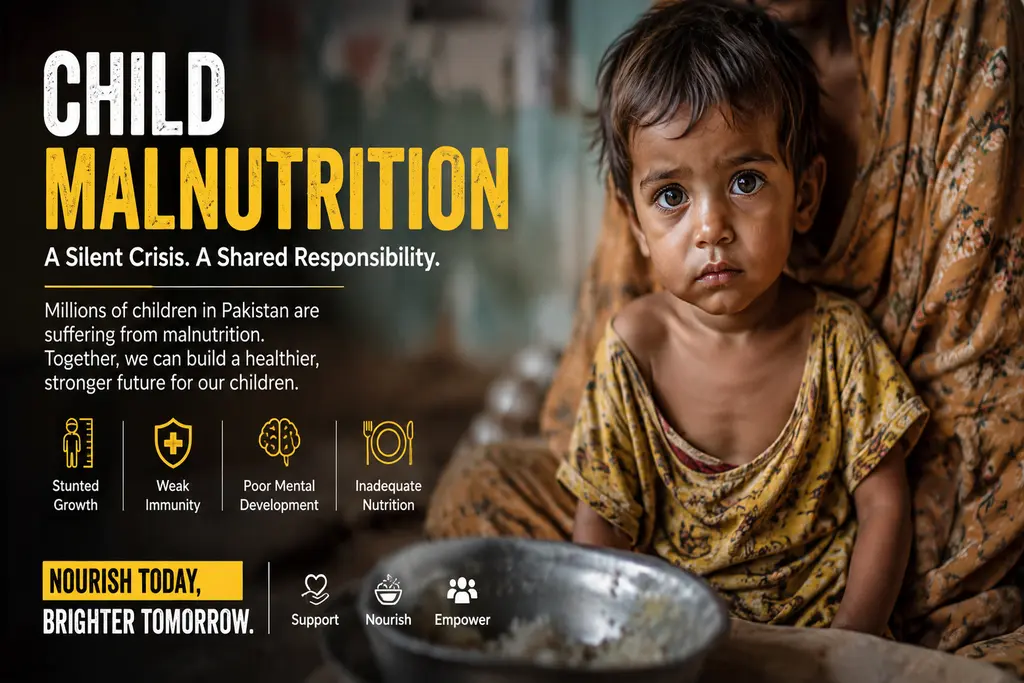
Pakistan loses billions of rupees every year to a problem that starts quietly in the kitchen and grows into a national emergency. The DawnMedia Nutrition Summit opened in Islamabad this week, bringing together government officials, doctors and global agencies under one roof to confront Pakistan’s child stunting crisis. For ordinary families, this event is not just political theatre. It touches something very personal: whether their children grow up healthy or fall behind for life.
What Is the DawnMedia Nutrition Summit About
The two-day conference, titled “Act For Nutrition: The Emergency We Can No Longer Ignore,” is not a one-off talk shop. It brings federal and provincial governments, the World Health Organisation, World Food Programme, World Bank and local groups like the Benazir Income Support Programme together to plan real action, not just speeches.
Why Nutrition Is a National Emergency
Nearly four out of ten children under five in Pakistan are stunted, meaning their bodies and brains do not develop as they should due to poor diet in early life. This is not only a health issue. It costs the country close to seventeen billion dollars a year, more than what Pakistan typically borrows from the IMF annually. Stunted children often struggle in school and earn less as adults, which keeps entire families trapped in poverty.
What Ordinary Families Can Do Right Now
While big policy decisions happen in conference halls, small steps at home matter too:
- Breastfeed babies exclusively for the first six months where possible.
- Register with BISP or local health units if eligible for nutrition support.
- Visit government-run Basic Health Units for free child growth checkups.
- Use iodised salt and fortified flour where available in local markets.
- Ask your local Lady Health Worker about free vitamin and mineral supplements.
The Road Ahead for Pakistan’s Nutrition Policy
Officials at the summit, including Federal Minister Ahsan Iqbal, stressed that talk must turn into measurable results. Since most rural families rely on mobile phones rather than banks, health authorities are also exploring SMS-based nutrition alerts and mobile registration for support schemes, making aid easier to reach in areas with limited banking access.
Conclusion
The DawnMedia Nutrition Summit is a reminder that Pakistan’s malnutrition crisis will not fix itself through conferences alone. It needs consistent government follow-through and small, daily choices from families. If policymakers and parents both act on what was discussed this week, Pakistan’s children stand a real chance at a healthier future.A well-fed child today is a stronger Pakistan tomorrow, so act on nutrition before it becomes an irreversible loss.