
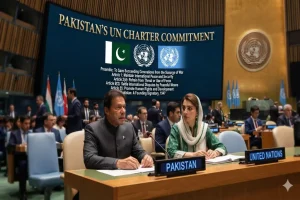


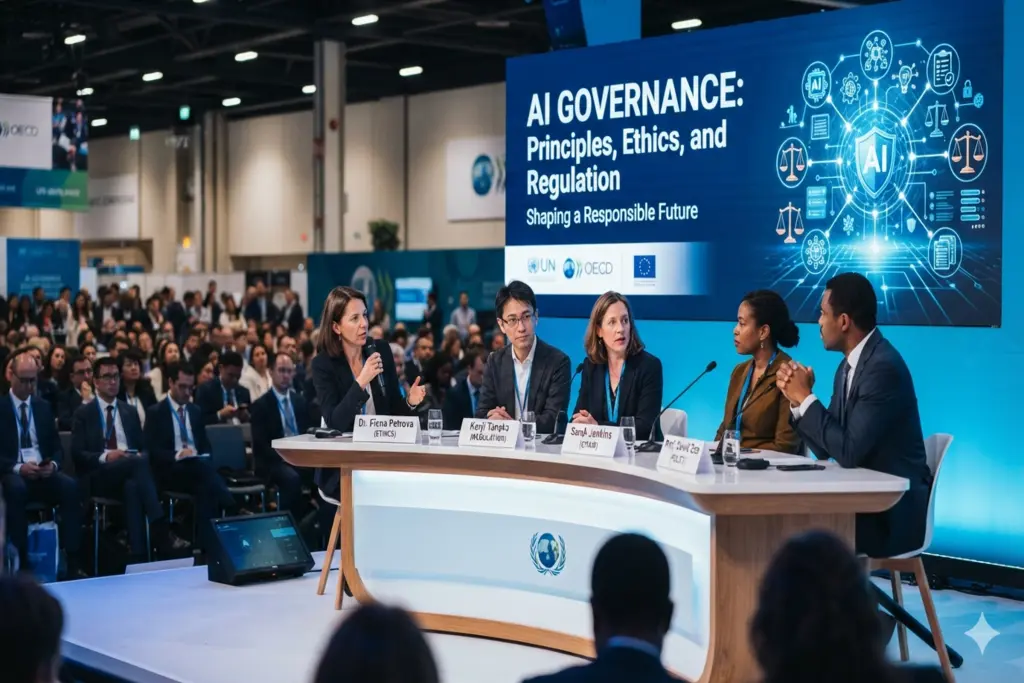
Pakistan has warned the world that artificial intelligence should not be the new weapon in the global arms race. At a UN Security Council briefing led by France, Deputy Prime Minister Ishaq Dar called for inclusive AI governance, while the heads of the world’s biggest AI companies have warned of grave dangers if this powerful technology is left unchecked. For the common Pakistani, this debate is not about diplomatic talk. It’s about AI tools coming to our phones, our work and our kids’ future.
What DPM Dar told the UN Security Council:
Addressing the meeting, Dar said Pakistan wanted rules governing the development of AI to be fair and apply to all countries, not just the powerful. He stressed that humans need to be in control of how standard artificial intelligence systems are built and used at every stage. His main arguments were plain and simple:
•AI should not be “another dimension of the ongoing arms race.”
•Guardrails, regulations and governance frameworks are urgently needed.
•AI should not be the monopoly of a few rich countries or companies.
•Safety rules can’t be used to keep poorer nations from technology.
•Global decisions on AI should be made in open UN forums, not closed-door clubs.
Dar also mentioned Pakistan’s membership of the World Artificial Intelligence Cooperation Organisation and termed it a genuine step toward fair global cooperation on AI.
Why Anthropic’s Warning Matters
If we mismanage AI, it could become a serious threat to humanity as a whole,’ Anthropic CEO Dario Amodei told the council. His company would slow its own product releases when necessary to keep new artificial intelligence systems safe, he said. This is a rare instance when a leading technology executive has openly confessed that speed should never be traded for safety. This warning comes from someone who is building this technology and has real weight for both governments and everyday users.
The “Middle Path” of Altman and Its Implications for Pakistan
OpenAI’s Sam Altman took a slightly different tone: The industry should not be blindly optimistic or overly fearful but take what he termed a “middle path.” Altman also warned that if countries don’t work together, AI could centralize too much power in too few hands. This is important for Pakistan, a country still building its digital infrastructure. It implies space for developing countries to have a say in the rules of AI rather than “accepting decisions made elsewhere.”
Local Context: Why This Dispute Matters to Ordinary Pakistanis
Pakistan is a mobile-first country. Millions of people connect to the internet through smartphones instead of computers. Here, AI-powered apps like chatbots and fraud detection tools for banks are already baked into everyday life even for those with limited access to formal banking. Pakistan’s voice at the UN Global Dialogue on AI Governance is crucial in shaping the global rules that will determine if local businesses and students will have fair and affordable access to future AI tools.
Quick Checklist: What this means for moving forward
•Watch Pakistan’s presence in international AI governance bodies.
•More government focus on AI regulation and digital rights
•Open global access to AI, not restricted, could help local businesses.
•WAICO developments to look out for students and startups to look out for opportunities
Conclusion
The UN Security Council debate shows that AI governance is no longer an esoteric technical issue. It’s a worldwide discussion on how countries, including Pakistan, will access and benefit from artificial intelligence safely and fairly.