

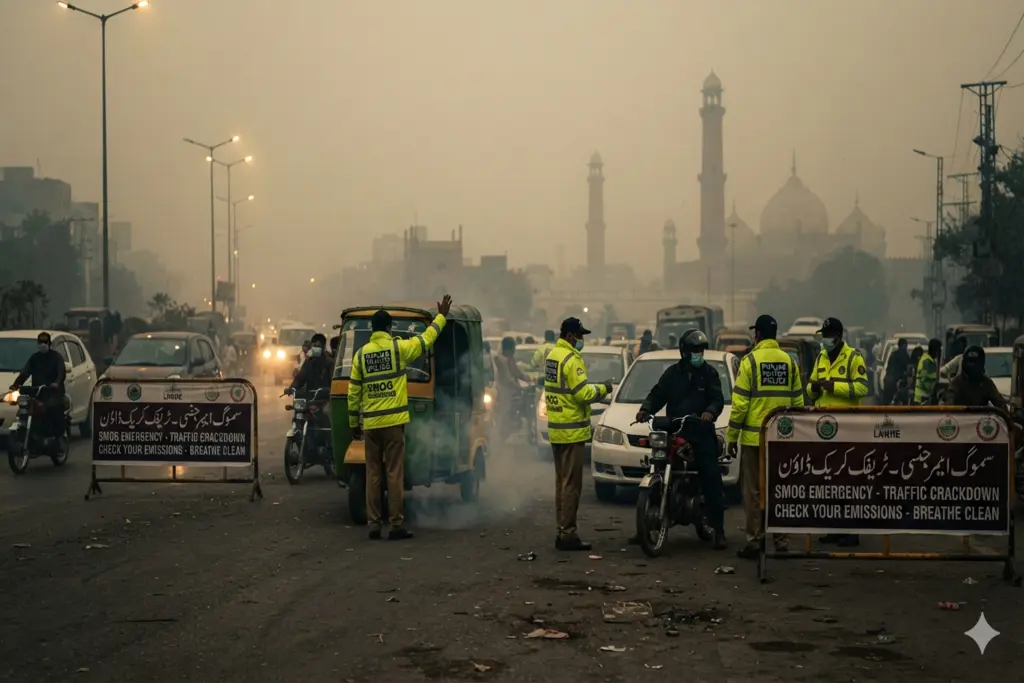
In a major environmental enforcement operation aimed at stabilizing urban air quality indices, accelerating carbon emission audits and dismantling non-compliant transit networks the Lahore Traffic Police stepped up enforcement against smog and environmental violations by issuing over 10,000 challan tickets in September. The aggressive vehicular campaign transitions legacy highway checks into a highly rigorous system-vetted environmental compliance sandbox targeting carbon-intensive commercial fleets and privately owned heavy machinery across the provincial capital.
In the coming winter months the prevention of hazardous accumulation of toxic particles in the air for acting as a threat to lives and health is an absolute priority for the public health planners of Punjab. This will directly address localized anomalies in air quality that historically impacted the regional Air Quality Index (AQI) while being deployed quickly. The department successfully quells high emission vectors in active city grids, reduces public health risks and portrays a forward-looking public image of green municipal management through the advanced vehicle inspection metrics and strict supervisory measures.
Allocation of Emission Interceptions and Multi-Month Trajectory Metrics
According to the official database logs released by the traffic command headquarters the September campaign marked a sharp high-velocity escalation in regulatory enforcement compared to previous operational cycles. The logistical breakdown of the anti-pollution campaign operates across three critical performance metrics:
The Rapid Month-on-Month Acceleration: Total environmental enforcement operations and ticket ingestions rose 215 percent compared to August levels, demonstrating immediate squad optimization.
The Multi-Month Baseline Transformation: September’s high-precision operations stood 1,149 percent higher than the baseline levels recorded in January signaling a permanent transition toward absolute zero-tolerance policy scripts.
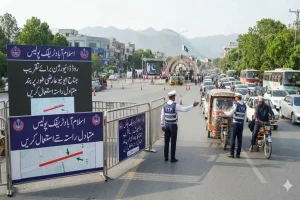
The Strategic Transit Boundary Lock: Enforcement infrastructure is in full operation at all main entry/exit points of Lahore to form a digital boundary grid which would intercept the smoke emitting LT commercial vehicles before they enter the metropolitan core.
Restructuring Commercial Inspections Through On-Field Executive Command
The broader socioeconomic and public health implications of this synchronized environmental sweep are extensive directly backing active clean-air mandates authorized by the provincial executive. The deployment of senior Superintendents of Police (SPs) and Deputy Superintendents of Police (DSPs) in the field to oversee and monitor the enforcement activities in their respective zones to prevent any loophole in administration and for total transparency in operation.
| Operational Timeline Log | Percentage Growth Metric | Mandated Enforcement Objective |
| August to September Transition | 215% Strategic Expansion | Rapid deployment of mobile emission testing units. |
| January to September Baseline | 1,149% Historic Ingestion | Full-scale suppression of legacy environmental violations. |
| Active Campaign Footprint | Province-Wide Entry/Exit Nodes | System-vetted inspection of heavy commercial transport. |
Field units have intensified random physical and electronic smoke density checks explicitly isolating aging logistics fleets, unverified intra-city buses and malfunctioning auto-rickshaws. Electronic real-time ticketing and moving away from manually logging penalties ensure all penalty records are instantly synchronized to central provincial databases. Lahore with these harmonized transit restrictions and up-to-date diagnostic modules at roadside effectively reduces the shortfall in public services, keeps commuters’ trust in public transportation and protects the human development indices of the city.