



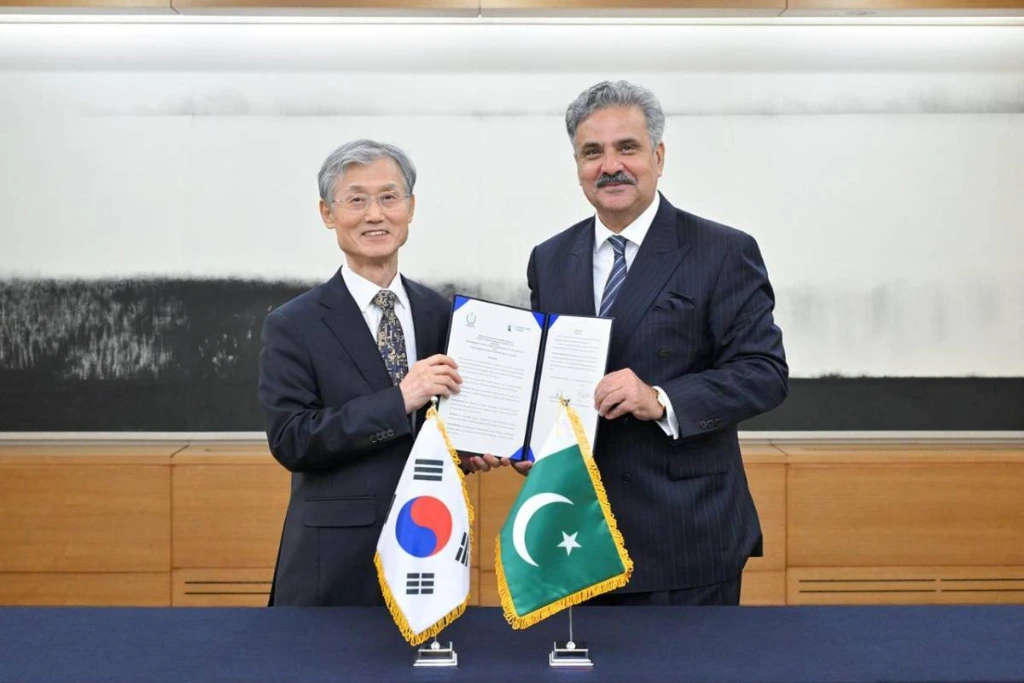
A new update of Pakistan South Korea Judicial Agreement 2026 has officially made its way into the headlines with the signing of a Memorandum of Understanding (MoU) in Seoul. This bilateral treaty, signed during the Chief Justice of Pakistan, Yahya Afridi’s visit to South Korea by Chief Justice Jo Hee-de, sets the basis for a new paradigm in the development of bilateral legal matters. The historic alliance is a crucial step in the evolution of international judicial cooperation between the two sovereign states.
Accelerating Digital Justice Systems and Modern Reforms
The main thrust of the recently approved Pakistan South Korea Judicial Agreement 2026 is institutional modernization. The pact is to systematically improve the operational capacities of the domestic circuit branches by examining the legal capacities of East Asian countries.
The structural tech components that were developed, collaborated and integrated into the roadmap are:
Automated Management: Electronic courts and paperless records.
Advanced Analytics: Implementing intelligent court technology using secure data processing algorithms.
Responsible Artificial Intelligence: Human work, automation with machines, carefully regulated by cybersecurity guidelines.
Sustained Exchange programs and Capacity Building
The treaty also enhances the mutual competences of legal professionals in both territories beyond infrastructural measures. The framework formally includes a range of ongoing legal dialogues at the highest level, capacity building and mutual research work.
The Pakistani Chief Justice also had an official tour to the Supreme Court of Korea IT Center. A first-hand look at the technical infrastructure of other countries provides a blueprint that can be applied to the digital justice systems rollout taking place in the country.