



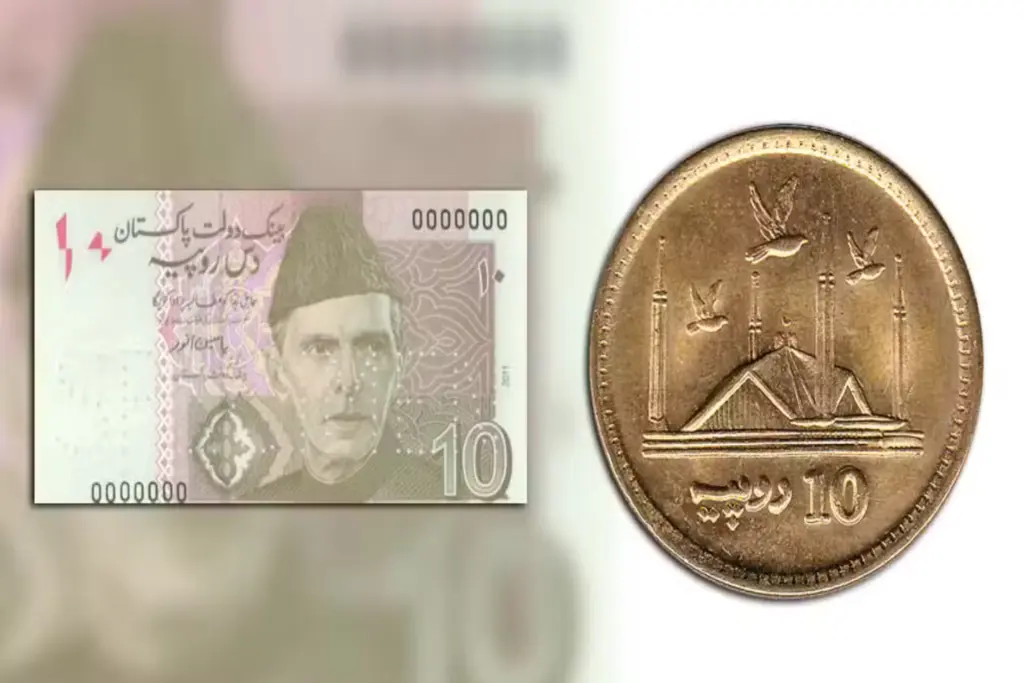
Thefederal cabinet is already thinking of the in-principle consent to permanently substitute the ten-rupee paper note with a metal coin. The significant move in currency management is expected to save the national exchequer billions of rupees in the next ten years and help initiatives that are greener in banking.
This is all you need to know about the proposed phase-out of the Rs. 10 note.
Why is the Rs. 10 Note Being Replaced?
The decision is based on the comprehensive report on currency management made by the State Bank of Pakistan (SBP) and the Pakistan Security Printing Corporation (PSPC) jointly. A report, made to the cabinet by a committee of high-ranking officials headed by the Finance Minister, pointed at the huge difference in the life between paper notes and metal coins.
At present, the lifespan of a ten-rupee note is very low at 6 to 9 months on account of high circulation rate and wear-and- tear. Conversely, a ten rupee coin has a long life span ranging between 20 and 30 years.
How Much Money Will the Government Save?
Currently, ten-rupee notes make up about 35% of all currency notes printed annually. The continuous cycle of printing, exchanging, and managing these short-lived notes costs the government an estimated Rs. 8 to 10 billion per year.
While the initial minting cost of metal coins is higher, they do not need to be replaced for decades. By transitioning entirely to coins, the government expects to save a massive Rs. 40 to 50 billion over the next 10 years.
When Will the Phase-Out Happen?
If approved, the transition will not happen overnight. The central bank is expected to gradually phase out the printing of ten-rupee notes over the next three years. The gradual replacement of notes will strictly follow legal procedures outlined under the State Bank Act.
Are Rs. 10 Coins Already in Use?
Yes, there are ten-rupee coins that are already a lawful tender in the country. They were released in the country on October 24, 2016. After the paper notes are eliminated, these coins will be the only one that will be used to denominate ten rupees.
The issue of replacing low-denomination paper money with hardy coins is a common economic trend in the world. Other nations such as the United Kingdom, Canada and Australia have also managed to turn their low-denomination notes into coins in order to avoid administrative and printing expenses. Additionally, authorities noted that reducing the continuous printing of paper notes aligns perfectly with global green banking initiatives.
Is the Rs. 10 paper note being discontinued in Pakistan?
Yes, the federal cabinet and the State Bank of Pakistan are considering a proposal to permanently phase out the Rs. 10 paper note and replace it entirely with metal coins.
What is the main purpose of replacing the Rs. 10 note?
The primary goal is to eliminate the heavy recurring costs of printing short-lived paper notes. Since a Rs. 10 coin lasts 20 to 30 years, this shift is expected to save the national exchequer Rs. 40 to 50 billion over the next decade.
Will the Rs. 10 notes become invalid immediately?
No, the transition will not happen overnight. Authorities plan to gradually phase out the printing and circulation of the paper notes over the next three years.
Are Rs. 10 coins already available in the market?
Yes, the Rs. 10 metal coins were officially introduced on October 24, 2016, and are already in circulation as legal tender across the country.
READ: More informative news