

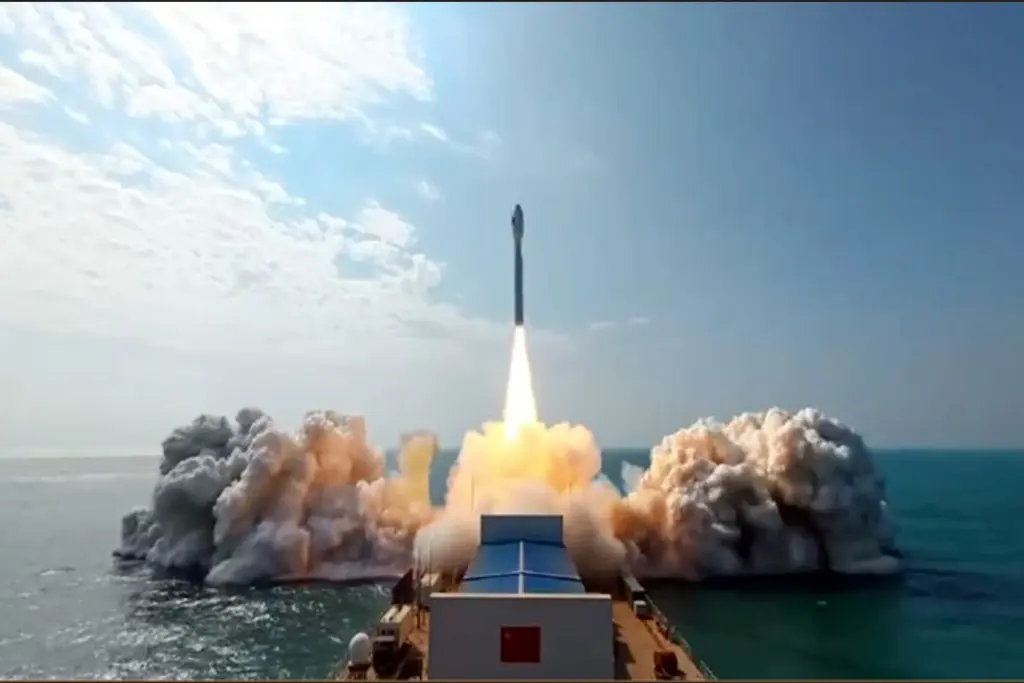
The potential success of the launch of the second indigenous Electro-Optical Satellite, EO-2 has been a milestone that has been met by the Pakistan Space and Upper Atmosphere Research Commission (SUPARCO). This is a breakthrough in the space program and technological independence in the country.
The launch of the satellite was done at the Yangjiang Sea Launch Center (YSLC), in China. The EO-2 was entirely conceived, designed and assembled in the Satellite Research and Development Center (SRDC) in Pakistan. The project demonstrates the increasing ability of the country in the field of indigenous research and systems engineering.
Second Indigenous EO-2 Satellite Key Features
EO-2 is made to work alongside the EO-1 satellite that has already been launched. These two functions will greatly improve Pakistani earth observation data.
High-resolution Imaging: The satellite is able to see earth in a range of light settings which has greater chances of detecting things on the ground and the changes.
National Development: The information obtained will be useful in national planning, governance and sound management of resources.
Capacity Building: The mission promotes applied research and development of the infrastructure of domestic space in Pakistan.
Quick Summary: Pakistan EO-2 Satellite
| Feature | Details |
| Satellite Name | EO-2 (Electro-Optical Satellite) |
| Developer | SUPARCO (SRDC) |
| Launch Site | Yangjiang Sea Launch Center, China |
| Primary Function | Earth Observation & Data Collection |
| Key Benefit | Enhanced imaging continuity & resource management |
1. What is the EO-2 Satellite?
EO-2 is Pakistan’s second indigenous Electro-Optical satellite designed for earth observation and analyzing ground features.
2. Where was the EO-2 satellite launched from?
The satellite was launched into orbit from the Yangjiang Sea Launch Center (YSLC) in China.
3. Who developed the EO-2 satellite?
It was designed and integrated locally by SUPARCO at their Satellite Research and Development Center (SRDC) in Pakistan.