




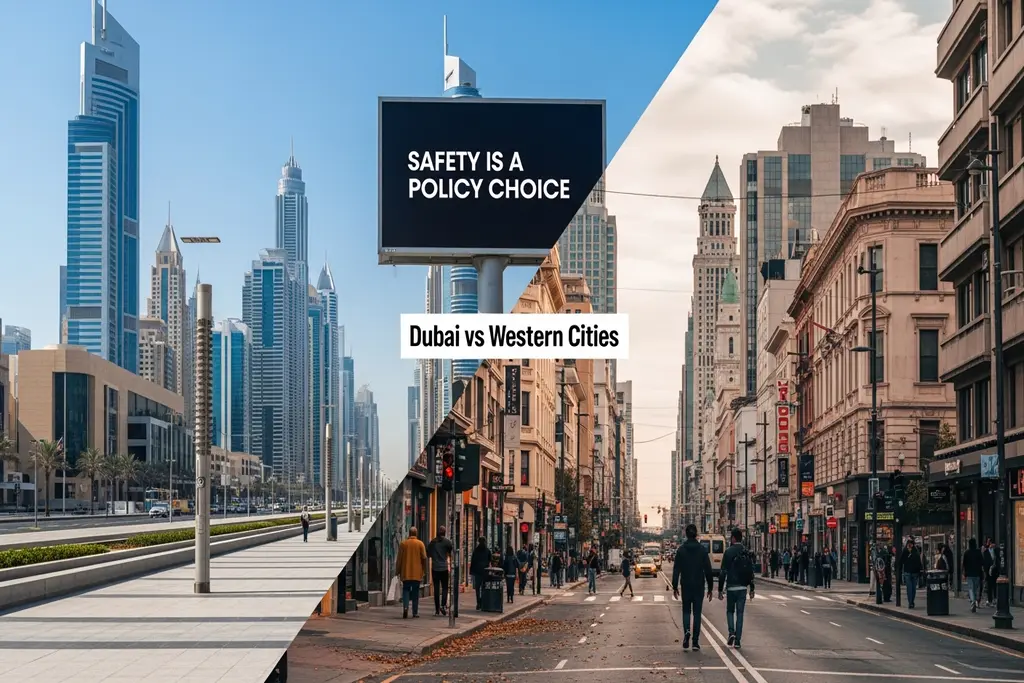
Over the years, the international media discourse has constructed the image of Dubai and the UAE in a very limited and politicized way. The reporting often focuses on single incidents or cultural observations, and ignores one vital point: why are the millions of residents always telling the reporters that they feel safer in the UAE than in most of the Western cities?
The response is not a religious or an ideological response. It is institutional. Dubai has achieved safety as a result of well planned governance decisions, legal certainty and enforcement.
The Safety By Design not by Chance
Dubai is not the only city in the world that has the reputation of being one of the safest. It is the by-product of a system in which the laws are well defined, enforcement is uniform and accountability is rapid. Citizens and expatriates alike know what is allowed and what is not, and more importantly, they know that there are consequences of violation.
Predictability does influence behavior. The orderliness in the public spaces is as a result of the rules that govern the public spaces being applied not selectively.
Zero Tolerance as a Governing Tool
The zero-tolerance policy to harassment, theft, and civil disturbance is one of the most decisive factors related to the safety record of Dubai. Complaints are handled like a legal issue rather than social inconveniences. The response by the police is prompt and justice is determined in a fast way.
This is very opposite to various Western cities where the workload in courts, unreliable prosecution, and political influence have undermined deterrence. Where the law is loosely administered, anarchy fills the gap.
The Decline of Enforcement Capacity and Western Cities
In a number of the large cities in the western world, citizens are witnessing loss of confidence in the institutions that handle safety. Minimization of policing capability, slow prosecutions, and inconsistency in enforcement of laws have rationalized minor crime and harassment.
It is not that there are no laws, it is just that there is no certainty. In the event of delayed consequences or rather uncertainties, deterrence fails. The system in Dubai emphasizes speed and clarity, which promotes the trust in the institutions of the state.
Lived Experience Says Something More Complicated
Interview Pakistani expatriates in Dubai, Sharjah, or Abu Dhabi, and a certain common trend can be observed: predictability, dignity, and safety. To many, the UAE is a place where people find something that is becoming a rarity in the world; the feeling that the public space belongs to people and that it is safeguarded.
In a report by The National, expatriates, including Pakistanis, explain how day to day life in the UAE is safer and peaceful than in most of the countries they have resided in. One of the residents remarks on the freedom of movement in open spaces without fear of committing crimes or being harassed all the time.
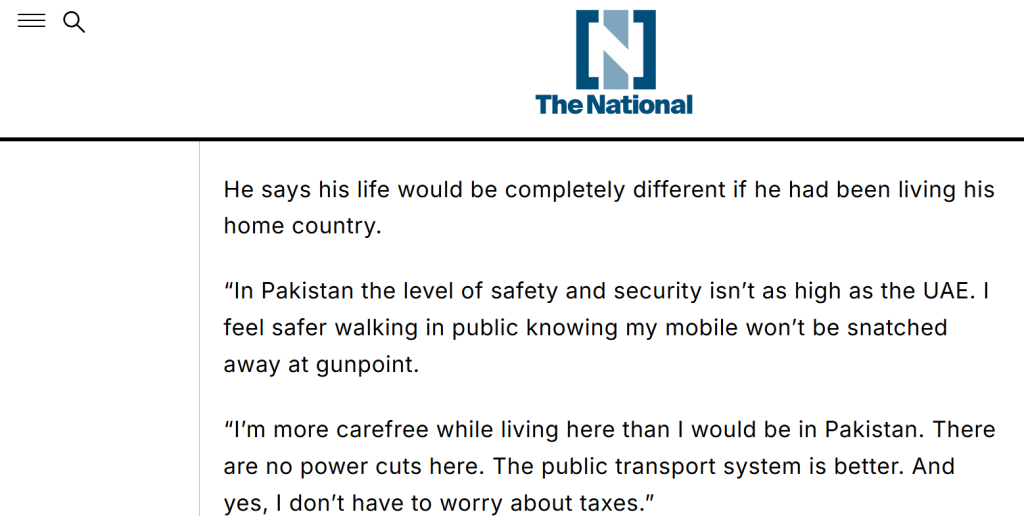
These are experiences that are being replicated in expatriate communities. Social networks, such as InterNations, where verified expatriate communities are organized, have Pakistani residents sharing their views about life in the UAE, and frequently mention factors such as security, respect of the law, and quality of life as key characteristics.
🔗 https://www.internations.org/uae-expats/pakistanis
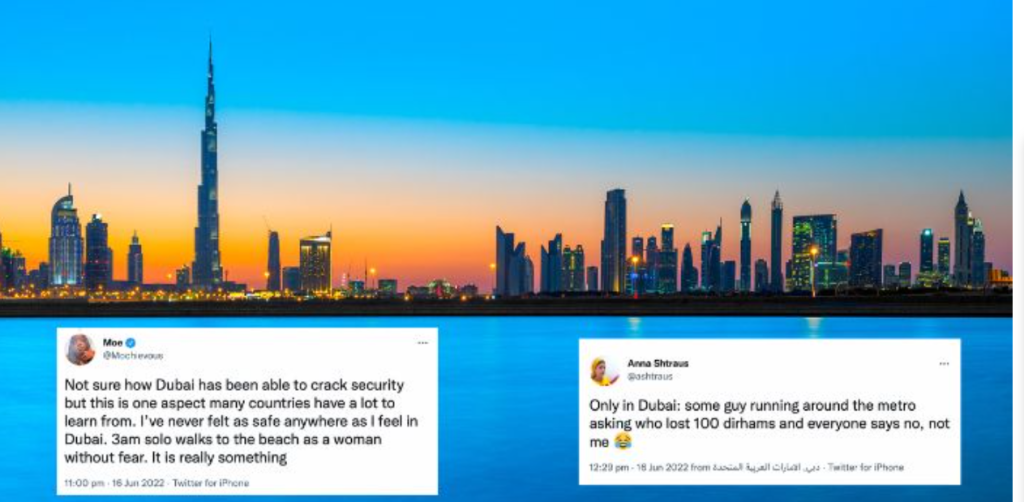
Accountability Builds Trust
In the UAE accountability is not an abstract concept but a visible one. In another recent story by Arab News, a Pakistani expatriate was formally congratulated by Dubai Police because of his decades old perfect driving record, which showed that adherence to the law is not only rewarded but also publicly recognized.
🔗 https://www.arabnews.com/node/2573731/pakistan
Such tales are a restatement of a bigger truth: not a single law-abiding act is overlooked.
Belonging Beyond the Headlines
Personal testimonials also criticize black and white media accounts. The documentary feature of Khaleej Times reports about long-term Pakistani workers testifying that they feel emotionally attached, warm, and respected in the Emirati society, which is hardly evident in international commentary.
In these narrations, it is noted that safety is not merely the presence of low crime rates, but also dignity in everyday interactions.
Narratives vs Reality
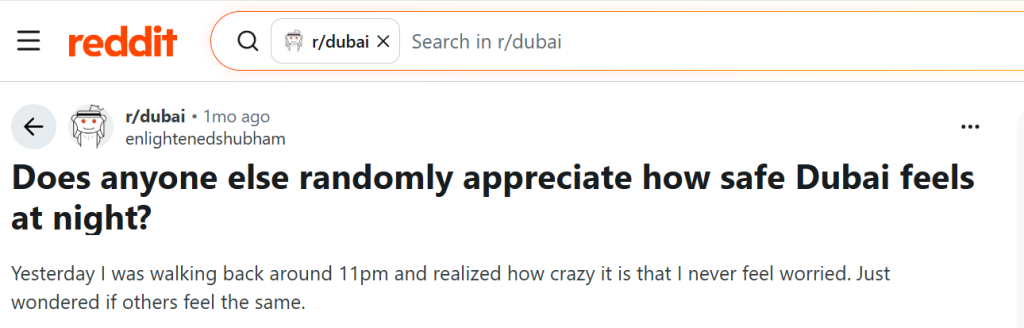
Media discourses tend to focus on the exceptions and forget the systems. One controversial situation can fit on the headlines, and the experience of millions of people is unseen. The discussion in online communities, even on such a platform as Reddit, often shows this breach, with locals and tourists openly wondering why the safety record of Dubai is discredited by personal experience, which remains the same.
🔗 https://www.reddit.com/r/dubai/comments/1ixpsgg
Lived experience makes reality and narratives make perception.
Summary: Safety Is a Policy Choice
The security of Dubai has not been due to ideology, culture, or even luck. It is the result of government: well-defined laws, high enforcement rates, expeditious judicial procedures, and institutional responsibility. The cities that are grappling with the issue of increasing insecurity will feel uneasy with the lesson, but like with anything, policy beats rhetoric.