



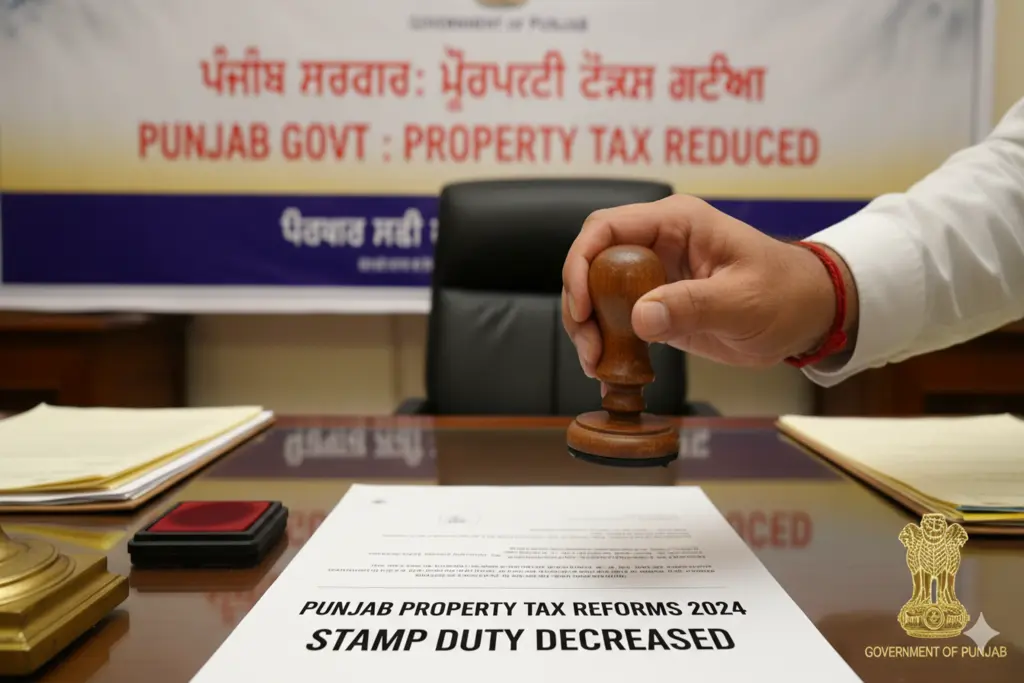
The Government of Punjab has officially cut and harmonized stamp duty rates on property transfers in the landmark effort to modernize the provincial real estate sector and to spur economic growth. On Friday, Punjab Governor Sardar Saleem Haider Khan signed the Stamp Duty Amendment Ordinance 2026, marking a significant change in the land administration and investment policy.
This reform is a subset of a larger overhaul of the legislation that aims at streamlining the property laws, making them more transparent and freeing buyers in the rural areas to a good extent.
The Shift to a Uniform 1% Stamp Duty
The greatest lesson of the new ordinance is the elimination of the difference between costs of property transfer in cities and in rural areas. In the past, the system would cost more rural transactions, which was a barrier to agricultural and suburban land investments.
Old vs. New Stamp Duty Rates
| Area Type | Previous Rate | New Rate (2026) |
| Urban Areas | 1% | 1% |
| Rural Areas | 3% | 1% |
The government has cut the rural stamp duty by 3 to 1 thus lowering the cost of transfer of rural property by 66%. It is anticipated that this equalization will cause a real estate boom in other areas other than large metropolitan centers such as Lahore, Faisalabad and Multan.
Punjab Modernizing Land Revenue and Ownership Protection
The stamp duty cut is not in a vacuum. Two other important pieces of legislation support it: Punjab Land Revenue (Amendment) Ordinance and Immovable Property Ownership Protection (Amendment) Ordinance 2026. These ordinances are intended to put the province into the digital era of land administration:
Digital Transformation: The new framework provides the use of electronic systems of land distribution, transfers of possession, and appeals.
Electronic Communications: Notices and legal communications pertaining to property will now be created digitally, eliminating delays and paperwork being lost.
Increased Transparency: The new system will be able to trace all the steps involved in a transaction, which will hold officials more responsible in the transparency of land records.
Eliminating Oral Agreements for Legality
The Punjab government, in an effort to curb land grabbing (Qabza) and legal tussles has officially prohibited registration of land transfers on the basis of oral agreements.
In the past, oral pre-agreements were known to be a source of litigation in the Pakistani courts. According to the new rules, all transactions of property should be duly registered, legalized and registered in the provincial system. This requirement will guarantee that all purchasers will have a legally safeguarded paper trail, which will enhance the general security of immovable property possession.
Economic Impact of Stamp Duty Reduction
These reforms are timely. By making property transfers cheaper and safer, the Punjab government is looking to:
Encourage Foreign Investment: Overseas Pakistanis are usually reluctant to invest in rural land as the laws and taxes are complex and high. The homogenous 1% rate makes the market more appealing.
Increase Construction Activity: Land transactions tend to increase construction and development resulting in employment in the labor and materials region.
Streamline Enforcement: A uniform rate throughout the province will make it simpler to have the citizens know their tax rates without having to seek professional legal advice to make some basic calculations.
READ: More Informative Content