




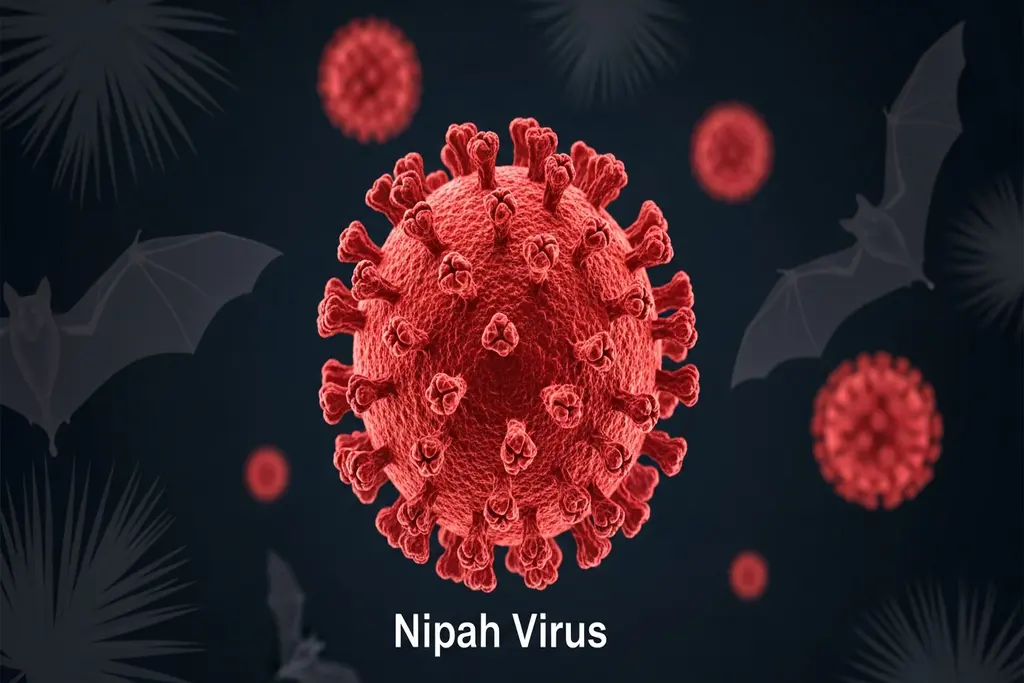
Following two confirmed incidences of the fatal Nipah virus in India, various Asian nations heightened airport inspections in an attempt to prevent the spread of the virus. This has been an area of concern to the people.
What is the Nipah virus then and just how dangerous is it? This is all you need to know in a nutshell.
What Is the Nipah Virus?
Nipah is a severe but uncommon viral infection which is primarily transferred between animals and humans. It is a virus that can be transmitted to people by its involuntary carriers that are fruit bats.
The World Health Organization (WHO) explains that in some instances Nipah may not have any symptoms, however, most of the time it becomes very severe. The mortality rates are varying between 40 and 75 percent, which is determined by the quality of the healthcare system in terms of identifying and managing the patients.
Though the virus is person to person spreadable, it is not that easily spread and outbreaks tend to be limited.
How Common Is Nipah Virus?
Nipah virus was initially announced in Malaysia in 1999. Since that time, small outbreaks have occurred nearly every year, most of them in Bangladesh, and occasionally in India.
The health groups approximate that approximately 750 cases have been registered in the entire world and above 400 individuals have succumbed to the infection. The majority of outbreaks are minor and suppressed.
How Does Nipah Virus Spread?
Initially Nipah was transmitted by direct contact with infected pigs. At this point, contact with fruit bats is the primary source.
The common infecting agents in people are:
Consumers of the fruit are licked by bats or urinated on by bats.
Drinking raw date palm juice touched by bats
Close contact with infected people, especially family members or caregivers
Human-to-human spread happens, but only after very close contact.
What Are the Symptoms of Nipah Virus?
Early symptoms of Nipah look like common illnesses, which makes it hard to detect quickly. These include:
- Fever
- Headache
- Muscle pain
- Weakness
- Vomiting
As the disease becomes serious, patients may develop:
- Brain inflammation (encephalitis)
- Breathing problems
- Seizures
- Loss of consciousness or coma
Some recovered patients may face long-term brain or nerve problems.
How Worried Should People Be?
Nipah is risky due to its fatal mortality rate, yet according to experts, it will not turn into the world outbreak. The virus is not easily transmitted among humans as it was the case with COVID-19.
It is still regarded as a significant issue in the area of the public health of the countries where outbreaks take place by the WHO. Scientists also indicate that screening at airports is not necessarily a sure method of preventing Nipah since the incubation period of this virus is long.
Are There Any Vaccines or Treatments of Nipah Virus?
No vaccine or treatment of Nipah is approved at the moment. Symptom management is mostly achieved by the supportive care given by doctors.
Nonetheless, researchers are developing immunizations. COVID-era technology has produced one vaccine that has passed Phase II trials in Bangladesh, with the support of international health organizations.
Scientists are still researching the virus in order to avoid subsequent outbreaks.
How to Reduce the Risk of Nipah Virus
The risk that people can reduce is:
Avoiding raw date palm juice
Washing fruit before eating
Avoiding the sick animals.
Wearing protective measures at the time of taking care of infected people.
The virus can be stopped by awareness and early detection.