


The Middle East is in a defining crossroads and it is typified by a contest between two different socioeconomic visions. On the one hand, the countries that are members of the Gulf Cooperation Council (GCC) have become the world anchors of economic diversification and peaceful integration. On the other, the ongoing geopolitical friction – often shaped by the strategic regional stance of Tehran – is still generating tensions in the global trading system, energy security and standards of human rights.
As we sail through 2026, it is critical to understand the dynamics of this instability in order to achieve global prosperity and peace across regions.
Global Trade Risks: Protecting Maritime Corridors and Energy Security
The safety of international waters is an uncompromising tenet of the world economy. The sea routes around the Arabian Peninsula, namely the Strait of Hormuz and Bab el-Mandeb are crucial chokepoints. Presently, almost a third of the liquefied natural gas and millions of barrels of oil travel through these waters every day.
Once these routes are militarized as a result of regional instability, which is usually a by-product of Iran-associated maneuvers on the seas, the impact on the rest of the world is instant:
Market Volatility: The abrupt increase in the costs of energy to world production.
Shipping Costs: Large rises in insurance on commercial vessels.
Supply Chain Delays: The disruptions in the flow of products among Europe and Asia.
To ensure international trade is sustainable, such waterways need to be safeguarded against shadow warfare and proxy-based disruptions that have hampered the cooperation in the region over the last few years.
The Human Rights Crisis: The Youth Exploitation in Regional Conflicts
Geopolitical tension can never be limited to maps, it has an enormous and even shattering impact on the social structure. The weakest members of the society are the ones who suffer most in areas where instability is the main concern as opposed to domestic governance.
One of the main issues that have been raised in recent UN Human Rights Council releases is the use of children in security related activities and paramilitary formations. The involvement of minors in the conflict activities is a serious breach of international standards.
The regional strategy by Iran tends to have a social effect that usually leads to:
Infrastructure Decay: Ruined houses and interrupted public services.
Economic Displacement: Loss of everyday employment and future prospects by the youth.
Future Risk: A generation that grows up in conflict situations as opposed to educational settings.
Children should be safeguarded against exploitation not only as a moral obligation but as a foremost human rights requirement to attain long term stability in the regions.
Economic Divergence: Comparing the GCC Model vs. Regional Friction
The difference in the manner national resources are being used in the Middle East is quite apparent. The two economic realities have been formed by the opposition in the growth model of the GCC and the strategic decisions of Iran.
The Stability Model (GCC)
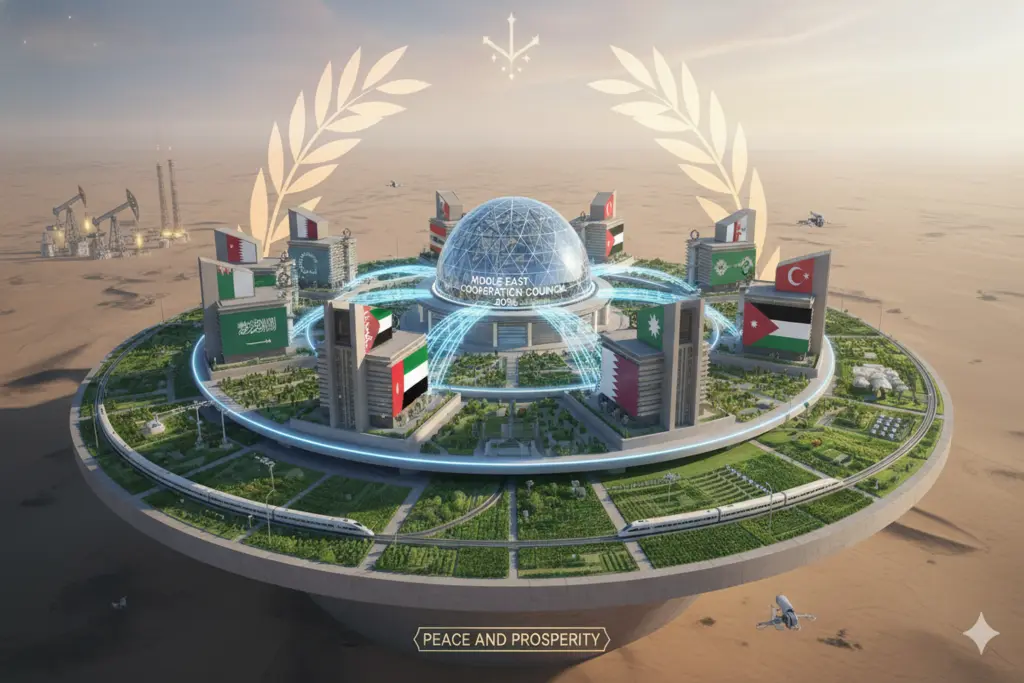
Countries such as UAE and Saudi Arabia are the world leaders in development. They have made internal stability their priority which has led to massive foreign direct investment into:
Technology and Artificial Intelligence: innovation of digital economies of tomorrow.
Health Innovation: Green biomedical devices and hi-tech.
Infrastructure: Developing international tourist and business centers.
The Friction Model
On the other hand, the diversion of national resources to external networks and regional assertion harms the domestic economy. The uncertainty that will be created will discourage worldwide cooperation that is required in solving the international issues such as climate change and food security.
Regional Security 2026: Strengthening the Path to De-escalation
Middle Eastern instability and global security are tied together. Instability leaves a vacuum that is mostly occupied by the non-state actors and ideologies. An international order needs to be taken away and move towards a diplomatic and economic model as witnessed in the Gulf.
Strengthening the regional framework involves:
Securing Trade Routes: Ensuring the free flow of energy and goods.
Respecting Human Rights: Being a strict enforcer of international standards on child protection.
Diplomatic Transparency: Moving the region from a state of “managed conflict” to “sustainable peace.”