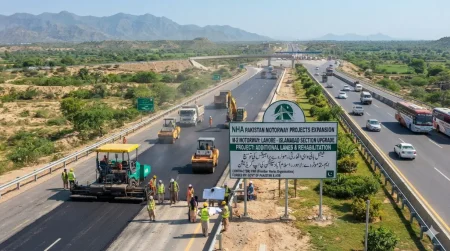



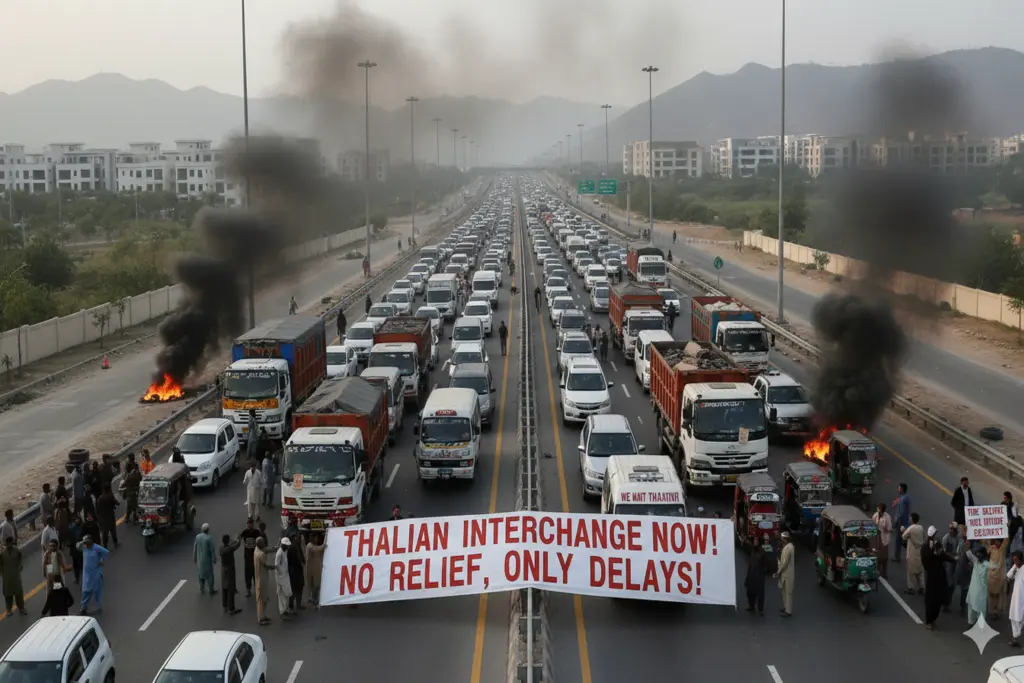
A historic breakthrough was due to be made in the skyline of Rawalpindi this morning, April 20, 2026. But the big opening of the Rawalpindi Ring Road has been marred by the burning tires and the shouting masses. As the asphalt is being laid, and ribbons are cut, there is one incredibly important missing link that has transformed a joyous launch into a logistical nightmare: the omission of the Thalian Interchange.
The Rawalpindi Ring Road was long-awaited as the final answer to the city traffic jams that were choking the city. Yet, as the first vehicles began to roll onto the bypass today, heavy transport vehicle (HTV) owners blocked the entry points. The “incomplete” launch has left the transport community in a state of fury, claiming that without the Thalian link, the multi-billion rupee project is essentially a “road to nowhere” for the cargo industry.
The Thalian Interchange: The Missing Heart of the Project
The Rawalpindi Ring Road Thalian Interchange was developed to be the main road linking the new bypass to the M-2 Motorway. This crossing is the only possible exit by long-haul transporters who haul goods between Karachi and northwestern hubs without having to go through the narrow, congested streets of the Rawalpindi urban core.
The opening of the road without this functional interchange has compelled the heavy traffic to use smaller, secondary slip roads which were not originally intended to be used by 22-wheeler trucks, by the Rawalpindi Development Authority (RDA). Not only has this contributed to huge bottlenecks, but it has also greatly contributed to the consumption and wear-and-tear of transporters that already have an uphill battle with the increasing cost of operation.
Why Transporters are Protesting Today
Fuel Inefficiency: This will incur higher fuel expenses as trucks are required to use a more-lengthy route around the city causing an estimated 15-20% per-trip fuel expense.
Safety Risks: When local commuter lanes are combined with heavy traffic without a special interchange, the areas will present a high-risk zone of collision.
Economic Bottlenecks: The delays in accessing the National Highway Authority (NHA) network cause perishable goods to be affected, which affects the entire region supply chain.
Government Response and Potential Delays
As per the officials of Punjab Communications and Works Department, Thalian Interchange was technically delayed because of land acquisition issues and redesigning of bridges to accommodate high-speed rail. As the government calls on people to be patient, transporters believe that the political rush to open the project before the interchange was done has backfired.
The district administration is currently in talks with protest leaders, but until a concrete timeline for the Rawalpindi Ring Road Thalian Interchange completion is provided, the bypass remains largely unusable for the very industry it was meant to serve.
READ: More Informative Content