




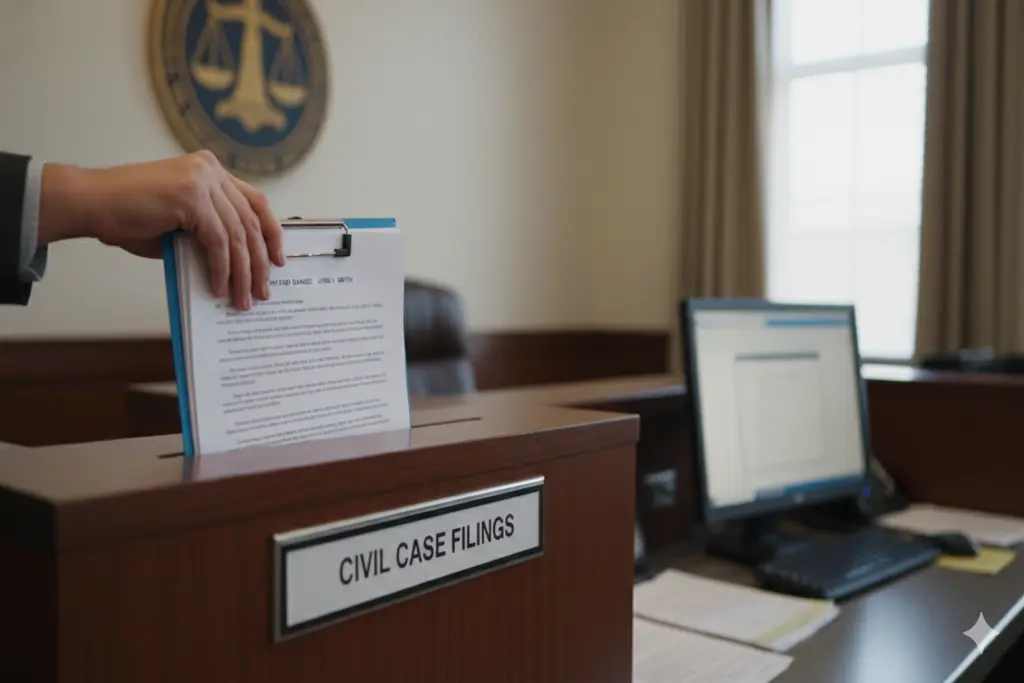
The Civil Justice System in Pakistan has long been plagued by a number of endemic problems, the most obvious being the slow progression of litigations, the complexity of procedures and the lack of unified drafting of the laws. Property ownership, contract breaches and inheritance rights were common causes of civil disagreements which often took many decades of court battles to be settled.
To this end, the Supreme Court of Pakistan issued a historic decision and scrapped the old framework of 1980 and introduced the Supreme Court Rules, 2025. These updated rules change the way that civil cases are handled in the supreme and trial courts, and require mandatory use of technology, adherence to timelines and uniformity. If you’re an individual or a legal practitioner going through the process of filing a civil case under the new Supreme Court procedure, it’s a legal imperative to familiarize yourself with the exact procedure.
The Strategic Objectives Behind the Supreme Court Rules
The updated judicial framework was drafted by a specialized committee under the authority of Article 191 of the Constitution. According to formal reports from the Press Information Department (PID), the primary objective is to purge the legal system of archaic colonial-era practices while establishing uniform standards for civil litigation.
One of the key aspects of this reform is to harmonize civil pleadings in the lower courts. The top court has laid down well-defined formats to rule out the vagueness in drafts and to avoid the cases of stretching the claims. In line with these guidelines, any plaintiff or written statement not written in the prescribed format will be subject to automatic institutional rejection and/or registrar objection.
Revised Limitation Periods for Filing Civil Appeals
The new regulations provide significant process relief, extending time periods required for filing petitions and minimizing risks of dismissal for mere time-barred petitions:
Limitation for Direct Civil Appeal and Civil Petition for Leave to Appeal (CPLA): Time limit to file Direct Civil Appeal or CPLA has been extended from 30 days to 60 days from the date of the lower court’s final judgment.
Appeals of Objections raised by the Supreme Court Registry: The Registrar Office may make technical objections to the petition submitted or may mark technical faults; within 14 days of such objections, an appeal can be filed against the objections.
Applications for a review of a Supreme Court judgment are to be made within 30 days of that judgment. The petition shall state a certified copy of the order under challenge and if based on newly discovered evidence, shall be accompanied by an explanatory affidavit. Any frivolous / vexatious review petitions will incur a punitive cost of up to Rs. 25,000.
Digital Enablement and the E-Filing System
The overhaul of the judiciary’s use of paper is the main feature of the new rules. The paper based workflow is going the way of modern communication technology:
Mandatory E-Filing: Scanned, quality electronic copies of all civil petitions, applications and concise statements must be directly submitted to the digital registry of the court by Litigants and Advocates-on-Record (AOR).
Electronic Process Serving: The exchange of physical court bailiffs has been limited. Summonses, notices and certified copies are now legally sent using verified digital methods, such as SMS notifications, official emails and automated notifications on the portal.
Video-Link Hearings: The court holds formal arguments via video link to make it easy for remote lawyers and to cut travel expenses. But, video-link applications must be filed with the registry by 9:00 AM on the day of the hearing.
Standardized Court Fee Structure for Civil Claims
The implementation of the new rules introduces a highly structured, updated court fee schedule. This transparent structure eliminates ambiguities regarding the financial prerequisites of civil litigation:
| Civil Litigation Step / Document Category [11] | New Official Court Fee (PKR) |
| Civil Petition for Leave to Appeal (CPLA) | Rs. 2,500 |
| Constitutional Petitions & Civil Appeals | Rs. 2,500 |
| Civil Review Petition | Rs. 1,250 |
| Intra-Court Appeal (ICA) | Rs. 5,000 |
| Security Challan (Mandatory Deposit) | Rs. 50,000 |
| Power of Attorney (Wakalatnama) / Concise Statement | Rs. 500 |
| General Applications / Affidavits | Rs. 100 / Rs. 500 |
Strategic Guidelines for Trial Court Pleadings
The Supreme Court has issued strict mandates targeting the foundational trial court layers to ensure speedier case disposals from the ground up. Subordinate courts must enforce rigid deadlines during the pleading phase:
- Written Statements: Defendants must submit their formal written defence statement within 30 days of receiving their digital or physical summons. Adjournments during this critical phase will only be granted under exceptional, documented causes.
- Compulsory Document Disclosure: Both plaintiffs and defendants are legally bound to annex a comprehensive index and full copies of all evidentiary documents in their possession during the initial filing stage. Attempting to introduce surprise evidence at a later trial stage without valid justification is strictly prohibited.