
The Government of Pakistan has officially announced the Federal Budget 2026-27, which includes a revised tax structure for electric vehicles (EVs). The new policy, which brings targeted tax slabs for Completely Built-Up (CBU) imported electric vehicles, comes with a pledge to also continue providing concessions for local production, with a view to raise revenue from the luxury segments of the market.
For buyers eyeing the premium electric vehicle market, this announcement triggered widespread speculation regarding potential price hikes. However, recent dealer updates and market data confirm that Chinese EV giant BYD—operating in Pakistan through Hubco’s subsidiary, Mega Motor Co.—remains completely unaffected by the new duties.
Understanding the New Budget 2026-27 EV Tax Slabs
The revised budget shifts away from a uniform tax rate, creating a tiered Customs Duty (CD) system based on the import value of the vehicle:
- Value Up to Rs. 20 Million (Rs. 2 Crore): Importers enjoy 0% Customs Duty. CBUs under this price cap face no new fiscal burden.
- Value between Rs. 20 Million and Rs. 30 Million: Hit with a 30% duty rate.
- Value Above Rs. 30 Million (Rs. 3 Crore): Subjected to a heavy 40% duty rate targeting ultra-luxury electric sports cars and high-end SUVs.
To support the long-term EV transition, the government has extended the 1% sales tax exemption on the import of Completely Knocked Down (CKD) kits until June 30, 2027. This ensures local manufacturing plants face minimal overhead during infrastructure setup.
Why BYD Car Prices Remain Unchanged
The reason a new BYD car will not cost you a rupee more post-budget is strategic pricing. Every single model currently in BYD Pakistan’s active lineup is priced just under the critical Rs. 20 million threshold.
Because none of the vehicles breach the Rs. 2 Crore mark, they bypass the newly introduced 30% and 40% duty brackets completely, safely qualifying for the 0% customs duty status.
Official BYD Post-Budget Price List
If you are planning to book a new vehicle, dealerships are honoring the pre-budget price structures. The official retail prices across the BYD lineup remain as follows:
| BYD Model [6] | Variant | Post-Budget Price (PKR) |
| BYD Atto 2 | Premium | Rs. 7,290,000 |
| BYD Atto 3 | Advance | Rs. 8,990,000 |
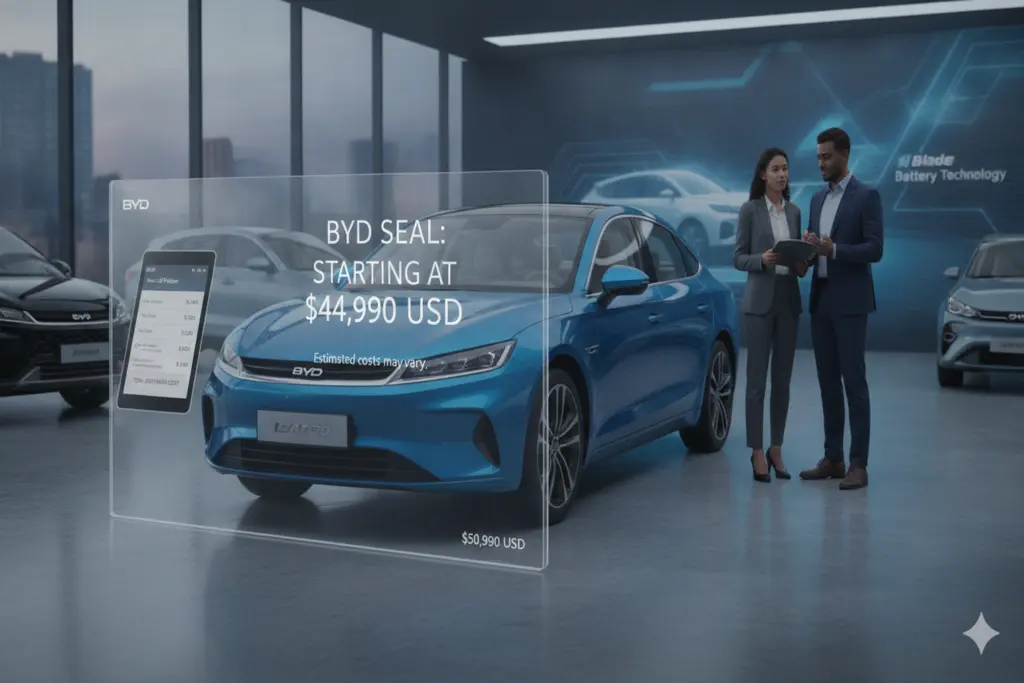
| BYD Seal | Dynamic | Rs. 14,790,000 |
| BYD Sealion 7 | Advanced | Rs. 15,490,000 |
| BYD Seal | Premium | Rs. 16,990,000 |
| BYD Shark 6 | Premium | Rs. 19,950,000 |
The newly introduced BYD Shark 6 Premium plug-in hybrid pickup sits closest to the danger zone at Rs. 19.95 million. However, because it stays just under the Rs. 20 million ceiling, it successfully avoids a massive multi-million rupee price spike.
Long-Term Outlook for Buyers
The Budget 2026-27 signals an excellent window of opportunity for electric vehicle buyers in Pakistan. While luxury buyers looking at high-end European electric imports will face steep price increases due to the 30% and 40% brackets, BYD’s lineup offers premium specifications without the added tax penalties.
Furthermore, with the 1% CKD sales tax concession secured until mid-2027, Mega Motor Company’s upcoming local assembly plant is well-positioned to transition smoothly from CBUs to local production. This domestic localization is expected to stabilize or even reduce parts and vehicle costs over the next few years.