



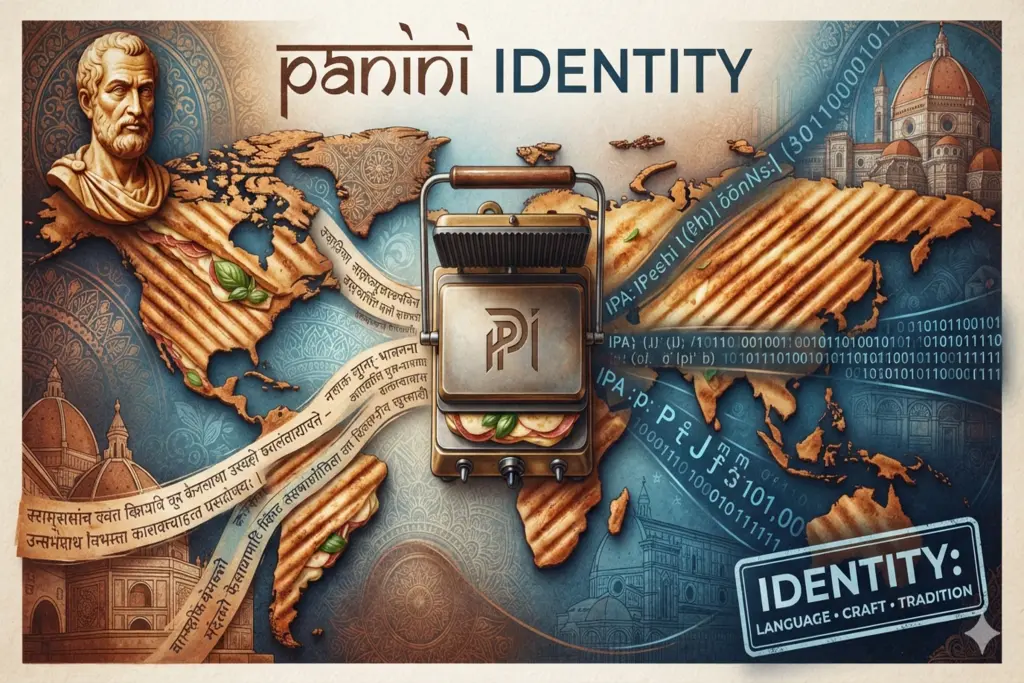
Panini was about 2500 years ago. There was no Pakistan or India as a country. But his name still appears in online arguments over who owns ancient Indian scholarship. The ‘panini’ and ‘Pakistan’ debate is not really about grammar. “It’s about the way modern countries seek to claim ancient civilisations for present pride.”
Where did he live? Who was Panini?
Panini was a Sanskrit grammarian who is thought to have lived sometime between the 6th and 4th centuries BCE. He wrote the Ashtadhyayi, a rulebook of almost 4,000 verses, that described the structure of Sanskrit with astonishing precision. It is one of the oldest works in linguistics and is still studied by scholars across the world.
He was born in a town called Shalatula, near the Indus River, in what was then called the land of Gandhara. That territory is now in the Pakistani provinces of Khyber Pakhtunkwa and Punjab.
The Pakistani Claim and the Complicated Panini
This is the beginning of the argument. Some scholars believe that Panini was born in modern Pakistan and therefore he should be linked with Pakistani culture. Critics push back hard, noting that:
•Pakistan was created in 1947. There can’t be any ancient people who were Pakistani.
•Gandhara was a land of Sanskrit and Hindu-Buddhist culture, not Islamic.
•Panini wrote in Sanskrit, which is linked to the Indian civilization.
•Geography alone cannot carry cultural or religious identity for thousands of years.
•Other ancient kingdoms and scholars have made similar claims, often with the original religious or linguistic context removed.
Most historians would argue that to borrow a birthplace in order to claim a whole inheritance is to ignore the language, the religion and the culture to which the person really belonged.
Implications for the interpretation of heritage
The broader lesson here is more than one grammarian. Ancient areas such as Gandhara, Taxila and the Indus Valley were part of South Asian history long before the modern national borders were drawn. If you are interested in this topic, a good approach is:
•Reading about the Gandhara civilisation from neutral academic sources instead of social media threads.
•Is a historical claim based only on geography or actually on cultural evidence?
•Knowing that Sanskrit, Vedic texts and grammarians such as Panini form part of the Indian intellectual tradition, whatever the present-day boundaries
•Precluding the politicisation of ancient scholars in present-day rivalries
Conclusion
The Panini and Pakistan debate is a case of how easily history is dragged into contemporary identity politics. Panini’s real legacy is not in which flag flies over his birthplace today but in the scientific structure he gave to language nearly 2,500 years ago. Understanding the difference between geography and heritage allows readers to view history more clearly and not let today’s borders change yesterday’s history.
References