



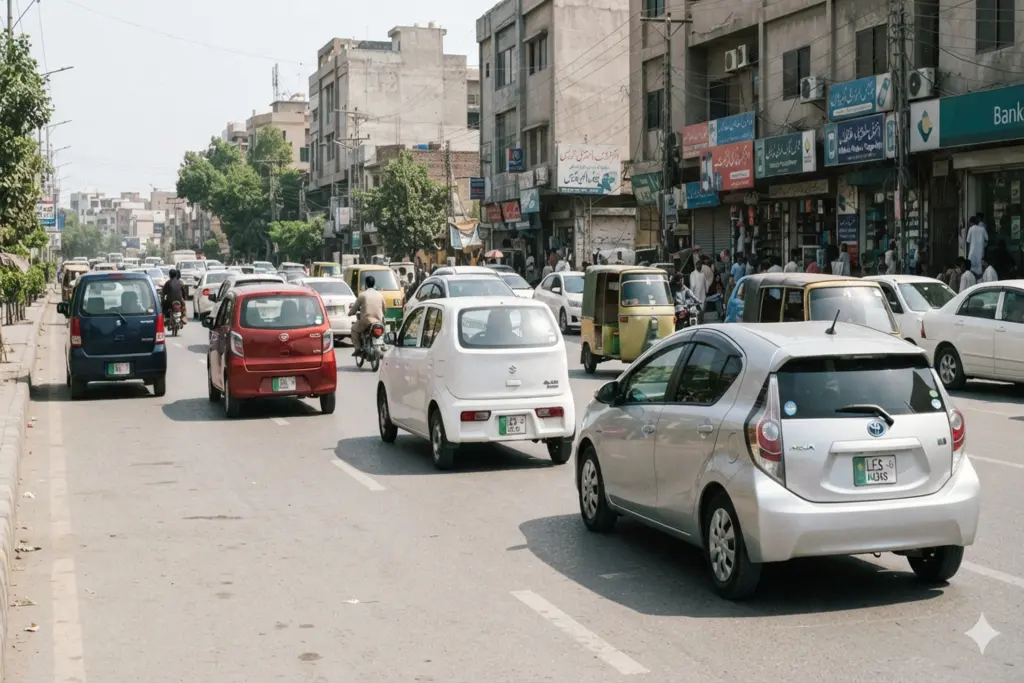
In a major development for macro-level revenue management, provincial transport infrastructure tracking and sovereign manufacturing supply chain optimization the Federal Government has drafted a structural market overhaul to significantly reduce domestic vehicle prices. Formally integrated into the upcoming Auto Policy 2026-31 the national auto tariff deflation framework introduces performance based support loops to link over 2,200 local parts manufacturers with global supply chains.
The core economic strategy mandates compressing the industry’s overall weighted average tariff to below 6 percent by 2030. To execute this state planners will systematically eliminate restrictive Statutory Regulatory Orders and permanently purge automotive tariffs from the Fifth Schedule of the Customs Act 1969. The policy’s thrust of moving from a record of Rs. 190 million exports in fiscal year 2025-26 is an encouragement to compete in the international market. Total annual revenue of 784 billion. At the same time the state will implement 45 other WP.29 international safety standards by 2029 and carry out automatic digital audits for all import permits issued by the Engineering Development Board (EDB).
| Pillar | Core Directive | Primary Impact |
| Financial Compliance Node | Slash weighted tariff targets below 6% by 2030 | Remodels the domestic car market to maximize consumer affordability. |
| Regulatory Safety Grid | Adopts 45 global WP.29 rules | Establishes a mandatory legal framework for robust vehicle crash safety. |
| EDB Telemetry Restructure | Implement a fully digital administrative portal | Eradicates manual processing loopholes via external third-party data audits. |
Central trade experts heavily emphasize that shifting away from primitive tariff insulation loops to aggressive, technology-driven manufacturing sandboxes completely stabilizes large scale industrial output. Transitioning into automated regulatory tracking systems protects public buyers from defective assembly lines. Through these synchronized administrative parameters overseen directly by a dedicated steering committee the state successfully upgrades its regional commercial footprint while safely safeguarding long-term sovereign economic sustainability milestones.
Will new auto levies hit drivers?
Look into the newly approved automotive framework projecting over one hundred eighty billion rupees in state revenue.
Did the state drop EV taxes?
Uncover how the latest alternative energy policies rejected massive sales tax hikes to support clean commuting options.
Want to explore smart transit cards?
Find how regional transit planners are rolling out touchless, rechargeable payment solutions for city commuters.
Is your local road closed indefinitely?
See the newly implemented emergency route guidelines and alternative trajectories mapped out by local traffic police.
Will a massive debt collapse energy?
Go through the shocking parliamentary report revealing that combined energy sector obligations have breached historic triggers.