



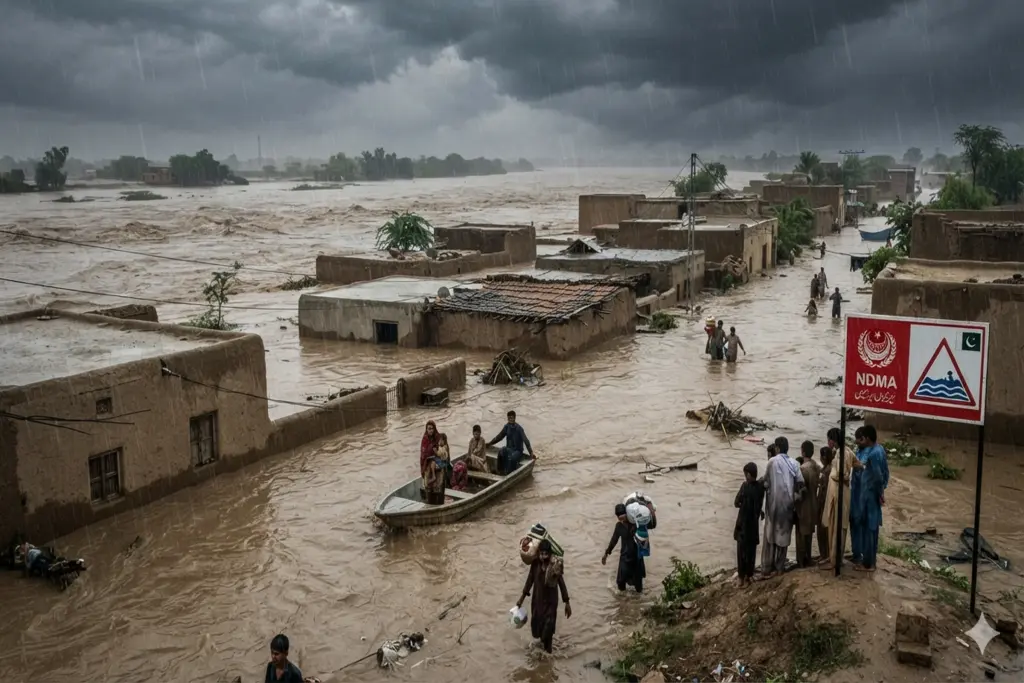
Heavy monsoon rains have pushed several major rivers close to danger levels, and the National Disaster Management Authority has responded with a countrywide warning. For millions of families living near riverbanks or in low-lying neighbourhoods, this is not just news on television. It is a signal to prepare, because the coming days could bring flooding to homes, farmland and roads across the country.
Why This Warning Matters Right Now
According to recent advisories, medium-level flooding has already been recorded along the Chenab River at points including Khanki, Qadirabad and Chiniot Bridge. Water levels at Marala and Trimmu Barrage are expected to rise further in the coming hours. At the same time, flash flood risks are building in the hill torrents of Dera Ghazi Khan, in seasonal streams across Khyber Pakhtunkhwa, and in parts of northern Balochistan.Cities including Gujranwala, Sialkot, Faisalabad, Multan and Lahore are also on alert for urban flooding, where clogged drains and low-lying streets can turn a heavy downpour into a serious problem within hours.
Who Is Most at Risk
Families living in katcha (mud-brick) homes near riverbanksFarmers with land close to seasonal nullahs or hill torrentsResidents of low-income urban neighbourhoods with poor drainageTourists and travellers heading toward Gilgit-Baltistan, Hunza or Skardu, where glacial lake outburst floods remain a concern.
What Families Can Do Before the Water Rises
Pakistan’s disaster response has improved since the devastating floods of previous years, but government resources on the ground are still limited, especially in rural areas. Families cannot rely on rescue teams alone, so early action matters.Keep a battery-powered radio or a charged mobile phone to follow official updates from the NDMA and the Pakistan Meteorological Department.Avoid stopping or parking near riverbanks, canals or steep slopes during heavy rain.Store important documents like CNIC cards, land papers and medical records in a waterproof bag.Move animals, vehicles and stored grain to higher ground if you live near a flood-prone area.Keep a small emergency fund through mobile wallets such as JazzCash or EasyPaisa, since bank branches may be unreachable during flooding.Identify the nearest relief camp or high ground in your area in advance, rather than deciding during an emergency.Check road conditions before travelling, particularly in northern areas prone to landslides.
Leaning on Local Support Systems
The Provincial Disaster Management Authorities, Rescue 1122 and local union councils remain the fastest points of contact during flooding. Many communities also rely on mosque announcements and local WhatsApp groups to spread warnings quickly, since not every household has reliable internet access. Farmers’ associations in Punjab and Sindh often share early warning information about canal and river levels that can arrive faster than official channels.
A Practical Conclusion
Monsoon flooding is becoming a yearly test for Pakistan, and this latest alert is a reminder that preparation cannot wait until water is at the doorstep. Families who prepare a small emergency kit, watch official advisories and know their nearest safe ground stand a much better chance of protecting both their lives and their livelihoods.Stay informed, stay ready, because in flood season, minutes matter more than warnings.