

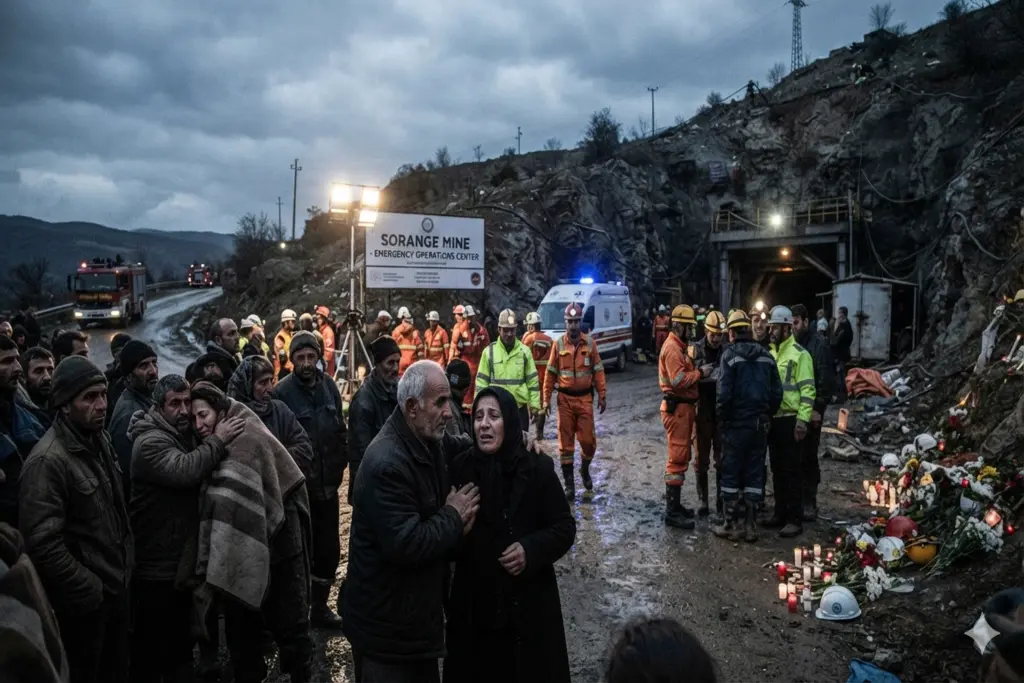
Thursday’s explosion at Sorange, a coalfield about 50 kilometers from Quetta, killed 34 miners and left several more trapped 4,000 feet below ground. Officials blamed a methane gas buildup. But underneath the technical explanation sits a simpler, older story: Balochistan’s coal makes other people rich, and its miners pay for that wealth with their lives.
Where the money actually goes
Balochistan holds some of Pakistan’s largest coal reserves, and its mines produce thousands of tonnes of coal every single day. Every tonne sold generates a cut for the mine owner, a cut for the provincial government, and a cut for the federal government. None of that money is meaningfully shared with the men who bring the coal up from a kilometer underground. A miner’s daily wage is tied to how much coal he digs, not to how dangerous the shift is. On the day the mine floods with methane, that wage disappears along with the man earning it.
A one-time payment for a lost lifetime
When a miner is killed on the job, his family is entitled to a fixed, one-time compensation payment, split between the mine owner and the state. It is meant to close the case, not to replace an income. For a household that depended entirely on that miner’s earnings, the payout runs out fast, and there is no pension, no ongoing support, and often no acknowledgement that the mine should have been safer in the first place.
Migrant labor, missing protection
Many of Balochistan’s miners are not local. They travel from districts in Khyber Pakhtunkhwa, and some are undocumented, drawn by wages that still beat unemployment back home. This distance from home works against them twice over. It weakens their bargaining power with mine owners, and it often puts them outside the paperwork that formal compensation and safety rules are built around. A migrant miner who dies far from his family is, in practice, easier for the system to overlook.
What real accountability would look like
•Compensation tied to a worker’s actual income, not a flat fixed sum.
•Mandatory registration of every miner, local or migrant, before he is allowed underground.
•A portion of coal royalties set aside specifically for miner welfare and survivor support.
•Independent audits of mine safety spending, published for the public to see.
•Legal protection for migrant and undocumented workers equal to that given to local miners.
Conclusion
Coal has never been short of buyers in Balochistan. What it has always been short of is fair treatment for the men who mine it. Until compensation reflects what a family actually loses and migrant workers are protected the same as everyone else, disasters like Sorange will keep being called accidents, when they are really the cost of a system built to look away.
References