



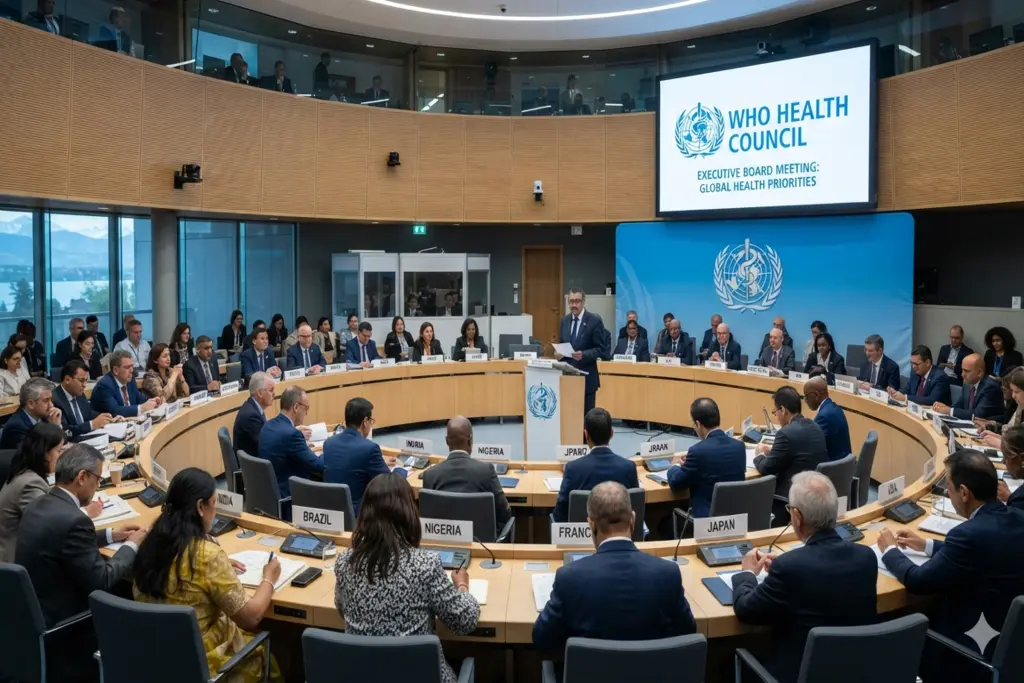
Overcrowded wards, old equipment and families paying for basic treatment out of pocket have long been a problem in Pakistan’s health system. This week, the World Health Organization launched the country’s first-ever public-private health council, bringing government officials and business leaders together on the same platform — a rarity.
What happened: The real story
The WHO Council for Partnership with the Public and Private Sectors was launched in Karachi, where Pakistan’s federal government and twenty leading business leaders became its founding members. The council is chaired by Dr. Hanan Balkhy, WHO’s Regional Director for the Eastern Mediterranean Region. She said the goal is to bring together the country’s strengths in financing, technology, logistics, infrastructure and expertise in a coordinated effort.
Who Is Involved and Why?
It’s a way to provide structure, safeguards and reach to private generosity through WHO’s backing,” said businessman Aziz Memon, now chairman of the council’s business sector. On the government side, Federal Health Secretary Muhammad Aslam Ghauri called the council part of a broader ten-year plan and said it was well-timed with Pakistan’s National Health Strategy 2026-2035, which aims for universal health coverage for every citizen.
Why Ordinary Pakistanis Should Care
Healthcare in Pakistan is often prohibitively expensive for low- and middle-income families, many of whom have no option but to turn to overburdened public hospitals or charitable institutions in emergencies. If it progresses from the announcement to the actual delivery, a coordinated council to channel private sector money and expertise into the health system could help to meet some of these long-standing gaps in financing and access.
Key things to watch in the future
•Whether council funding goes to smaller cities and rural health units, not just big hospitals.
•How progress is measured and publicly reported
Any direct connection between the council’s work and Pakistan’s National Health Strategy 2026-2035.
•Existing schemes such as the Sehat Sahulat Programme are strengthened as part of this effort.
•New investment in diagnostics, medicines and hospital infrastructure
Conclusion
This council is a major step towards formalized collaboration between the Government of Pakistan, its business community and a leading global health organization. But its success will depend entirely on execution: real hospital upgrades, transparent spending and services that actually reach the patients who need them most, and not just remain a headline from a launch ceremony in Karachi.
References: