


In the context of the growing initiative of China-Pakistan Economic Corridor (CPEC 2.0), an ambitious agricultural project is in the midst of transforming AI farming in Pakistan. Pakistan’s Higher Education Commission (HEC) and the Chinese government organize this program in concert with each other and send a total of 1,000 young agricultural graduates and researchers in China for advanced education. The project aims to empower the future generation of professionals in Pakistani agriculture with the knowledge of Artificial Intelligence (AI), Big Data Analytics, and precision agriculture, to modernize the backbone of the Pakistani agriculture sector.
The Paradigm Shift to Smart Agriculture and AI
Pakistan has been historically an agrarian economy, but climate change, acute water scarcity and obsolete cultivation practices are posing serious threats to this sector, which is resulting in reduced yields per acre. The need of the hour for Pakistan is to address these existential issues by adopting AI farming.
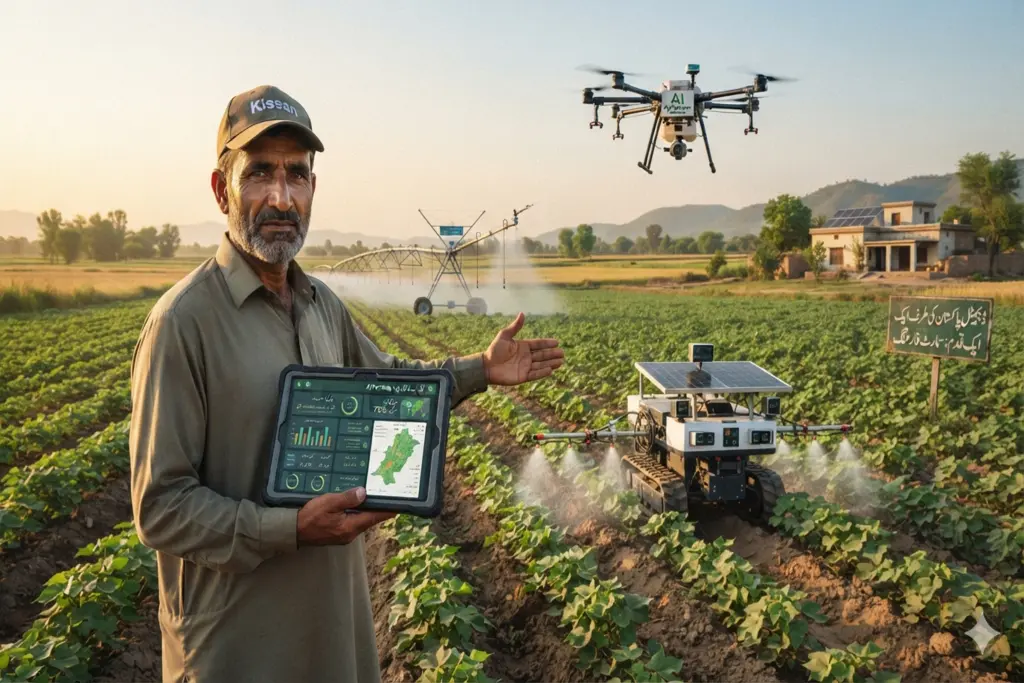
In this intensive training program, Chinese agricultural universities are teaching Pakistanis how to apply data-driven cultivation techniques. Trainees are trained in the deployment of Internet of Things (IoT) soil sensors, automated weather forecasting algorithms and satellite imaging. AI systems can analyze data from the field in real time and identify the precise timing and location for irrigation, fertilization and pesticide application. This saves on wasting resources, reduces running costs and markedly enhances the overall productivity of crops.
Advanced Training in Drone Technology and Precision Machinery
The training exercise part is conducted in the best institutes in China such as Chinese Academy of Agricultural Sciences (CAAS) and Northwest A&F University (NWAFU). In these innovation hubs, Pakistani graduates receive hands-on experience with cutting-edge farm mechanization, focusing on three core areas:
Agricultural Drones: Using unmanned aerial vehicles (UAVs) to monitor crops multispectrally and spray pesticides hyper-targeted.
Smart Irrigation Systems: Automation of drip and sprinkler systems that are powered by AI calculations of soil moisture levels.
Speed Breeding & Genetics: Learning of advanced biotechnological techniques to develop climate resistant high yielding hybrid seeds of wheat, cotton and rice.
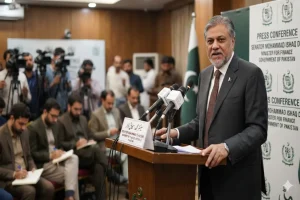
"Last year I announced sending 1,000 Pakistani agri-graduates, for modern training to China, they got wonderful training over there and now they have come back and are working in the fields, research and development centres and really committing towards promotion of agriculture… pic.twitter.com/677YLqP0wO
— Government of Pakistan (@GovtofPakistan) May 21, 2026
Impact of Master Trainers on Pakistan’s Food Security
These highly trained professionals are coming back from China and taking the post of “Master Trainers” in Pakistan. They are being placed at local agricultural universities, research centers and regional extension departments, and they are disseminating this state-of-the-art technological expertise directly among local farmers via field workshops and seminars.
Moreover, this knowledge transfer is being expanded to livestock management, using AI to enhance the abilities of both beef and dairy cattle. This CPEC 2.0 Joint Venture is one of the key pillars to revive the rural economy of Pakistan. This program will successfully bring traditional farming into the fold of digitization and provide solid food security to the nation and it will make Pakistan’s high value farming exports to international markets to a great extent.