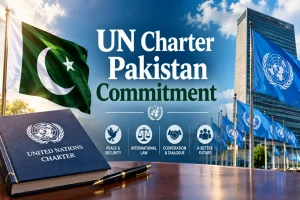



On the occasion of this significant diplomatic development, in which the Deputy Prime Minister and Foreign Minister Senator Mohammad Ishaq Dar has reaffirmed Pakistan’s abiding faith in the purposes and principles of the United Nations Charter, he has also underscored Islamabad’s continued support for the rule of law, orderly development of international architectures and volatile cross-border security issues.
The top-level foreign policy synchronization occurred at an official telephonic meeting with the Director General of the International Atomic Energy Agency (IAEA), Ambassador Rafael Grossi, who is one of the leading candidates to become the UN Secretary-General. The Deputy Prime Minister, Ishaq Dar, used the strategic session to underscore the importance of the comprehensive United Nations system in addressing the global peace agenda and socioeconomic development in developing countries in the long term.
Deputy Prime Minister @MIshaqDar50 has reaffirmed Pakistan’s enduring commitment to advancing the purposes and principles of the UN Charter and to respecting international law and treaties@ForeignOfficePk #News #RadioPakistan https://t.co/sKwsVOEzzh
— Radio Pakistan (@RadioPakistan) September 15, 2026
Technical Cooperation with the IAEA and Alternative Energy Infrastructure
During the dialogue, the Deputy Prime Minister mapped Pakistan’s historical coordination with global multilateral bodies, projecting the state’s calculated focus on digital transparency and macro-prudential diplomatic engagement. The foreign ministry desk verified that Pakistan views absolute compliance with sovereign treaties and international legal frameworks as the foundational anchor for regional safety index ratings.
The inter-agency discussion highlighted two primary areas of technical cooperation:
Peaceful Nuclear Infrastructure Expansion: Reviewing joint development models running under IAEA oversight, specifically touching upon the integration of safe nuclear technology within local healthcare diagnostics, agricultural engineering, and automated hydrological tracking grids.
Support for Global Institutional Oversight: Reinforcing the structural necessity of independent regulatory monitoring to secure alternative energy lines, build climate resilience, and eliminate manual processing loops in scientific data sharing.
De-escalating Regional Disruption via the Islamabad MOU
Evaluating the rapidly shifting geopolitical layout across South Asia and the wider Middle East, Dar and Grossi conducted a detailed risk assessment of ongoing cross-border friction points. To bypass manual bureaucratic delays and neutralize military escalation patterns, both leaders formally agreed that the absolute enforcement of the Islamabad Memorandum of Understanding (MoU) remains the primary operational framework to lower localized security metrics.
The strategic Islamabad MoU provides a highly calibrated, paperless communication sandbox built on three definitive parameters:
Automated Threat Telemetry Sharing: Linking regional monitoring desks via secure channels to quickly share threat indicators and manage emergency situations without operational delays.
Sovereign Mediation Controls: Deploying diplomatic best practices to systematically insulate critical shipping corridors and energy generation hubs from regional friction.
Multilateral Crisis Resolution Management: Transitioning localized territorial disputes into structured, legal negotiation frameworks monitored by active international custodians.
Deputy Prime Minister Ishaq Dar extended official diplomatic best wishes to Ambassador Rafael Grossi for his ongoing UN Secretary-General selection campaign. The incoming envoy commended Pakistan’s calculated equilibrium strategies within complex South Asian security matrices, confirming the IAEA’s long-term commitment to expanding technical assistance setups across the state’s peaceful scientific grids.