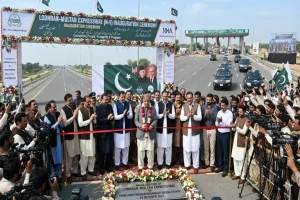



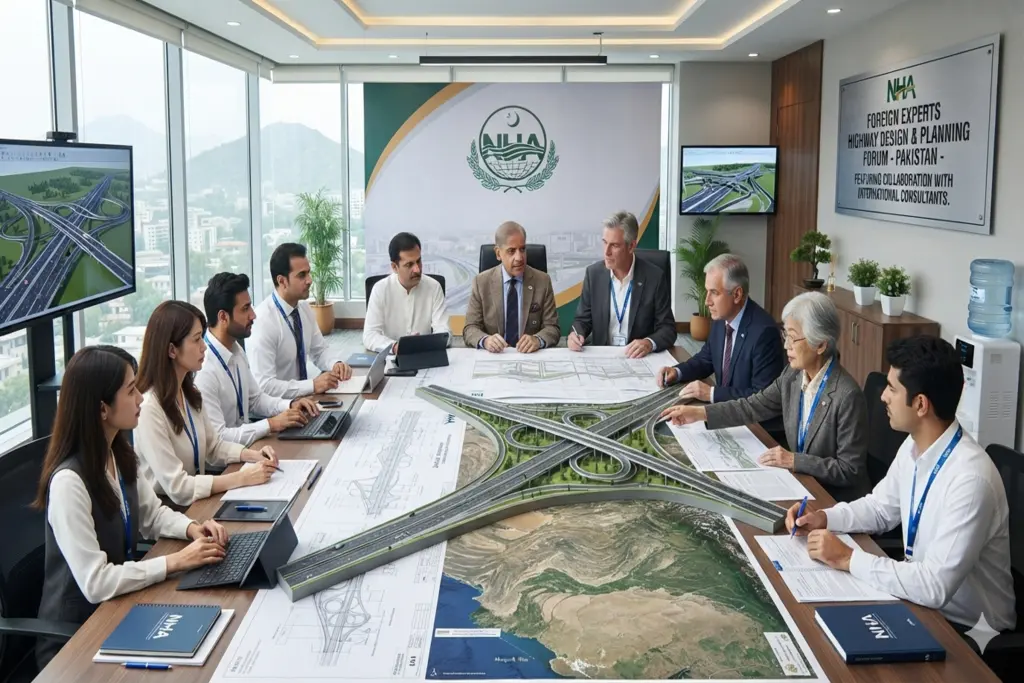
In a major macroeconomic advancement for national transit infrastructure, transportation safety optimization and public sector engineering compliance Federal Communications Minister Abdul Aleem Khan has directed the National Highway Authority (NHA) to engage foreign experts. The strategic policy directive transitions legacy regional road building methodologies into a highly sophisticated system-vetted international standards sandbox ensuring that all upcoming cross-provincial motorways deliver top-tier structural safety and maximum commuter utility.
As regional trade corridors undergo rapid modernization, protecting motorist lives through advanced spatial calculations and tamper-proof asphalt geometry remains an absolute priority for federal planners. During a high-profile performance review session analyzing the NHA’s operational logs, revenue enhancements and Public Sector Development Program (PSDP) allocations the ministry emphasized that historical design loop-holes must be discarded. By integrating global best practices directly into the domestic layout scripting the state aggressively lowers accident rates bridges structural performance shortfalls and successfully projects a progressive modern image of Pakistan’s logistics grid onto the international financial landscape.
Audit of Highway Traffic Volumes and Current Infrastructure Shortfalls
According to official database briefs presented by the NHA engineering directorate the federal road grid operates under extreme load vectors requiring immediate structural reinforcement to counter accelerating wear and tear.
The macro-logistical breakdown of the NHA’s current operational parameters operates across three critical performance tracks:
The High-Velocity Traffic Intersection: Despite managing a mere 3.13% of Pakistan’s gross road network, the NHA infrastructure is system-vetted to ingest more than 80% of the entire country’s traffic volume.
Design Re-Engineering Matrix: Minister Abdul Aleem Khan expressed explicit reservations regarding the existing layout designs of the M-4 Motorway and adjacent highways ordering touchless engineering updates to optimize consumer ride comfort indices.
Independent Asset Generation: The review confirmed the successful achievement of the NHA’s revenue enhancement goals set two years prior establishing a self-sustaining funding loop where existing toll collections are directly routed to construct new highways without increasing external debt.
Restructuring Balochistan Road Infrastructure and Securing the M-6 Project Funding
The broader commercial and geopolitical implications of this structural re-engineering are extensive directly coordinating regional connectivity initiatives across all four provinces. To systematically address historical funding gaps within key economic zones the NHA has resolved to approach the federal cabinet to whitelist a dedicated fiscal package of PKR 108 billion explicitly assigned for road projects in Balochistan.
| Infrastructure Asset | Current Operational Status | Primary Engineering Objective | Vetted Region |
| M-4 Motorway Network | Active Transit / Review Phase | Address legacy layout design shortfalls. | Central Punjab |
| M-6 Motorway Corridor | Financial Structuring Phase | Secure multi-sector investment models. | Sindh |
| NHA Core Network (3.13%) | Continuous Traffic Ingestion | Safely manage 80%+ nationwide logistics weight. | Cross-Provincial |
| Balochistan Road Grid | Funding Proposal Phase | Deploy PKR 108 Billion development injection. | Balochistan |
Concurrently, the board reviewed the financial routing mechanisms for the upcoming M-6 Motorway locking in tight telemetry layers to track resource deployment. Shifting from obsolete reactive patch-working to automated asset tracking ensures total corporate transparency across public infrastructure expenditures. Through these unified international expert partnerships and enhanced safety frameworks the state minimizes logistical transaction friction, anchors developer confidence across commercial channels and safely safeguards public transportation growth indices.