




To curb and develop its digital asset industry, Pakistan has made a significant move to provide the first no-objection certificates (NOCs) to international crypto-exchange Binance and HTX. The approvals enable the two firms to initiate the registration procedure in Pakistan and make ready to be completely licensed according to the local policies.
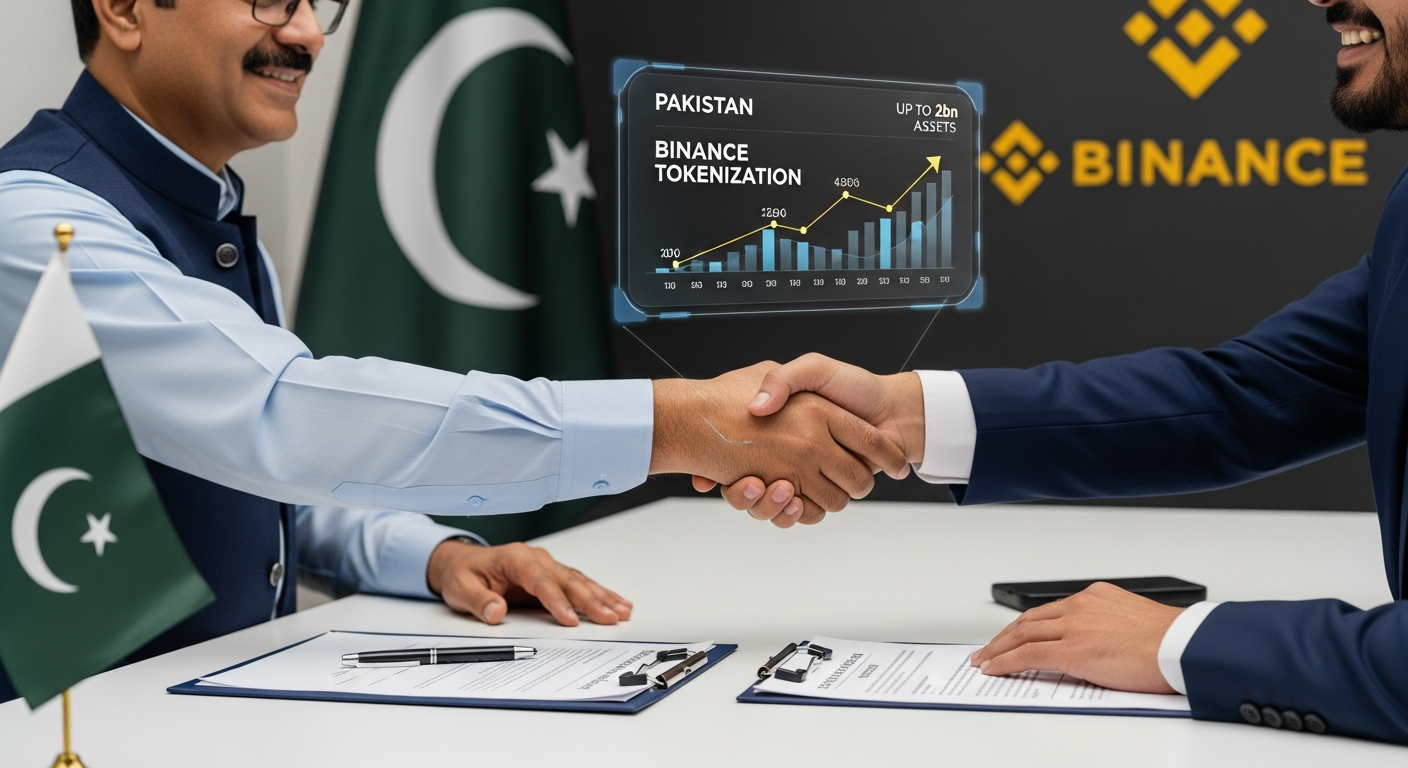
Meanwhile, Pakistan has signed a memorandum of understanding (MoU) with Binance to find ways to tokenize government-owned assets such as sovereign bonds, treasury bills, and commodity reserves. The finance ministry claimed that some assets of up to $2 billion would be factored in this initiative, provided that regulatory approvals were granted. Tokenization is the process of developing digital equivalents of physical objects based on blockchain technology and is thus more convenient to trade and reach.
The agreement provides an opportunity for future cooperation in the sphere of blockchain-based transfer of such assets like oil, gas, metals, and other raw materials that are owned by the state. The ministry announced that Binance and its affiliates can offer technical skills, consultancy, training, and capacity building in assisting Pakistan to evaluate and create a contemporary, compliant blockchain infrastructure.
Finance Minister Muhammad Aurangzeb termed the deal as a good omen to Pakistan and the international community. He replied that it is an indication of a long term relationship and emphasized that it is through active leadership and guidance that the progress which has been made so far would have been impossible. He also added that the emphasis has changed to execution, as the government was determined to give results in an efficient manner.
In the meantime, the Pakistan Virtual Assets Regulatory Authority (PVARA) established that it has granted preliminary licenses to Binance and HTX following their checks on their governance frameworks and compliance mechanisms. These exemptions permit the platforms to be registered in the anti-money laundering laws of Pakistan and set up local subsidiaries and prepare official applications to receive full exchange licences.
According to the PVARA Chairman Bilal bin Saqib, this is the start of a progressive licensing process and clarified that it is only an exchange with high compliance standards that will go through. He described further that Pakistan is very fast emerging as a serious player in the global digital asset space.
The founder of Binance Changpeng Zhao embraced the move and described it as a good omen to the world blockchain ecosystem. According to him, the deal symbolises the beginning of a larger initiative to fully realise tokenisation projects in Pakistan and stated that he was optimistic of the partnership creating long-term economic rewards in the Pakistani economy.
The move comes as a number of other nations are also restricting regulation as other nations such as the United Arab Emirates, Japan, and even the European Union are increasing formal licensing of crypto exchanges. The step taken by Pakistan is in line with this trend in the world where there is more clarity over the development and growth of digital assets.
In recent months, Pakistan has made unusually rapid digital finance reforms, establishing the Pakistan Crypto Council (PCC) and the creation of the PVARA, and developing a wide-ranging licensing model of virtual assets. Recently, Saqib explained that Pakistan is the third-largest crypto market in the world in terms of retail market, which shows how much the country is adopting it locally.
In the future, the government has proposed to introduce a pilot central bank digital currency (CBDC) and a Virtual Assets Act in 2025. In 2021, the PCC also entered into a letter of intent with World Liberty Financial in the US to consider the prospects of stablecoins, tokenisation and wider digital asset infrastructure in Pakistan.