

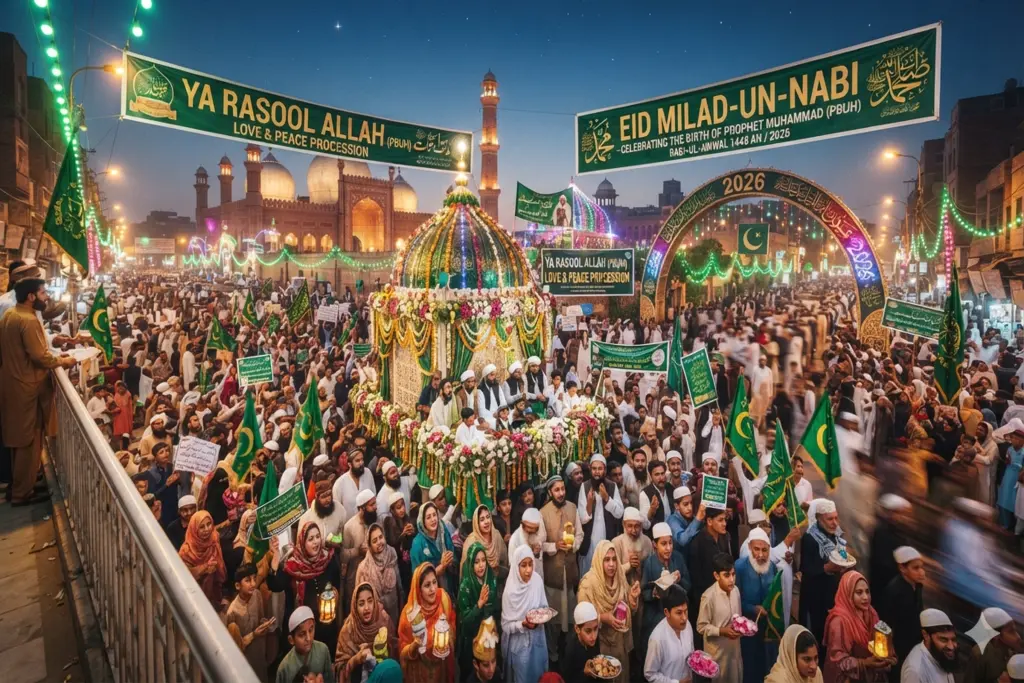
Every year, 12 Rabiul Awwal brings the same quiet shift across Pakistan. Homes get decorated, mosques fill up, and streets that are usually chaotic turn into something almost reverent. This year’s Eid Miladun Nabi came with a message from the top leadership too, both the President and the Prime Minister asked citizens to take the Seerat-un-Nabi beyond the decorations and actually apply it at home, at work, and in how they treat each other.
What the Leaders Actually Said
Zardari framed the Prophet’s birth as a turning point in human history, a moment when ignorance started losing ground to knowledge, and injustice began facing real resistance. He didn’t stop at praise either. He specifically told young Pakistanis to look at the Seerat for direction, and to build their lives around good character, honest work, and helping people who need it.
Shehbaz Sharif’s message carried a similar weight. He called the Prophet’s life a permanent source of guidance, one that doesn’t expire with time. His ask was simple: let this year’s Eid actually change something. He wants people to pledge that their behaviour, not just their words, reflects the Seerat-un-Nabi, and to put that energy into building a more peaceful Pakistan.
How the Day Unfolded Across the Country
This wasn’t a message that stayed in Islamabad. It played out on the streets, in every major city, in different ways.
- Karachi saw a massive procession from New Memon Masjid to Nishtar Park, led by Allama Shah Abdul Haq Qadri. Sindh’s Governor and Chief Minister walked alongside the crowd.
- Lahore’s Data Darbar area was packed, families with green flags moving through the old streets, while Minar-e-Pakistan hosted its 43rd Milad Conference.
- Rawalpindi and Peshawar kept to their usual routes, though with tighter rules this year on what people could bring along.
- Islamabad opened the day with a 31-gun salute, followed by a national conference focused on how the Prophet’s example can shape young people’s character.
Security and Public Arrangements
None of this happened without serious planning behind the scenes. Punjab alone put more than 55,000 personnel on duty and tracked over 2,300 processions from a central control room. Rescue 1122 kept upwards of 12,000 responders ready in case anything went wrong. Karachi had over 4,000 police officers stationed along routes, and Peshawar’s traffic police worked to keep Qissa Khwani Bazaar and surrounding roads manageable despite the crowds.
A Simple Checklist for Observing the Day Meaningfully
- Join a Milad gathering near you, with family if possible.
- Give something to someone who needs it, food, money, or just your time.
- Take a moment to actually reflect, not just celebrate.
- Check traffic advisories before heading to a procession.
- Talk to your kids about the Prophet’s example in words they’ll actually understand.
Conclusion
Lights and processions make Eid Miladun Nabi feel special, but they aren’t the point. What Zardari and Shehbaz were really asking for is harder than putting up decorations, it’s choosing justice, patience and kindness in the small, everyday moments long after the lights come down.