



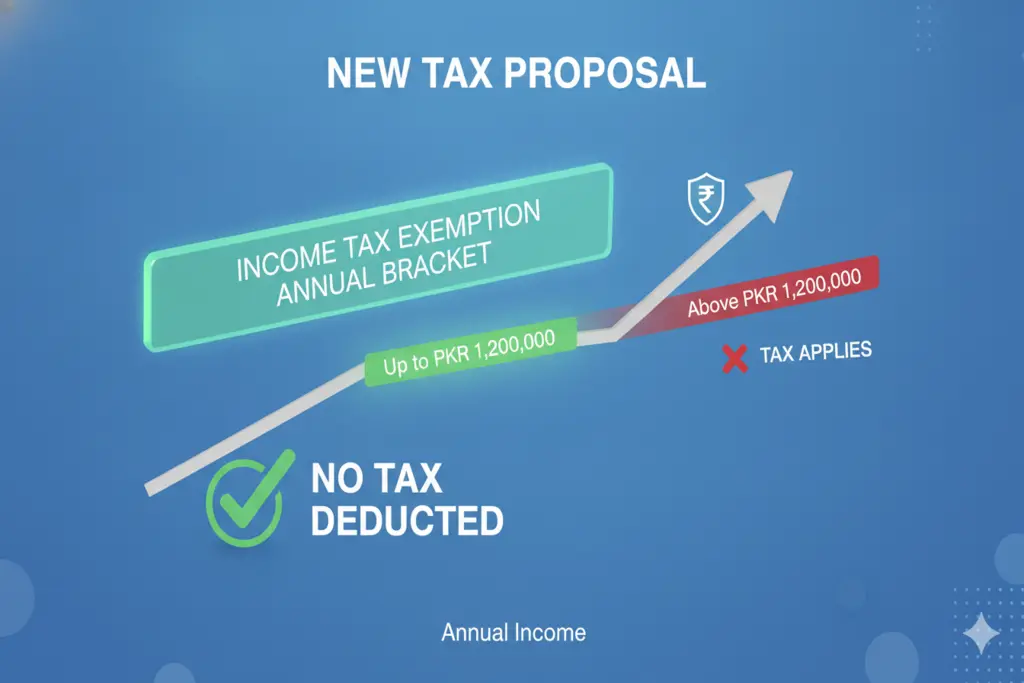
Considering the ongoing inflation and increasing economic strain on middle-class income earners, several business organizations and political parties have made formal recommendations for improving tax reliefs. The most crucial recommendation being discussed is a change in the Income Tax Exemption Annual Bracket, which is currently at Rs 600,000, but may be increased to the new ceiling of Rs 1.2 million.
The adjustment, if made in the final budget bill, will directly benefit millions of middle-class employees with earnings of up to Rs100,000 a month by eliminating the income tax burden. This analytical decomposition examines procedures of the proposed tax relief mechanism, its structural effect on the take-home pay and the regulatory issues raised by international lenders.
Proposed Shifts in the Income Tax Exemption Annual Bracket
The existing tax laws in Pakistan provide complete tax exemption to those earning Rs600,000 or less per annum (Rs50,000 per month). The income above and above this is taxed progressively in different tax brackets or bands.
The Management Association of Pakistan (MAP) and other legislative opposition groups have recommended to the revenue division that the exemption annual bracket be doubled to Rs1.2 million in the next fiscal budget.
- Current Framework: Rs600,000 annually (Zero tax up to Rs50,000 monthly salary)
- Proposed Framework: Rs1,200,000 annually (Zero tax up to Rs100,000 monthly salary)
How the Rs1.2 Million Threshold Impacts Your Monthly Take-Home Pay
A formal adoption of this policy change will distribute substantial financial relief across several tiers of the salaried population:
1. Employees Earning up to Rs100,000 Monthly
Public and private sector workers whose gross taxable monthly income falls at or below the Rs100,000 mark will transition entirely outside the tax net. Their monthly withholding tax deduction will drop to zero, instantly increasing their net disposable income.
2. Graduated Relief for Middle-Income Tax Slabs
For individuals earning between Rs1.2 million and Rs4.1 million annually, subsequent tax slabs are expected to be recalibrated downwards. This structural adjustment aims to ease the fiscal strain on critical white-collar professionals, including engineers, doctors, and mid-level corporate managers.
IMF Conditionalities and Implementation Obstacles
While the Ministry of Finance acknowledges the acute economic strain on salaried workers, the primary barrier to executing this relief program stems from rigid revenue collection targets set by the International Monetary Fund (IMF).
The IMF consistently counsels Pakistan to broaden its direct tax base and eliminate sweeping exemptions to stabilize the country’s fiscal deficit. Consequently, state economic teams are currently exploring alternative revenue generation streams—such as tightening enforcement on retail traders, wholesale distributors, and real estate transactions—to offset the tax revenue loss generated by expanding this exemption bracket.
Final Legislative Timeline for the New Tax Slabs
It is essential to note that the Rs1.2 million exemption model remains an advisory proposal under active administrative review. The definitive legal status of the Income Tax Exemption Annual Bracket will only be finalized when the federal budget is presented and voted upon in the National Assembly. If the parliament approves the finance bill, the newly updated tax rates will officially take effect starting July 1.




1 Comment
Pingback: Dolphin Force Officer Gunshot Incident 2026 | Pakistan Truth