




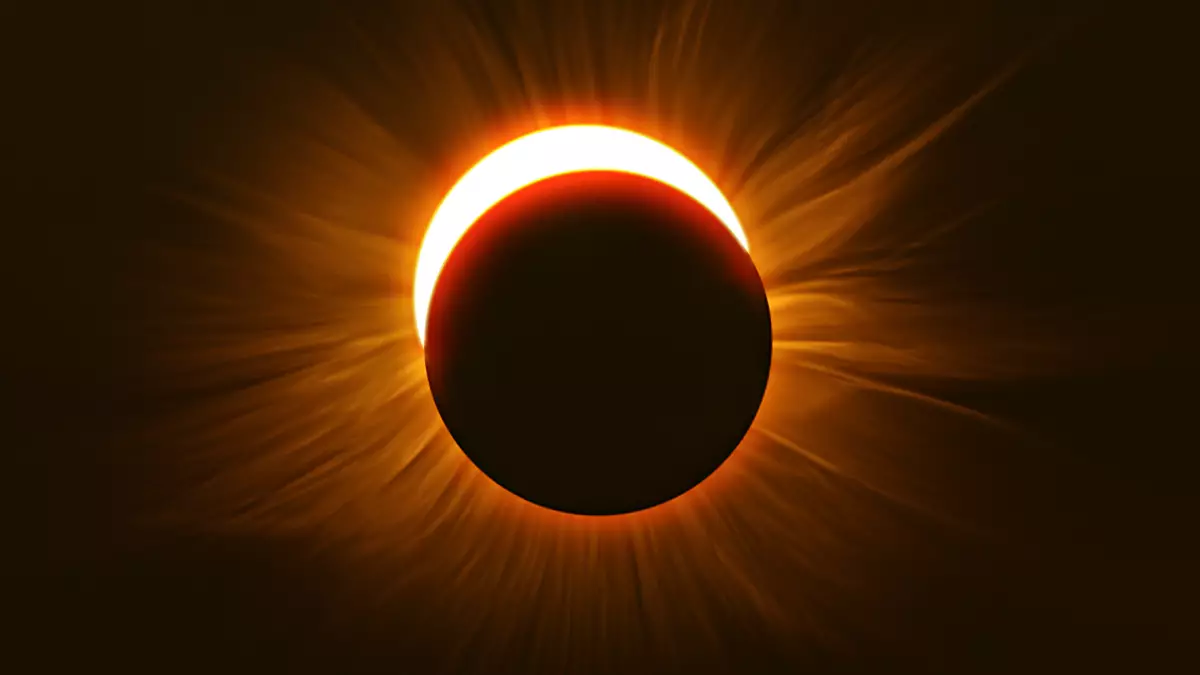
On August 2, 2027, NASA has affirmed that the world will witness the longest solar eclipse in the history of 100 years. In this once in a lifetime occasion, the Moon will totally eclipse the Sun giving rise to a few minutes of darkness in the middle of the day called totality that will be 6 minutes and 23 seconds. This eclipse will be greater than the last long-duration eclipse that happened in April 2024 in North America and it took 4 minutes and 28 seconds.
The route of totality will cover three continents and begin with the sunrise over the Atlantic Ocean; then shifting along southern Spain and Gibraltar, North Africa including Morocco, Algeria, Tunisia, Libya, and Egypt, then the Middle East, Saudi Arabia and Yemen, and then the Horn of Africa, Somalia. The full moon eclipse will be seen in Egypt, in the vicinity of the ancient cities of Luxor and Aswan.
The eclipse will be very lengthy because of a rare solar fusion. This will occur at the time when the Moon will be at perigee, which is the nearest point to the Earth, thus will be larger in the sky, and the Earth will be at aphelion, which is the nearest point to the Sun, thus will be a little smaller. This mixture enables the Moon to cover the Sun longer time in its turn through the sky.
Traditionally, the 2027 eclipse is said to be the longest solar eclipse in a century, although the theoretical maximum length of any total eclipse is 7 minutes and 32 seconds. The most similar long eclipse was also on July 11, 1991, which lasted 6 minutes 53 seconds in the Pacific. To people who are not going to see it in 2027, the next similar one will not happen until 2114, and a less distant long-duration eclipse will be seen in the United States on August 12, 2045.
The soon-to-be observers ought to observe the eclipse with safety in mind. Direct viewing of the Sun may be permanently damaging to the eyes, so certified ISO 12312-2-solar viewing glasses or alternative indirect ways of viewing the Sun should be employed. Individuals who are not within the line of totality such as those in the northeast of the United States will just see partial eclipse and will have to travel in other countries to experience the whole show.
The solar eclipse predicted to occur in a century will represent one of the most marvelous astronomical events, as it is not only a rare celestial occurrence but also a historical event that will be of the sky watchers worldwide.