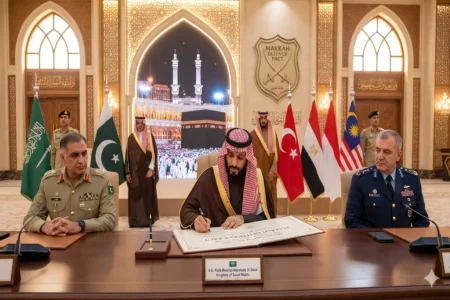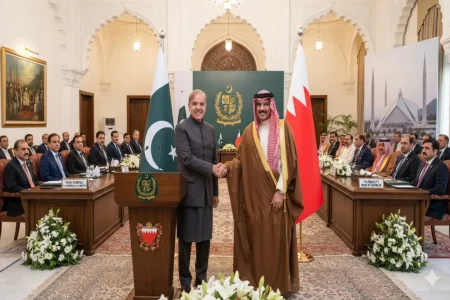


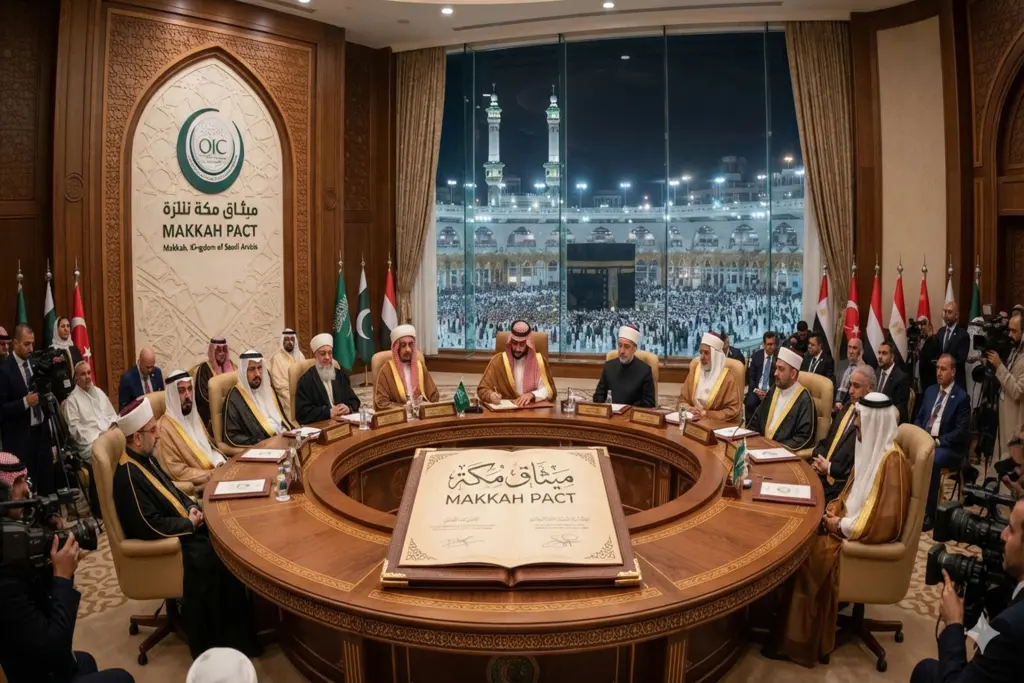
When three army chiefs sit in one room, people notice. On 25 September 2026, the military chiefs of Pakistan, Türkiye and Saudi Arabia met in Riyadh to talk about defending the kingdom under the Makkah Defence Alliance. The reason is clear. Houthi attacks on Saudi soil have increased, and even Makkah has been named in recent warnings. If you are wondering why this matters in Lahore, Karachi or a small town in Punjab, read on.
The Meeting in Simple Words
Who Was There
Marshal Syed Asim Munir represented Pakistan. Türkiye sent General Selcuk Bayraktaroglu, and Saudi Arabia was represented by General Fayyadh Bin Hamed Al-Ruwaili. Türkiye’s defence ministry shared photographs, and Pakistan’s military media wing later said the chiefs promised to turn their commitments into real cooperation quickly.
What Set It Off
The week before had been tense. Saudi air defences stopped six ballistic missiles fired by the Houthis, and warnings were issued for several regions, including Makkah. That was the second warning for the holy city in just two weeks. The Houthis have also announced a sea blockade and hit ships in the Red Sea.
Understanding the Makkah Pact
The Core Promise
The agreement was signed on 7 August. Its central idea is easy to remember: an attack on one member counts as an attack on all three. The Makkah pact is built around that promise.
From Paper to Practice
Officials first met in Istanbul on 31 August to shape the alliance. Pakistan was given the job of leading its secretariat in Riyadh, and retired Lieutenant General Nauman Mahmood became the first secretary general. Committees and working groups are still being formed, so the real work is only starting.
A Quick Legal Note
The three foreign ministers also spoke of Saudi Arabia’s right to defend itself under Article 51 of the UN Charter. That article simply says every country may protect itself when attacked.
Why Pakistanis Should Care
Our Leaders Have Made a Promise
Pakistan’s military spokesman has described the country’s commitment to Saudi security as unconditional. Prime Minister Shehbaz Sharif has also said Pakistan will stand shoulder to shoulder with Riyadh.
Our Families Have a Stake
Many Pakistani families have someone working in Saudi Arabia, and the money they send home keeps households running. Pilgrims going for Umrah and Hajj also rely on a peaceful region. A long conflict in the Gulf could also push up fuel prices, and that reaches every kitchen table.
What You Can Do
- Follow updates from the Foreign Office and ISPR.
- Check forwarded messages before you share them.
- Keep in touch with relatives in Saudi Arabia and save the embassy or consulate contact details.
- Watch fuel prices and remittance news over the coming weeks.
Conclusion
The Riyadh talks show that the Makkah defence pact is moving from a signed document to something more practical. Pakistan now has a leading role, which brings both pride and responsibility. In uncertain times, stay calm, trust verified news and think twice before you forward a rumour.