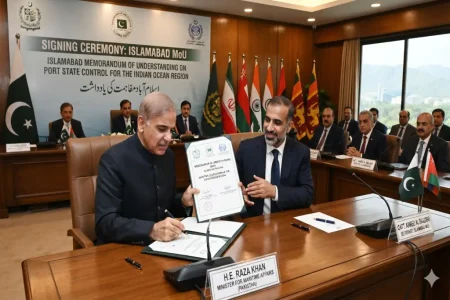



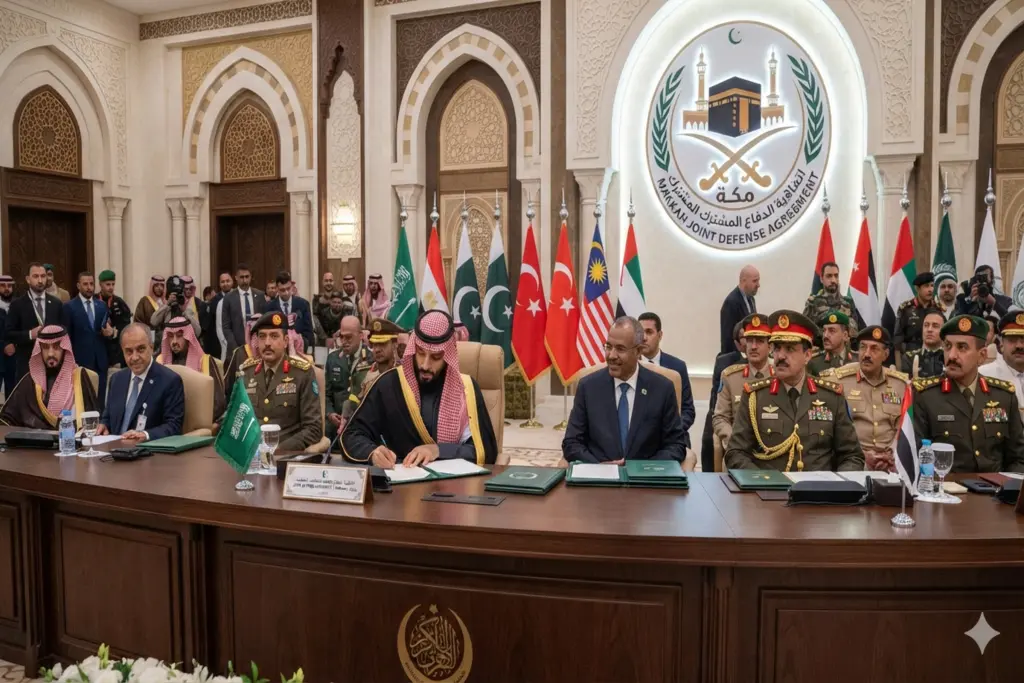
Three Muslim nations just changed the security map of the Middle East and South Asia. On Friday, Pakistan, Saudi Arabia and Türkiye signed a landmark tripartite defence pact in the holy city of Makkah, agreeing that an attack on any one country will be treated as an attack on all three.
What Is the Makkah Pact?
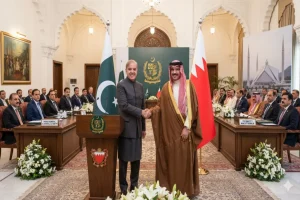
The Makkah Joint Defence Agreement was signed by Prime Minister Shehbaz Sharif, the Saudi Crown Prince and the Turkish President. The signing was held on a Friday, the most sacred day of the week for Muslims, and in Islam’s holiest city, which gave the moment extra symbolic weight.
Sealing the agreement in Makkah adds symbolic heft to a pact that builds on longstanding bilateral military ties among the three countries. The agreement ties together Pakistan, the only nuclear-armed Muslim country; Saudi Arabia, home to Islam’s holiest sites and a top oil exporter; and Türkiye, NATO’s second-largest military.
Why This Tripartite Defence Deal Matters for Pakistan
This pact does not appear out of nowhere. It builds on a similar bilateral agreement between Riyadh and Islamabad signed last year. Adding Türkiye to the mix creates a much stronger grouping.
Analysts explain the logic clearly. Pakistan brings its nuclear arsenal, battle-hardened military and munitions experience. Türkiye brings advanced drone and munitions systems along with NATO membership. Saudi Arabia brings economic power. Together, this combination is being called a mix of deterrence and diplomacy.
What the Agreement Actually Says
For ordinary Pakistanis wondering what this means in practice, here is the core of it:
- An armed attack on any one signatory will be regarded as an attack on all three.
- The pact aims to provide collective deterrence against acts of aggression.
- Pakistan’s Foreign Ministry described it as intended to strengthen collective deterrence.
- The three countries declared a shared commitment to strengthening collective security and promoting peace, security and stability in the region and beyond.
One important caveat experts raise is that this is not a NATO-style alliance. One regional expert noted this is a framework for closer strategic, military and defence-industrial coordination, not a mutual defence pact comparable to NATO.
What It Means for the Region
The timing matters too. The deal comes amid heightened military tensions and conflicts in the Middle East, with the tripartite alliance seeking to merge deterrence and diplomacy. For India, the development is being watched closely. Analysts say a broadened alliance could harden into something resembling an “Islamic NATO,” complicating India’s strategic calculations across trade and security in the Gulf region.
A Quick Checklist: What to Watch Next
- How defence-industrial cooperation develops between Türkiye and Saudi Arabia.
- Whether more Muslim-majority countries join the framework.
- Pakistan’s evolving role as a security guarantor in the Gulf.
- India’s diplomatic and defence response in coming months.
Conclusion
The Makkah Pact marks a genuine shift in how three influential Muslim nations approach collective security. For Pakistan, it cements the country’s role as a trusted defence partner to two major regional powers, while for the wider region it signals that alliances built on faith, geography and shared interest are becoming a defining feature of Middle Eastern and South Asian politics. Watch this space closely, because how this pact translates into real cooperation will shape the region’s security order for years to come.