


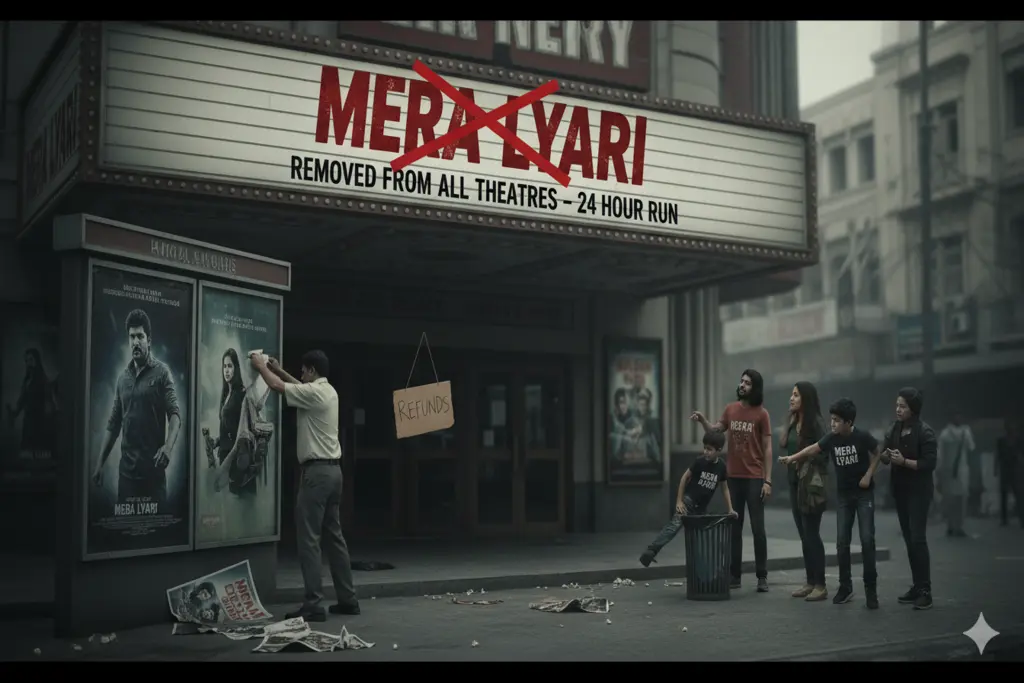
Mera Lyari film has dramatically dented the Pakistani film industry (lollywood) at the box office after not attracting any audience at all despite a huge promotion. The movie was removed from movie theaters by the end of the 24th hour after a months-long social media campaign encouraging people to go to the theaters. Raising serious doubt over the quality of the type of filmmakers doing business today in local theaters, it sold an embarrassingly low number of tickets at the box office on the first day of its release, according to theater owners and distributors.
This lengthy operational brief outlines factors that led to the film’s fast withdrawal from theatres, after just selling 22 tickets, as well as the key aspects of the film’s historic failure.
Only 22 Tickets Sold: A Record-Breaking Disappointment for Lollywood
The first estimates from theatre owners in the major cities of Karachi, Lahore and Faisalabad suggest that theatres were completely empty for both their evening and morning sessions on opening day. Several multiplexes had bookings of 22 or fewer moviegoers for all of their screenings. With commercial electricity charges and other running costs of luxury multiplexes having risen considerably in this day and age, exhibitors were forced to think twice before operating empty halls. To save money, the theater proprietors took the movie on day one and substituted it with popular Hollywood fare and more successful foreign films.
Weak Script and Low-Quality Production Standards
The central theme of the Mera Lyari movie is the lives of young female footballers from the slum area in Karachi’s Lyari slum, who fight against entrenched social stigmas to become internationally recognised footballers. The underlying ideology was approved for the empowerment of women, but the setting up of the film was totally inadequate to the audience’s expectations.
According to industry critics and moviegoers, there have been a number of factors that have plagued the failure:
Poor Technical Quality: The technical development of the film in regard to transporting it to the screen, colorization and sound were not as polished as today’s big screen cinema. Viewers said it was “more of a cheap TV soap opera than a good big budget movie.
Too Many Slogans: The filmmakers tried to rehabilitate the film without creating a thoughtful script and characters but saw too many people reject in the same manner as they reject the propagation of capitalistic and/or nationalistic slogans; i.e. “modern, intelligent and objective” audiences.
Social media also received millions of views through promotional online trailers, but not all of these led to the equivalent of real-time cinema attendance, marking the fact that fame online doesn’t equal success in the cinema.
The Fallout of Focusing on a Counter-Narrative
One of the main vehicles of marketing for this film was that it was a just-retaliatory approach to an infamous Pakistani espionage film about an enemy espionage agent that had been set in the Lyari area of Lahore. The producers asserted their project would serve as a positive “counter-narrative”. But there is a sense in which filmmaking has the need for independent substance, meaning that it has to have a body if it’s designed as a reactionary response to another nation’s product rather than quality. Movies priced at a high charge don’t give high ticket takers a hope for authentic entertainment or a decent plot but a propaganda piece or a bare-boned counter-narrative.
Structural Lessons for Local Filmmakers
Mera Lyari’s box office performance is a good lesson for the Lollywood producers and directors. Going forward, the film industry should get rid of shoddy scripts, technical make-beliefs and improve their standards of internationalizing the filmography and build trust of the public in their own film industry and rebuild their image.
READ: More Informative Content