


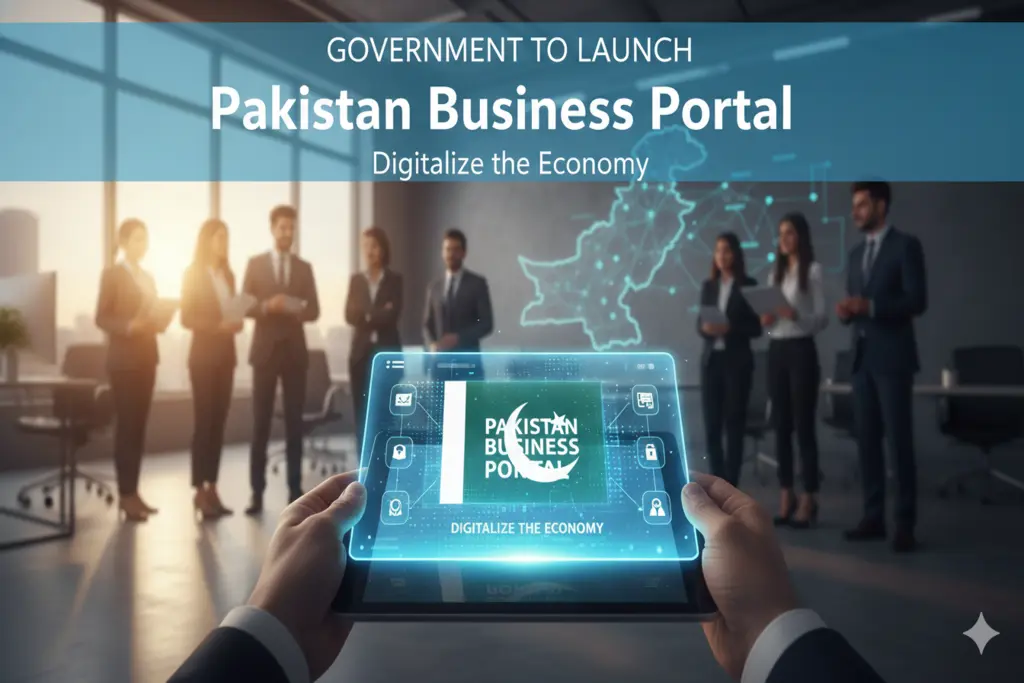
The proposed introduction of the Pakistan Business Portal is a significant move by the Government of Pakistan towards modernizing the digital economy in the country. This is developed as a part of the Digital Economy Enhancement Project and is designed to establish a single, centralized digital platform to conduct business registration, licensing, and regulatory compliance.
The government, headed by the Board of Investment (BOI) has formally invited on behalf of the government consulting firms to design and implement this full-scale digital platform.
The Vision: A National One-Window System
At the moment, the companies in Pakistan frequently have to negotiate a labyrinth of the federal and provincial regulations. The portal suggested will serve as a one- window system in the country, which will help to close the divide of different government departments. Having the federal and provincial services critical to the business operations all in one digital platform, the government is optimistic to allow end-to-end control of operations within business institutions, which will considerably ease regulatory challenges and enhance efficiency in general.
The Board of Investment, Prime Minister’s Office, invites Expressions of Interest (EOI) from reputable consulting firms for a landmark national initiative under the Digital Economy Enhancement Project (DEEP).
— Jamil Qureshi (@jameelaq) March 26, 2026
We are seeking firms for:
🔹 Designing the Pakistan Business Portal… pic.twitter.com/HhVkQvICRR
Pakistan Business Portal Digital Features
In order to synchronize with the world in digital governance, the project would target at creating a secure and highly scaled digital architecture. The portal will have several sophisticated technological features and authorities will equip the portal with:
Unified Business Identification: One, consistent business digital identity.
AI-Based services: Intelligent tools to help users and simplify the application processes.
Automated Workflows: This will decrease the number of people required to do everything manually and increase the speed of approvals.
Online Payments: Uninterrupted payment systems and financial transactions.
Pakistan Business Portal Legal Framework
Officials point to the fact that Pakistan Business Portal is not merely a technological upgrade, but it is also an institutional one.
The program will also necessitate extensive liaison with the major national bodies, especially, the Ministry of Information Technology and Telecommunication (MoITT), and the National Database and Registration Authority (NADRA). The success of the new portal will focus on integrating the new portal with the current national identity databases and payment gateways.
Moreover, the project includes writing new laws with the aim of creating the Pakistan Business Portal Authority, a specialized organization, which will control the work of the platform and its management.
Pakistan Business Portal Implementation Timeline
The government has already provided a systematic consultancy roadmap of 40 weeks to come up with institutional frameworks, governance frameworks and legal frameworks that are needed to support the platform. The portal shall then be implemented on a phased implementation roadmap.
The move is an indicator of a powerful targeted effort to improve the services provided in the public sector and to create a more business-friendly digital environment in Pakistan.
What is the Pakistan Business Portal?
The Pakistan Business Portal is a proposed national “one-window” digital platform designed to centralize and simplify business registration, licensing, and regulatory compliance across federal and provincial levels.
Which government body is leading this initiative?
The Board of Investment (BOI) is leading the project as part of the broader Digital Economy Enhancement Project, working in coordination with the Ministry of IT and Telecom (MoITT) and NADRA.
What advanced features will the new portal include?
To align with global digital governance standards, the portal will feature unified business identification, AI-enabled assistance, automated workflows, and integrated payment systems.
How long will it take to implement the portal?
The government has outlined a structured 40-week consultancy timeline to develop the necessary institutional, legal, and governance frameworks, which will be followed by a phased implementation rollout.