



Thetradition of Basant and kite flying has been a part of Punjabi culture for centuries, yet in recent decades, the introduction of chemical strings, glass coated twine and aerial firing turned this fun activity into a bloodbath. Following the death of thousands of valuable lives, especially the tragic accidents involving motorcyclists having their throats cut, the government put a full ban on the activity. In order to make this age old festival safe, the Government of Punjab has come up with rules that are highly stringent. Under the Punjab Kite Flying Rules which have now been enacted, criminal charges which are not bailable and huge monetary fines will follow on those who manufacture or use harmful strings. In this detailed article, we will analyze the laws, regulations, and exact punishments.
Ban on Chemical Strings and Harsh Punishments
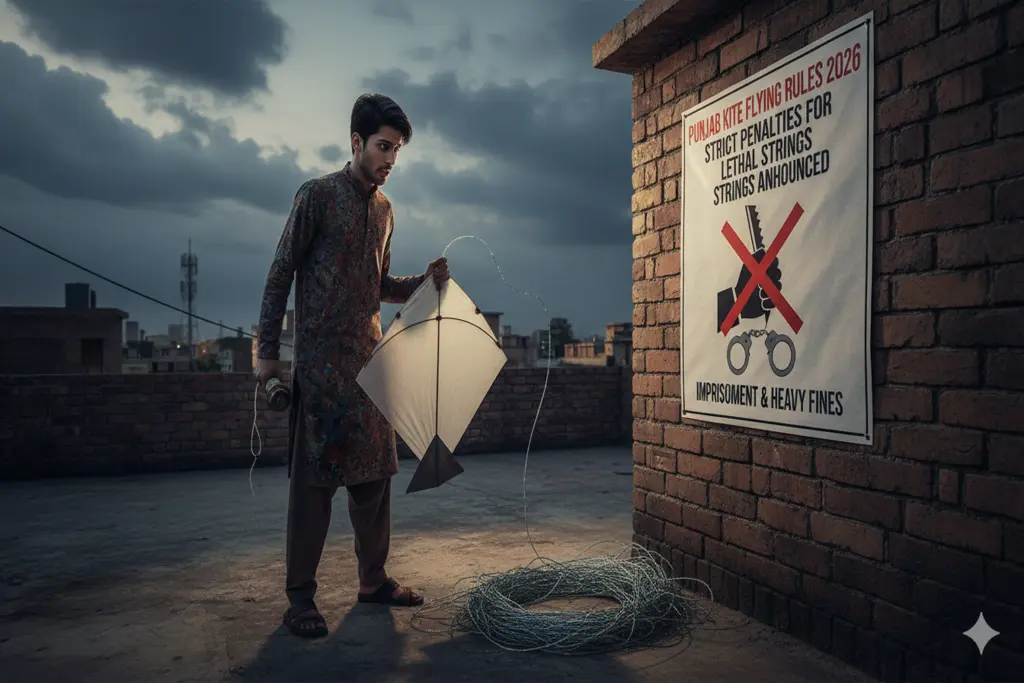
Under the Punjab Regulation of Kite Flying Act, there is severe prohibition on the use of metallic wires, nylon cords (tandi), and cotton threads covered with crushed glass or other sharp chemical mixtures (maanjha). The government has clearly outspoken that they would not accept the playing around with human lives under the guise of entertainment.
The structured penalties under this law include:
For Kite Flyers: Anyone caught flying kites using forbidden strings or engaging in unauthorized kite flying can face 3 to 5 years of imprisonment and a fine of up to Rs. 2 million.
To Manufacturers and Dealers: There are even more severe repercussions on those who are involved in the production, transport, storage or sale of the prohibited chemical strings. 5 million.
Non-Bailable Offense: It is stated in the law that such offences are cognizable and non-bailable, and therefore the police are allowed to arrest the suspects without a warrant.
New regulations for kite flying in Punjab announced for 2027.
— PMLN (@pmln_org) May 2, 2026
🔹The minimum height of boundary walls on rooftops has been set at at least 3.5 feet.
🔹Gathering more people than the allowed capacity on rooftops will also not be permitted. pic.twitter.com/CoI6udFex6
Parents Held Accountable for Minor Violators
The 2026 laws highly restrict children below the age of 18 to play with kites. When a minor is found committing an offense against the laws, the minor will be subjected to the Juvenile Justice System Act of the country. But the burden that is put on the parents or legal guardians is the financial one:
A fine of Rs. 50,000 will be imposed on the first offense.
Upon a second violation, the penalty increases to Rs. 100,000.
If the parents fail to pay the fine, it will be strictly recovered by the state as arrears of land revenue.
Mandatory QR Codes for Kites and Strings
In the past, tracking down the manufacturers of lethal strings was nearly impossible. To overcome this hurdle, the government has integrated modern tracking technology into the system:
Every manufacturer, trader, and seller of permissible kite-flying material must be registered with the relevant Deputy Commissioner’s office.
Only pure cotton thread with no more than 9 strands is legally permitted.
Every registered shopkeeper and every single kite produced must feature a unique QR Code. In the event that an illegal string or a dangerous kite is involved in an accident, the code can be scanned by the law enforcement to trace the specific manufacturer or retailer of a particular product.
The Punjab Kite Flying Rules are firmly enforced to ensure safety of life and property of the general population. While traditional kite flying with registered cotton threads is allowed during specified dates, crossing the thin legal line with sharp maanjha will directly land violators behind bars.
READ: More Informative Content