


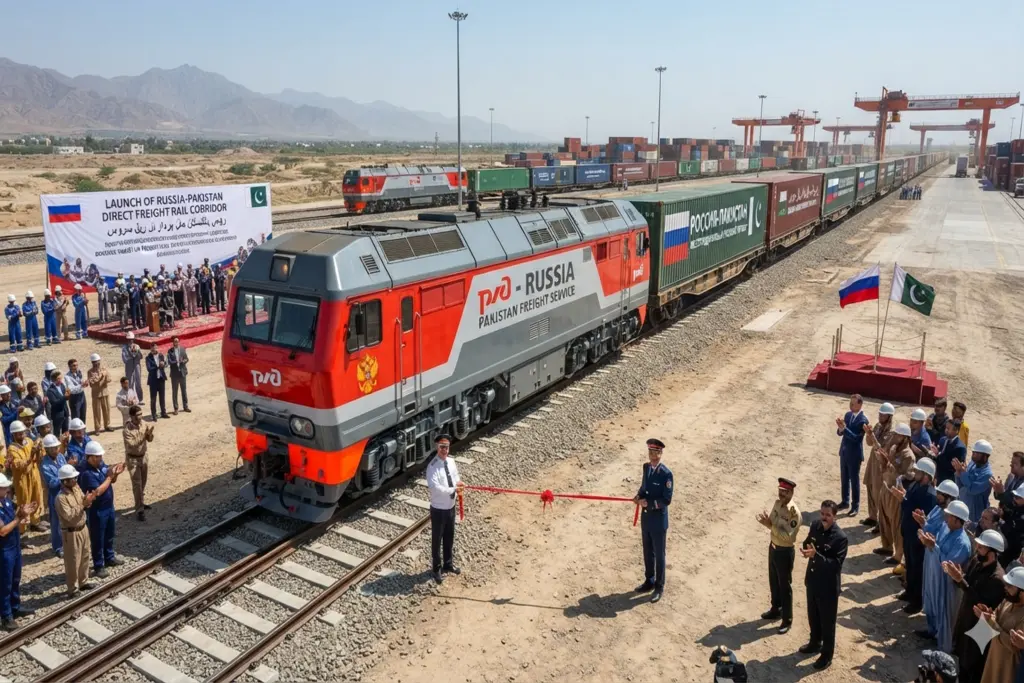
Pakistan and Russia are entering a transformative phase of economic integration with advanced preparations underway to launch their first-ever direct overland freight rail service. Albert Khorev, the Russian Ambassador to Pakistan said that in both directions this long-term railway track would link Pakistan’s major industrial cities, Karachi and Faisalabad, with Moscow. A key element of the connectivity project is to build a safe and fast shipping route across the Eurasia land mass that avoids potentially turbulent sea ports.
Strategic Route Alignment and Infrastructure Framework
The high-level layout of this international transit network has been jointly vetted by the Ministry of Railways in Islamabad and the Russian diplomatic mission:
Primary Trade Corridors: The network will run seamless operations simultaneously along two main routes: Moscow-to-Karachi and Moscow-to-Faisalabad.
Trilateral Extension: There is active diplomatic work going on on the formal extension of Belarus to the freight landscape of Eastern Europe.
Geographic Transit Paths: The freight trains will use the infrastructure of the International North-South Transport Corridor (INSTC) that cuts through Kazakhstan, Turkmenistan and Iran to reach Pakistan.
Geopolitical Friction and Implementation Timelines
According to diplomats, the Russia-Pakistan freight rail line was initially planned to be launched earlier. But as geopolitical tensions continued to escalate in the Middle East, particularly the intense cross-border tensions between Iran and Israel and short operational closures of transit routes, several logistical delays were forced. With regional transit routes stabilized, both nations are finalising technical protocols and freight tariffs to commence inaugural test runs.
Projected Economic Impacts and Cargo Dynamics
The operationalization of this direct rail link is projected to significantly scale up bilateral trade volumes, which currently stand below their true potential. The targeted cargo distribution highlights the mutual economic advantages:
| Commercial Sector | Pakistan Exports to Russia | Russian Imports to Pakistan |
| Textiles & Apparel | Finished garments directly from Faisalabad and Karachi | Instant, low-tariff access to competitive consumer markets |
| Perishable Agrifoods | Premium Pakistani rice, mangoes, citrus, and fresh produce | Minimal spoilage due to vastly reduced transit times over sea freight |
| Energy & Heavy Industry | Specialized surgical instruments and high-grade sports gear | Massive imports of discounted Russian crude, LNG, steel, and fertilizers |
| Logistics Optimization | Bypasses costly maritime routes around the Arabian Peninsula | Substantial reduction in per-ton freight shipping costs |
Macro Outlook: Connecting the Urals to the Indian Ocean
For people of Moscow, this is a strategic necessity to secure commercial access to the warm waters of the Arabian Sea through Karachi and Gwadar ports, a demand that has been present for a long time. The network solidifies Pakistan’s position as an important geopolitical trade hub, linking Central Asia with the world’s sea lanes. Pakistan Railways and private transport conglomerates are screening eligible corporate exporters to handle the initial wave of outbound cargo bookings.