



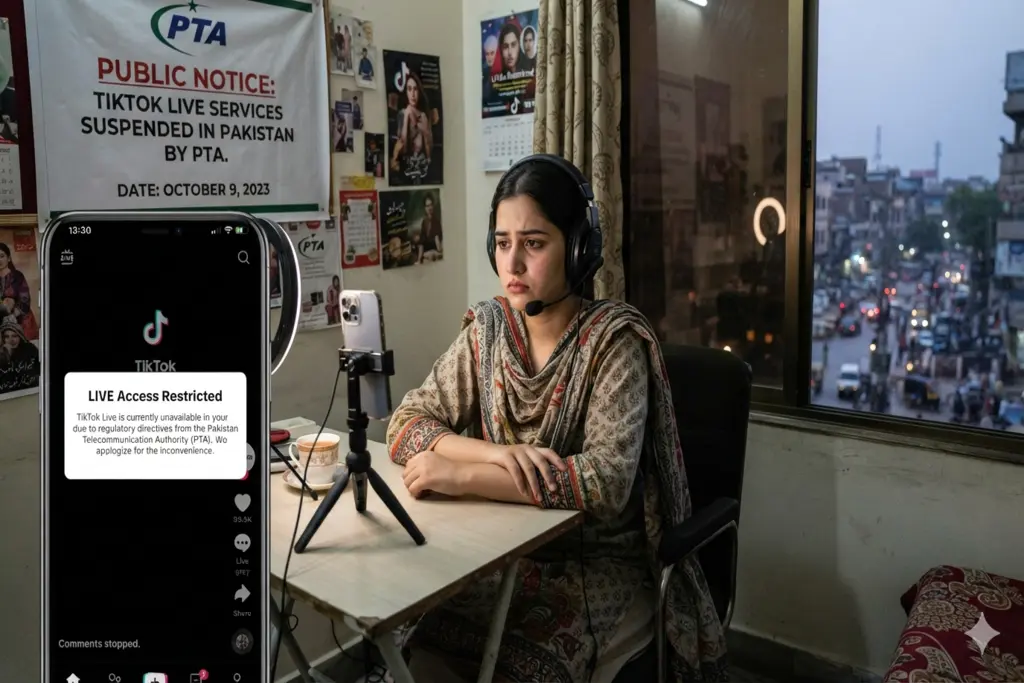
TikTok is quickly becoming one of the most popular platforms for content creators, digital influencers and casual users across Pakistan. But often misinformation spreads around social networks about how its features are working. There was a lot of speculation lately regarding the government’s or Pakistan Telecommunication Authority’s (PTA) new nationwide ban on TikTok Live.
The reports triggered significant worry for influencers in the area, who depend on real-time streaming to have interaction with their viewers and generate income from their material. To remove the increasing ambiguity, the telecom regulator took it upon itself to officially say what the reality is.
Has the PTA Issued a New Ban on TikTok Live?
The Pakistan Telecommunication Authority (PTA) explicitly debunked the viral online rumours confirming that there is no new regulation issued by it to block TikTok Live in Pakistan. The regulator said the TikTok app is still available and functioning normally for consumers to share their short video clips.
Local users who experienced sudden problems accessing the internet or their apps are facing a larger temporary technical issue or a regional update of the apps, as per official statements, and not a targeted government-imposed blackout.
The Reality Behind TikTok Live Accessibility in Pakistan
Why does the Live streaming feature on TikTok often not appear in users’ interfaces if there is no official active ban? In reality, there is a structural constraint set up at the corporate level:
Platform-Level Decision: TikTok has clearly never launched or promoted its inbuilt live broadcasting capabilities natively in the Pakistani region.
Previously, Pakistani regulators and ByteDance have reached some agreements on temporary bans of apps, and both sides would agree that the main app will be allowed to run while the Live feature will be disabled by the platform on a regular basis.
Localized Resolutions: Legislative bodies debate online safety and content filters from time to time, but recent localized resolutions calling for a crackdown on social media have not changed this pre-existing situation.
How Local Content Creators Bypass the Restriction
Despite the lack of native regional support, many prominent Pakistani digital creators are regularly seen broadcasting live on the platform. Industry sources reveal that influencers rely on unofficial, localized workarounds to temporarily activate the feature:
Foreign SIM Cards: Operating mobile devices utilizing active roaming SIM cards registered in countries where TikTok Live is officially supported.
Location Spoofing: Employing Virtual Private Networks (VPNs) alongside clearing local device caches to mask geographic indicators.
Proxy Management: Having co-admins or relatives located overseas set up, verify, and launch the broadcast sessions from abroad.
Regulatory and banking bodies have raised flags concerning these bypass methods. Because these streams often generate external monetary tips and virtual gifts, the State Bank of Pakistan (SBP) monitors unchecked, non-documented foreign financial inflows to ensure financial compliance. Furthermore, utilizing unauthorized application patches or unverified hardware configurations does not change a device’s official IMEI registry status.
Content Moderation Framework and Future Outlook
There is no blanket ban on live streams, but the authorities are extremely vigilant about the security of digital media and cultural values. The PTA adheres to the legal guidelines of the Prevention of Electronic Crimes Act (PECA) and has the authority to monitor internet traffic for illegal, explicit or inappropriate material.
TikTok regularly adjusts the automated filters it applies to ensure that the app’s functionality meets local requirements. The platform alone blocked more than 22.5 million videos that violated the policies in the country during the first quarter of 2026. Users are encouraged to ignore any rumors on social media about services, and verify that they are available through official ministerial sites or through official announcements from the PTA Press Center.