




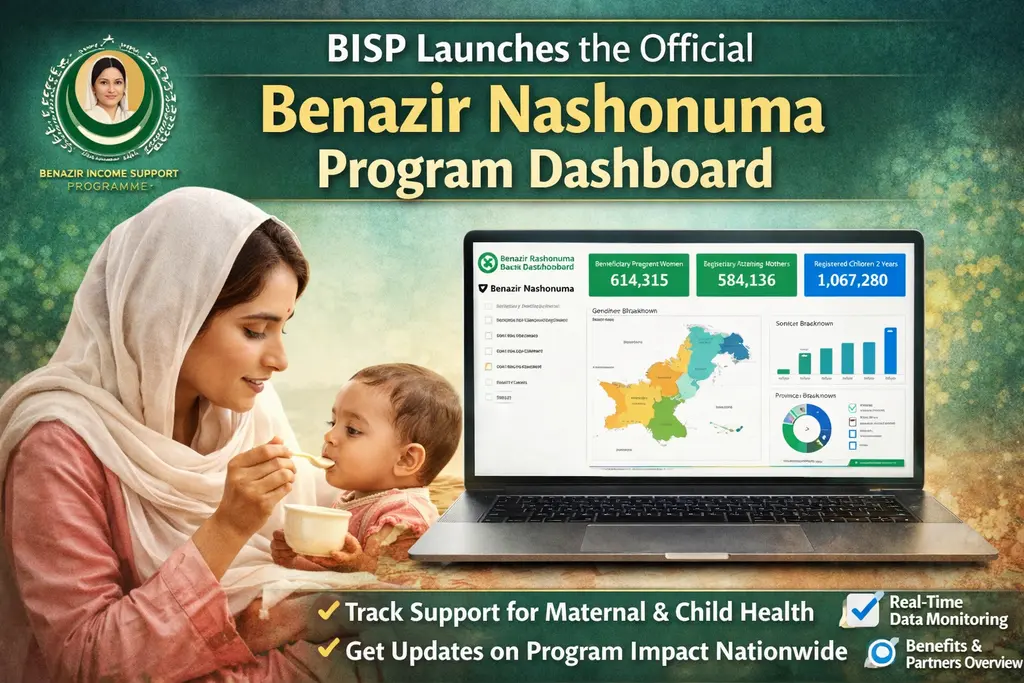
The Benazir Nashonuma Program Dashboard is an officially introduced real-time digital tool in a massive leap of maternal and child health in Pakistan, the Benazir Income Support Program (BISP). The following technology-driven project is planned to be used specifically to track and enhance the BISP flagship stunting-prevention program.
Syed Imran Ahmed Shah, the Federal Minister of Poverty Alleviation and Social Safety with chairperson of BISP Senator Rubina Khalid and the Country Director of World Food Program Coco Ushiyama accompanied her.
What is the Benazir Nashonuma Program Dashboard?
The Benazir Nashonuma Program Dashboard hopes to transform child nutrition surveillance in Pakistan but it is not an easy task considering that the country is so large and tracking the health initiatives would require a lot of time. These are the main aspects that prompt this digital launch:
Live Monitoring: It allows real-time knowledge in order to keep a close watch on the ground performance of the program.
Improved Accountability: The dashboard enhances accountability by ensuring that the data is readily available and assists in the formation of improved policy reactions at the federal and provincial tiers.
Smart Decision Making: It is a proponent of decision-making that is data-driven in both health and social protection domains.
Critical Tracking: The most important one is that it monitors key nutrition intervention of children and in particular, it targets the critical period of the first 1,000 days of a child life.
How the Benazir Nashonuma Program Dashboard Improves Child Health
Addressing the issue of malnutrition is a group undertaking. The main idea of using the Benazir Nashonuma Program Dashboard, according to Senator Rubina Khalid, is to achieve healthier children and address the nutritional issues that are especially widespread amongst young girls.
This dashboard and the Nashonuma program more broadly have become successful due to the technical assistance of large international organizations, such as the World Food Program (WFP), UNICEF, and theWorld Health Organization (WHO). The difference is already quite with the program having already reached more than four million women and children already, and giving them the necessary nutrition in those crucial early years.
Extra Relief: Ramadan Stipend Increase
In addition to the exciting tech upgrade for health tracking, BISP also brought some much-needed good news for families struggling with inflation. Alongside the dashboard announcement, the program confirmed an increase in stipend amounts across its flagship programs just in time for Ramadan.
This relief package will benefit 10 million registered beneficiary families across Pakistan. Specifically, the Benazir Kafalat quarterly stipend has been increased by Rs. 1,000—jumping from Rs. 13,500 to Rs. 14,500. These enhanced payments will be disbursed during the holy month of Ramadan.
1. What is the Benazir Nashonuma Program Dashboard?
It is a real-time digital tool by BISP to monitor child nutrition and prevent stunting during the first 1,000 days of life.
2. Who benefits from the Benazir Nashonuma Program?
It provides essential nutrition and health support to over four million women and children across Pakistan.
3. How much is the BISP Ramadan stipend increase?
BISP has increased the Benazir Kafalat quarterly stipend by Rs. 1,000, raising the total payment from Rs. 13,500 to Rs. 14,500.