


The Federal Budget of Pakistan for Fiscal Year 2026–27 (FY27)[5] will be presented to Parliament on Wednesday, June 12, 2026. Linked to the need for rigorous fiscal consolidation through ongoing International Monetary Fund (IMF) packages, the Federal Board of Revenue (FBR) is eyeing a record-high collection target of more than 15 trillion PKR.
This delayed budget is the most important economic milestone of the year for the salaried class. Which means the closest thing Pakistan has to instant economic relief depends in large part on how these reforms exactly change or not change income tax slabs which ultimately determines what amount working professionals actually take home every month.
Adjustments to the Tax-Free Income Threshold
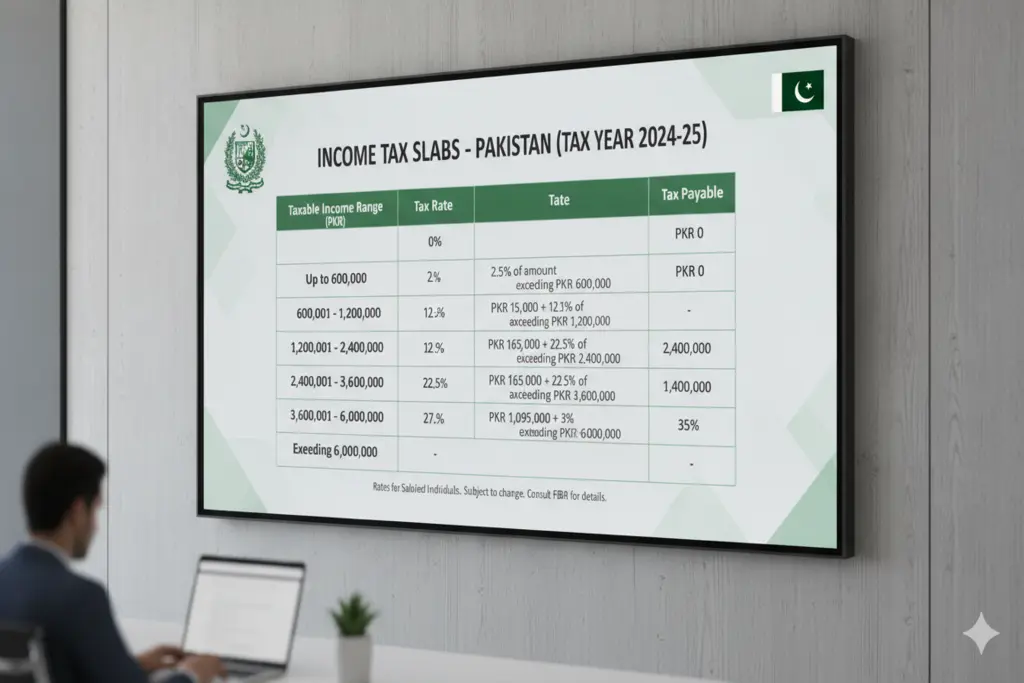
Under the old tax regime, income tax was paid only by those who were earning more than 600,000 PKR per year (50,000 PKR per month).
The Expected Change: With inflation having been never before seen in its 3rd-year running, labor unions and economic think tanks have lobbied heavily for this limit to be raised to as high as PKR 1.0 Million or even PKR 1.2 Million per annum (per member).
Impact on Take Home Pay: Salaried professionals in the bracket of PKR 50,000 to PKR 100,000 monthly spend most impact will be felt as this limit rises, since both less direct withholding tax and more liquidity into their salary every month.
Rationalization of the Middle-Income Tax Bands
The existing structural framework levied progressive tax rates ranging from 15% to 27.5% on middle-class salaried employees earning between 150,000 PKR and 333,000 PKR per month. This segment historically shoulders the heaviest proportional tax burden relative to disposable income.
Proposals circulating within the FBR for the June 12 budget suggest a radical “rationalization” phase. To balance IMF demands with political stability, the government is considering lowering the entry-level tax brackets (e.g., cutting the tax rate for individuals earning under 100,000 PKR from 5% down to 2.5%), while widening the brackets for mid-tier executives to buffer them against hyper-inflation.
Re-evaluation of the Highest Income Slab and Surcharges
For high-earning corporate employees bringing in over 6,000,000 PKR annually (above 500,000 PKR per month), the maximum tax bracket peaked at a steep 35%.
As the government aims to boost direct tax collection from high-net-worth individuals while remaining globally competitive for corporate talent, the FY27 budget may see amendments to the top tier. Suggestions include keeping the maximum baseline rate around 32.5% to 35% but expanding the active applicability of super taxes or supplementary wealth surcharges on ultra-high salaries. Any downward rationalization here will boost the disposable cash flow of top-tier corporate managers.
Heavy Penalties and Indirect Surcharges on Non-Filers
A primary objective of the delayed FY27 budget is expanding the formal tax net. If you are a salaried individual whose name does not actively appear on the Active Taxpayers List (ATL), the upcoming budget changes will heavily penalize your net earnings.
The government plans to sharply increase withholding taxes on banking transactions, cash withdrawals, utility bills, and international credit card transactions specifically for non-filers. Therefore, even if a non-filer’s direct salary tax slip remains unchanged, their real-world take-home spending power will shrink significantly due to these punitive indirect fiscal measures.
Salaried Class Tax Matrix: Old Slabs vs. Expected FY27 Changes
To understand how your specific bracket might behave after the June 12 announcement, see the estimated comparative projections below based on monthly gross income:
| Monthly Income (PKR) [11, 12] | Old Tax Rate (FY26) | Expected Tax Rate (FY27) | Expected Take-Home Pay Impact |
| Up to 50,000 | 0% (Exempt) | 0% (Exempt status retained) | No change in net monthly pay |
| Up to 100,000 | 5% | 2.5% (Proposed reduction) | Minor increase in monthly take-home pay |
| 150,000 to 333,000 | 15% to 27.5% | Step-wise tax bracket rationalization | Relief targeted at middle-tier professionals |
| Above 500,000 | 35% Baseline | 32.5% to 35% + Targeted Surcharges | Higher tax retention on executive packages |