




In a significant move to provide financial relief to inflation-weary consumers, the National Electric Power Regulatory Authority (NEPRA) has announced a substantial reduction in base electricity tariffs and monthly fuel price adjustments (FPA). As peak summer temperatures drive up power consumption across Pakistan, this price cut is a welcome development for millions of households. However, the application of this relief is highly conditional, meaning not every consumer will see a lower bill.
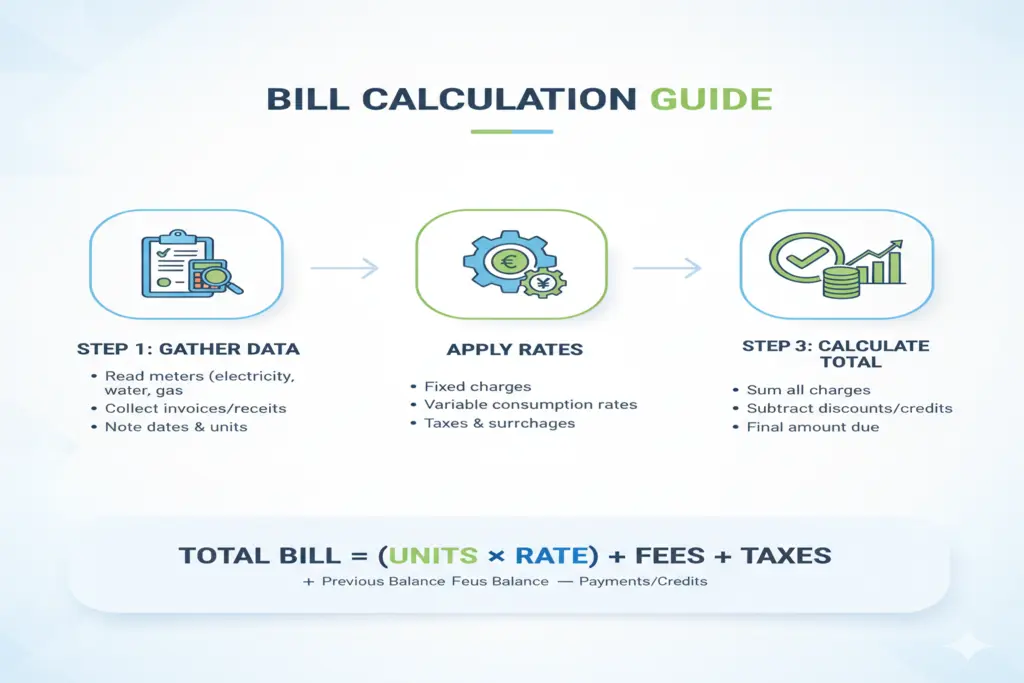
Understanding how these changes impact your monthly utility budget is essential. Use this comprehensive layout to learn how to calculate electricity bills calculated manually under the revised tariff framework.
5 Steps to Calculate Your Reduced Electricity Bill
With the newly approved NEPRA rates, you can gauge your monthly household utility expenses by following this step-by-step mathematical breakdown:
1. Record Your Consumed Units from the Meter
Examine the digital display on your physical electricity meter to note your current cumulative reading, or check the “Units Consumed” segment on your previous month’s bill statement. Pakistan utilizes a progressive billing structure, meaning that as your consumed units cross specific threshold slabs, the base price per unit increases exponentially.
2. Verify Your Protected vs. Non-Protected Consumer Status
Look at the upper left or right designation boxes on your paper statement to confirm your status. If your household successfully consumed fewer than 200 units consecutively for the last six months, you are classified as a Protected Consumer, giving you access to heavily subsidized baseline rates. Missing this cap even once shifts you to a Non-Protected tier.
3. Apply the Reduced Base Tariff per Slab
Identify the newly lowered base rate for your applicable slab following NEPRA’s recent price cut. For example, if the non-protected slab for 101–200 units was lowered from 30.86 PKR to 27.20 PKR, multiply the exact number of units falling into this slab by the new rate rather than the historical peak tariff.
4. Factor in the Monthly Fuel Price Adjustment (FPA)
Your gross utility cost is not composed of the base tariff alone. NEPRA calculates monthly fluctuations in generation costs via the Fuel Price Adjustment (FPA). Look at the current month’s approved FPA mechanism (which has turned negative or dropped significantly due to better hydel/nuclear mix components). Multiply this variable FPA rate by your total consumed units and add it to your baseline total.
5. Add Government Taxes and Fixed Surcharges
To arrive at your final payable amount, you must layer the standardized statutory government taxes over your net power cost:
- General Sales Tax (GST): Calculated at a flat rate of 18% of the total cost of electricity.
- PTV Fee: A fixed institutional surcharge of 35 PKR for residential connections.
- Financing Cost (FC) Surcharge: A variable per-unit fee used to service circular debt.
Summing up these five key components allows you to reliably calculate your net liability before the official paper slip arrives.
The 3 Categories Excluded From the Price Cut
NEPRA and the Ministry of Energy have clarified that this relief package does not apply across the board. The following three prominent consumer categories are completely excluded from the price reduction:
1. Lifeline Consumers (0–100 Units Consistent Usage)
Lifeline consumers are highly subsidized households that consistently restrict their monthly consumption to under 50 or 100 units. Because their baseline power tariff is already frozen at nominal rates (ranging between 4 PKR to 7 PKR per unit) through massive cross-subsidies, NEPRA’s new structural tariff cuts will not alter their bills; their existing rates remain unchanged.
2. Commercial and Industrial Connections
This targeted price cut is explicitly designed as a domestic relief package for residential consumers. Commercial configurations (retail outlets, corporate offices, and shopping plazas) operating on A2 commercial tariffs, alongside large-scale industrial manufacturing units, are excluded from the price cut. They will continue to pay their existing higher tariffs and fixed capacity charges.
3. High-Loss Feeders and Non-Paying Sectors
Areas characterized by rampant electricity theft (line losses) or regions where aggregate technical and commercial (AT&C) recovery metrics fall drastically below regulatory thresholds are excluded from the relief package. Consumers connected to these high-loss distribution feeders will continue to experience standard load management patterns and old peak pricing as part of circular debt management strategies.
Comparative Domestic Tariff Slab (Estimated Matrix)
| Consumer Category [27, 28, 29] | Monthly Units Consumed | Previous Base Rate (Per Unit) | New Reduced Base Rate | Projected Impact on Monthly Bill |
| Protected Status | 1 – 100 Units | 11.69 PKR | 11.69 PKR (No Change) | Consistent with fixed historical subsidy |
| Non-Protected (Slab 1) | 1 – 100 Units | 24.21 PKR | 21.50 PKR | Visible reduction in net payable sum |
| Non-Protected (Slab 2) | 101 – 200 Units | 30.86 PKR | 27.20 PKR | Notable relief for middle-class homes |
| Commercial Tier | All Units | 45.00+ PKR | 45.00+ PKR (No Change) | Completely excluded from price cut |