



Immigration, Refugees, and Citizenship Canada (IRCC) recently released its temporary residence update. The new official data shows extended timelines for global applicants, hitting Pakistani nationals particularly hard. Aspiring students and skilled workers from Pakistan now face longer queues to secure their visas. This regulatory shift creates substantial hurdles for thousands planning their departures in the upcoming quarters.
Canada Study Permit Delays: What Are the New Timelines?
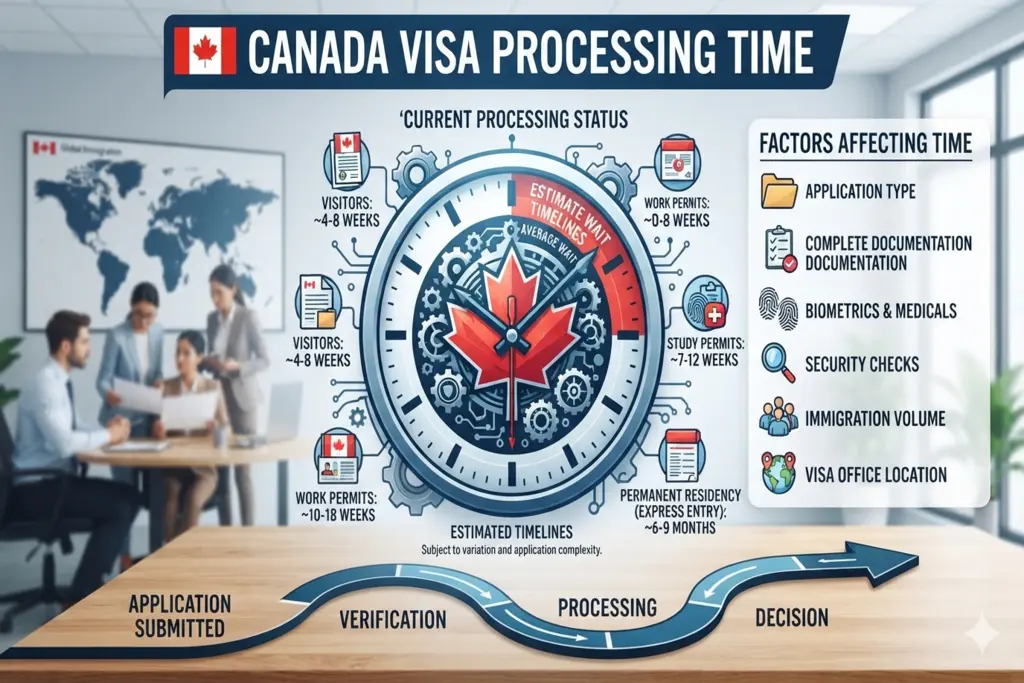
The official processing window for Pakistani study permit applications has officially stretched to 7 weeks. This marks a noticeable increase from the previous standard timeline.
The primary catalyst for this shift remains the permanent termination of the Student Direct Stream (SDS) program. Previously, the SDS program fast-tracked Pakistani student applications within 20 calendar days.
All students must now navigate the Standard Regular Routing stream.
Peak academic intake cycles create extreme application volumes for officers.
Biometric appointment bottlenecks routinely stretch real-world waits to 12–16 weeks.
Canada Work Permit Processing
The revised immigration framework also brings challenging news for skilled professionals. For applicants lodging files from outside Canada, the standard wait time is now 11 weeks.
While IRCC has accelerated internal transitions for onshore applicants, offshore processing pipelines face heavy administrative gridlock. Pakistani technical experts, trade workers, and professionals must anticipate nearly three months of structural waiting. This timeline assumes that the initial document submission contains zero discrepancies or requests for information.
Canada Universal Extended Backlogs: Visitor Visas and Super Visas
The administrative slowdown is not limited to academic or professional streams. Temporary visitor visa routes and family reunification channels are experiencing parallel systemic delays.
Temporary Resident Visas (TRVs): Standard tourist entry processing for Pakistanis has climbed to 43 days.
Super Visas for Parents/Grandparents: This channel has suffered the most severe adjustment, with wait times skyrocketing to 196 days (approximately 6.5 months).
Root Causes Behind the Mounting IRCC Backlogs
According to internal administrative metrics disclosed by IRCC, three structural issues are driving these delays:
Unprecedented Application Volume: Despite finalizing 1.2 million temporary residency files in early 2026, the active inventory retained over 404,000 pending files.
Enhanced Document Scrutiny: Fraud prevention teams have intensified checks on financial proofs, property valuations, and bank verification certificates.
Macro Population Caps: The Canadian federal government is actively enforcing a policy to lower temporary residents below 5% of the total population, triggering stricter selection thresholds.
Critical Recommendations for Pakistani Applicants
To minimize the risk of missing semester starts or employment start dates under the new Canada visa processing time standards, applicants should execute the following strategy:
Advance Submission Window: Submit your comprehensive visa application at least 6 to 8 months ahead of your planned travel or course commencement.
Proof of Financial Adequacy: Align your financial statements precisely with the updated living expense threshold of $22,895 CAD, ensuring clean, verifiable banking histories.
Upfront Medicals and Biometrics: Book medical tests at approved centers (Islamabad, Karachi) immediately upon filing. IRCC does not trigger the official processing countdown until biometric data maps to your portal profile.