




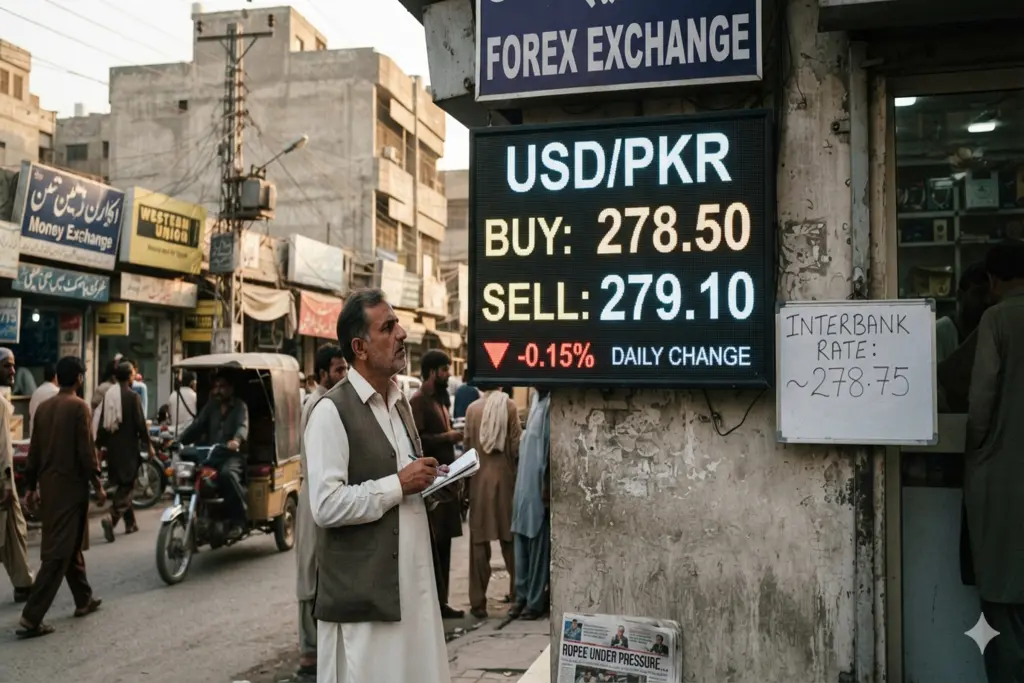
The Pakistani Rupee ended July on an uneventful but significant note. The currency closed at 277.80 against the US Dollar on July 31, gaining just a paisa on the day. It may seem like a small move, but it is over seven months of consistent gains for the rupee, and that streak is worth understanding if you send money home, run a small business or just do your monthly grocery shopping in rupees.
A Big Backstory With a Small Gain
One paisa does not appear much. But today’s currency update said this was the 210th day in a row that the rupee closed in the green or was steady against the dollar, a streak that has lasted since Dec. 25, 2025. For a currency that has bounced from crisis to crisis for years, over seven months of uninterrupted stability against the dollar is a truly rare run.
What Other Currencies Did On The Same Day
Different currencies told a different story for the rupee on July 31. Figures for the same day show it was losing ground elsewhere, although it held firm against the dollar:
•Stable against UAE dirham and a marginal one paisa gain against Saudi Riyal.
•Down Rs. 2.47 against the British Pound. Down Rs 1.64 against the euro.
•Down to Rs. 2 against the Australian dollar.
•Down 56 paisa against the Canadian dollar.
This is an important detail for Pakistan’s overseas workers. The rupee was mostly flat in the Gulf, which takes a big chunk of remittances, so families dependent on relatives in Saudi Arabia or the UAE saw little change. Those who have relatives in the UK, Europe, or Australia would have seen slightly less converted into rupees on this day.
What a Stable Dollar Means for Regular Families
A dollar rate that moves little for more than 200 days in a row offers a sort of predictability that Pakistani households rarely get to experience:
•Monthly budgeting is easier if the exchange rate is not wildly swinging from one week to the next.
•Families waiting on remittances will see about the same amounts coming into their accounts month after month, not sudden drops.
•When the rate is stable, businesses that price goods in dollars can plan with more certainty.
•A more tranquil currency market typically means fewer sudden stories about inflation purely from currency-induced shocks.
Quick checklist before you change money
•Even a one-paisa move is reported on a daily basis.
•So it is better to check the latest official rate before you go to a currency exchange counter.
•If you are sending money from the UK, Europe or Australia then compare the dollar rate against other currencies too such as the Pound or Euro.
•Avoid unlicensed street dealers; prices can vary greatly and you are unprotected if something goes wrong.
•If you send or receive remittances regularly, you should follow the day-to-day currency table and not react to a headline number at any one time.
Conclusion
The rupee’s slow, steady run against the dollar won’t make headlines like a crash does, but stability is often more valuable than a dramatic swing for millions of Pakistani households. Whether you’re budgeting for your groceries, waiting for money from a relative abroad, or running a small import business, keep a close eye on the Pakistani Rupee vs. US Dollar rate because in an economy this sensitive to the dollar, even small steady wins count.
References