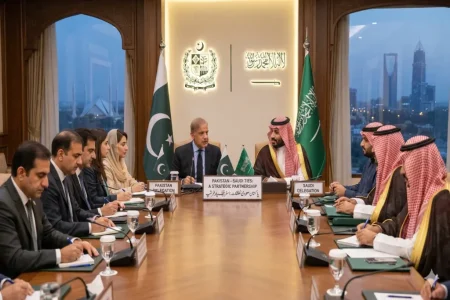




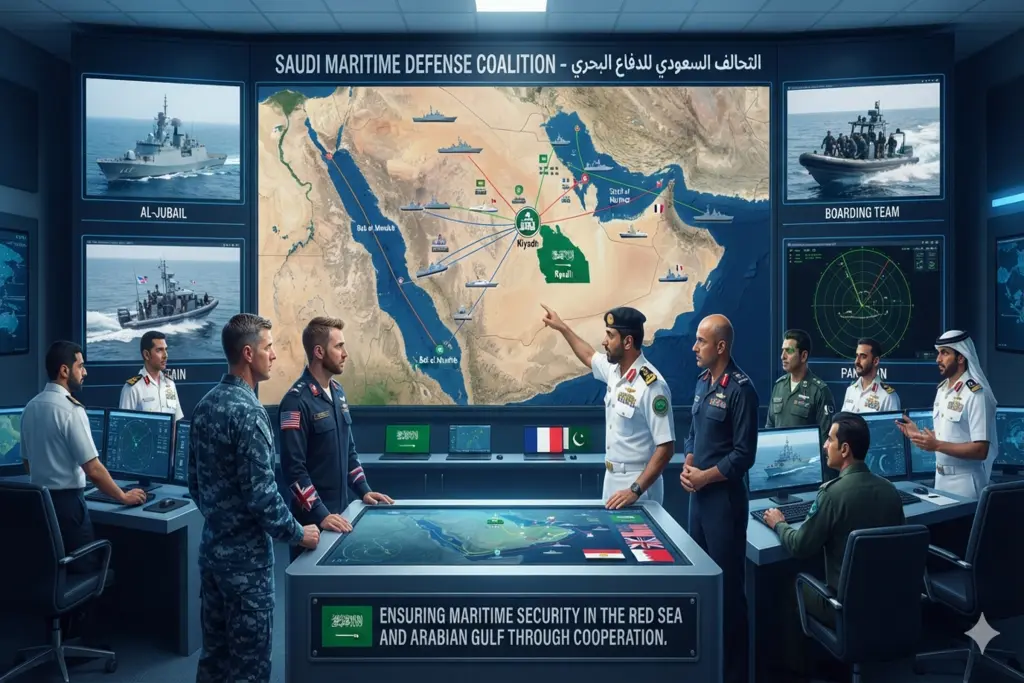
Pakistan has formally become a member of the newly-established Saudi-led Multinational Maritime Defense Coalition to strengthen security measures in the region through maritime means. In a high-level meeting in Riyadh, 14 founding countries, including Pakistan, also signed the strategic charter of the coalition. This new military and maritime alliance is aimed at protecting very sensitive international shipping lanes, particularly in the Red Sea, the Gulf of Aden and the very critical Bab al-Mandeb strait.
Structure and Objectives of the Saudi Maritime Defense Coalition
The Riyadh founding meeting attracted representatives and top military attachés from 51 countries and the EU, demonstrating the global support for this effort. Saudi Arabia will lead and have its headquarters in the alliance.
The three operational pillars of the organizational blueprint of the coalition are:
JCC (Joint Command and Control Centre): To monitor and coordinate the allied naval assets in real time.
Combined Maritime Operations Center: Established to take rapid action to counter potential maritime attacks, both tactical and military.
General Secretariat: An official permanent office in Riyadh to oversee diplomatic and administrative matters.
This alliance’s mission is to shield commercial cargo ships, oil tankers and deep-sea energy facilities from non-state actors and pirate groups and ensure the operations of global supply chains.
Pakistan’s Strategic Integration and Naval Role
The Pakistan Navy has a decorated history of spearheading international maritime task forces across the Arabian Sea and the Gulf of Oman. Integrating into this fresh Saudi Maritime Defense Coalition cements Pakistan’s defense ties with Riyadh while directly defending its own economic lifelines.
Pakistan relies heavily on these specific Middle Eastern sea lines of communication for its primary crude oil and petroleum imports. Following recent drone and missile strikes on commercial shipping vessels in the Red Sea corridor, close strategic consultations between Pakistani Prime Minister Shehbaz Sharif and Saudi Crown Prince Mohammed bin Salman accelerated Pakistan’s formal accession to the pact.
Fourteen countries, including Pakistan, have affirmed their support for Multinational Maritime Defense Alliance project aimed at enhancing maritime security and protecting international waterways@OfficialDGISPR @ForeignOfficePk #RadioPakistan #News https://t.co/4uEwHiews5 pic.twitter.com/ieW54TCx94
— Radio Pakistan (@RadioPakistan) July 30, 2026
Defensive Mandate and List of Founding Nations
The Saudi Ministry of Defense has emphasized that the coalition is “strictly defensive” in nature. It is not designed to target any specific sovereign state, but rather to uphold international maritime laws and UN charters regarding free navigation in open waters.
The 14 founding signatory nations include:
- Saudi Arabia (Lead & Host Country)
- Pakistan
- Turkiye
- Egypt
- Kuwait
- Bahrain
- Qatar
- Jordan
- Yemen
- Bangladesh
- Nigeria
- Sudan
- Djibouti
- Somalia / Comoros
Significantly, other regional neighbours such as the United Arab Emirates (UAE) and Oman have not yet joined the original founding tier, but the UAE’s capital, Riyadh, has stated the doors remain open for any countries interested in “sharing of knowledge” and “coordinated naval exercises.