


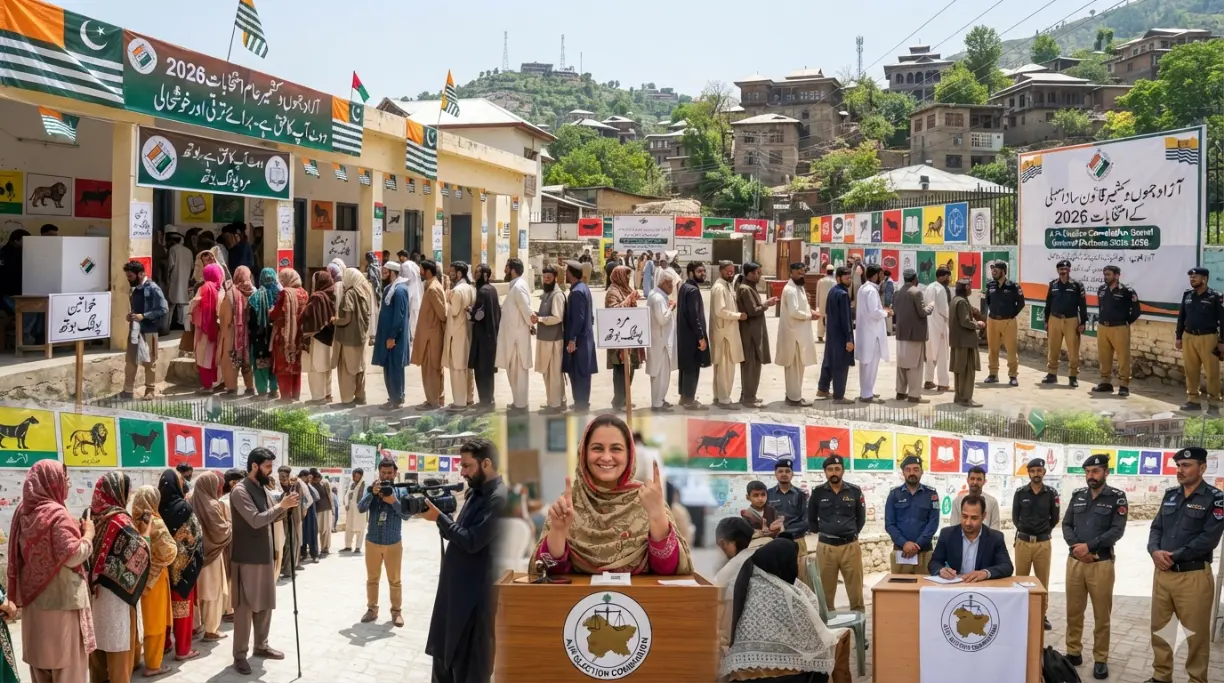
The second phase of Azad Jammu and Kashmir Legislative Assembly elections ended on Sunday with voting and the early trend is clear. The PML-N is ahead of all other parties that are contesting the elections. For families across Muzaffarabad, the refugee constituencies and the Kashmiri communities settled in Pakistan, the second phase carries real stakes for who forms the next AJK government.
What occurred in the second phase?
Polling was held for 19 to 20 constituencies, including seven or eight seats in the Muzaffarabad Division and 12 reserved seats for Kashmiri refugees residing in Pakistan. Voting was postponed to Tuesday in LA-27 and LA-28 constituencies due to bad weather and landslides blocking election staff from reaching remote polling stations.
Unofficial and provisional counts suggested PML-N would win 13 to 14 of the declared seats, while PPP would win four to five. Former Prime Minister of Azad Jammu and Kashmir Raja Muhammad Farooq Haider won his seat in Muzaffarabad-VI on a PML-N ticket and the party swept many of the Jammu refugee constituencies. PPP did manage some wins including seats in Muzaffarabad and a Kashmir Valley seat.
Why this phase is more important than the first
The results of both stages have been combined and it is being claimed that PML-N has crossed the 20-seat mark, which would enable it to get a simple majority on its own without having to form a coalition. This is significant for AJK politics where governments have often depended on alliances to stay in power.
Allegations of Rigging by PPP
Some people do not passively accept the results. The PPP chairman Bilawal Bhutto-Zardari has rejected the entire process and accused the PML-N of rigging votes, an accusation the PML-N has strongly denied. It is normal to have such disputes after AJK polls and the official notification of results generally puts an end to the matter, but political tension in the region often continues for weeks afterwards.
What to Watch Next for Voters and Observers
•Official declaration of results by AJK Election Commission.
•Result of the re-poll in LA-27 and LA-28.
Can pml-n muster the numbers to form a government alone.
•The reaction of the PPP and any formal complaints filed with the electoral authorities.
•Reaction from smaller parties and independent candidates, who could still be kingmakers.
Conclusion
The results of the second phase of AJK elections have bolstered the position of PML-N and moved the province closer to a clear government but the final numbers will also be determined by the remaining seats and the way the Election Commission deals with the objections filed by the PPP. For now, the message from the ballot box is simple: PML-N has the momentum and we will see in the coming days if that momentum translates into a working majority.
References