




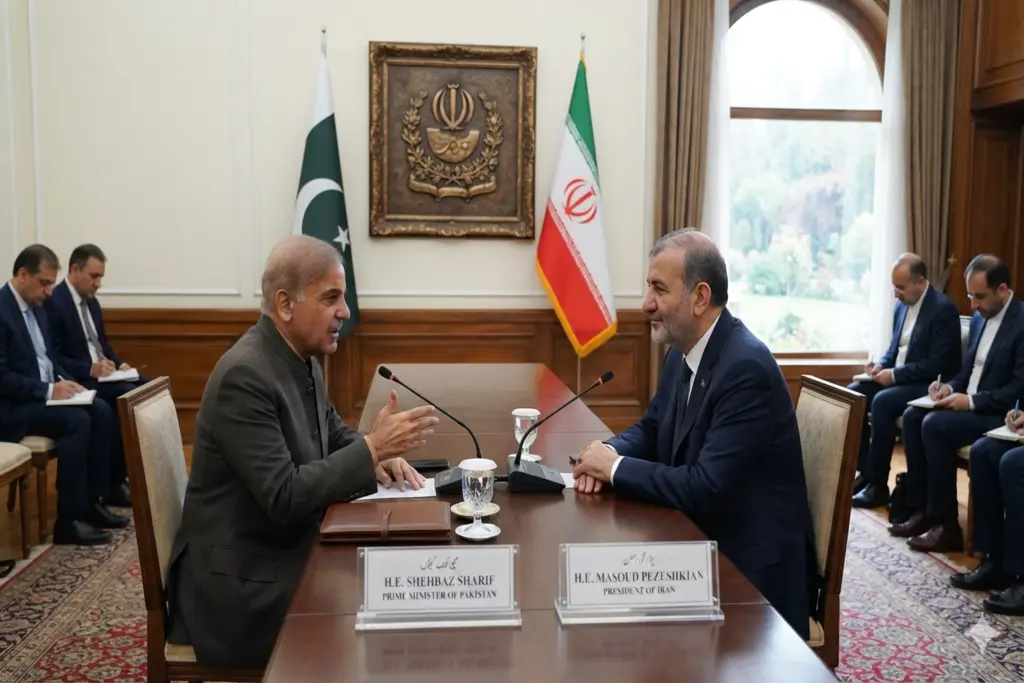
There’s a lot happening in New York this week, and most of it hasn’t made it to prime-time news back home yet. Diplomatic sources say a PM Shehbaz Sharif Pezeshkian meeting could take place today, part of Islamabad’s ongoing attempt to keep a fragile US-Iran dialogue from falling apart. It might sound like just another diplomatic footnote, but for Pakistanis dealing with fuel prices and remittance flows, what happens in these closed-door meetings actually trickles down into everyday life.
What’s Actually Going On Between Pakistan, Iran and the US
Pakistan’s Iran diplomacy push isn’t a sudden move, it’s been building for a few weeks now. What’s new is the pace. Sources close to the matter say Islamabad is running its own line of communication with Tehran, working alongside Qatar rather than duplicating its role. Qatar has taken on the more visible job, shuttling between American and Iranian delegations in New York, while Pakistan handles a quieter, parallel channel with Iran directly.
So essentially, two allied countries are pulling on the same rope from slightly different angles, both trying to stop this round of contact between Washington and Tehran from collapsing before it produces anything.
Why This Matters to Pakistan Specifically
It’s not just about being a good neighbour. Pakistan has real skin in the game here:
- Oil prices climb fast whenever Gulf tensions rise, and that hits transport and food costs almost overnight
- Trade through Gwadar and the wider regional trade corridor gets shaky when Iran-related tensions spike
- The Balochistan border region feels security pressure whenever things heat up next door
- Overseas workers in Gulf states, whose remittances prop up a good chunk of household budgets, get nervous when regional instability grows
The UN Session and the IMF Meeting Nobody’s Talking About
PM Shehbaz’s own UN General Assembly speech has been pushed to late Friday night Pakistan time. That’s fairly normal during UNGA week; schedules shift constantly as leaders juggle back-to-back bilateral meetings.
What’s arguably more relevant to household budgets is a separate meeting the PM had with IMF chief Kristalina Georgieva. He reaffirmed Pakistan’s commitment to the IMF reform programme, citing movement on fiscal discipline, tariffs, and privatisation. This is the part that eventually shows up in your electricity bill or your income tax slip, so it’s worth more attention than it usually gets.
A Quick Checklist for Anyone Following This Story
- Watch for any confirmation, or denial, of the actual Shehbaz-Pezeshkian sit-down
- Check the Foreign Office or PM Office pages for an official readout rather than trusting screenshots on WhatsApp
- Note the rescheduled UNGA address time if you want to catch it live
- Track IMF review updates since they connect directly to fuel and tax decisions
- Keep an eye on crude oil prices, they usually move first whenever US-Iran talks wobble
If you want to verify anything here yourself, the PTV News app and Radio Pakistan’s website tend to post official statements faster than most private channels, and they’re free to access even on a basic mobile data plan.

1 Comment
Pingback: US-Israel War on Iran Is Effectively Over 2026 | Pak Truth