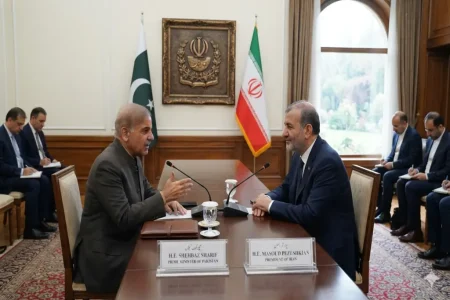
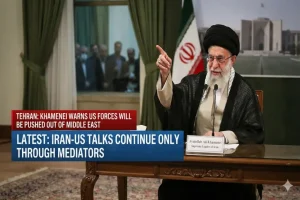


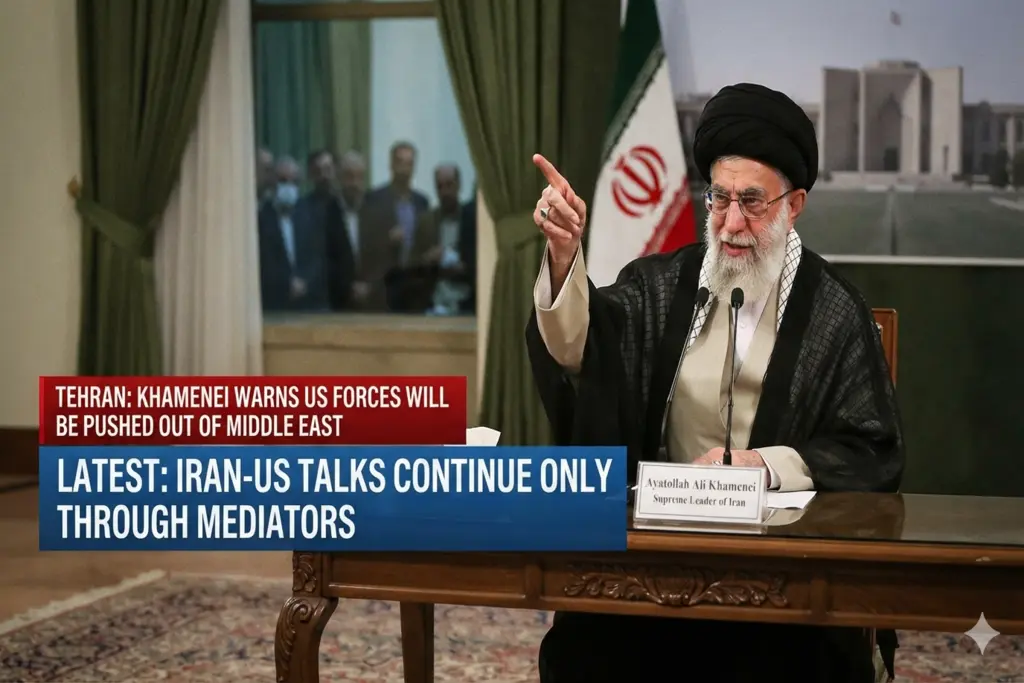
Tensions between Tehran and Washington took another sharp turn this week. Iran’s Supreme Leader Mojtaba Khamenei said openly that the United States would be forced out of the region after what he called “painful blows,” even as both governments confirmed they are still avoiding direct talks. For Pakistani readers, none of this is background noise. Oil prices, Gulf jobs, and even pilgrim flights all sit close to this fire.
What Khamenei Said This Time
Khamenei hasn’t made a public appearance since the Middle East war broke out back in late February, yet his statement on Monday carried no hesitation. Carried through state television, he said enemy forces no longer dare move past the Arabian Sea because of losses they’ve suffered at the hands of “valiant fighters” guarding the Strait of Hormuz. He went further, predicting that even that stretch of sea would eventually be cleared of foreign presence.
On X, he added that outside powers had tried to break Iran’s social fabric from within, but claimed ordinary Iranians across the country had instead grown firmer in defending the Strait of Hormuz, the narrow passage through which a huge share of the world’s oil moves daily.
Why Direct Talks Still Aren’t Happening
Here’s the part that matters more than the rhetoric. Iran’s delegation at the UN General Assembly told state media it has no intention of sitting down directly with American officials. Every message is passing through a Qatari mediator instead, and the delegation was due back in Tehran by Tuesday.
On the other side, Axios reported that President Trump is open to sanctions relief and unfreezing Iranian funds, but only if Tehran takes real, verifiable steps on its nuclear programme. He rejected Iran’s latest ceasefire proposal just days earlier, then turned around and told reporters he expects fresh talks soon, insisting Washington would “win” the standoff one way or another.
Some of the actual groundwork was reportedly laid last week during indirect meetings between Iranian Foreign Minister Abbas Araghchi and US envoys, a track that ties into the broader diplomatic push at the UN General Assembly taking place in New York.
Iran’s Core Demands
Tehran hasn’t softened its position at all. Before it reopens the Strait of Hormuz to normal shipping, it wants:
- A seven day ceasefire across the region, including in Lebanon
- Billions in frozen Iranian assets released
- Oil sector sanctions lifted
- An end to the US naval blockade on Iranian ports
Only after that, Tehran says, would talks on its nuclear programme resume.
What This Means Closer to Home
Pakistan imports the bulk of its oil, so any real disruption near Hormuz tends to show up quickly at the pump here. Add to that the millions of Pakistanis working in Gulf countries, sending remittances home, plus regular pilgrim traffic between Iraq and Iran, and this isn’t a distant story anymore.
Quick watch list:
- Whether Qatar manages to arrange an actual US-Iran meeting this week
- Any shift on Hormuz shipping restrictions
- Movement in global oil prices
- Airline and travel disruptions affecting Gulf-bound Pakistani workers