

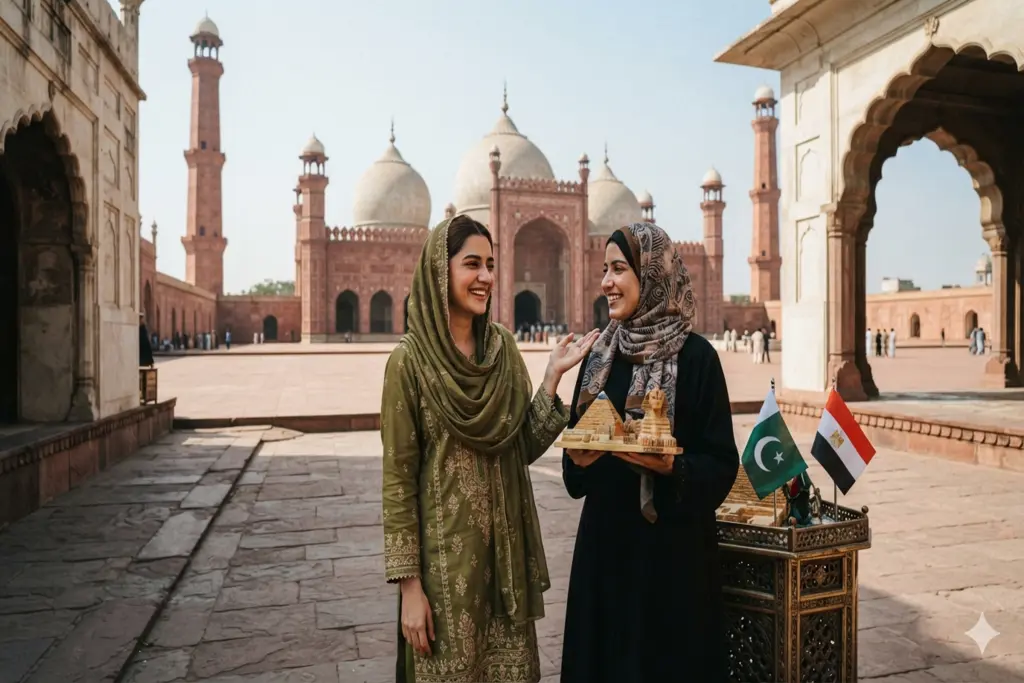
During a pivotal step towards improving bilateral relations and strengthening the national economy, Pakistan and Egypt have come together to intensify their strategic relations in the field of agriculture. The Ministry of National Food Security and Research was held in Islamabad that was attended by Federal Minister for National Food Security and Research, Rana Tanveer Hussain and Ambassador of Egypt to Pakistan, Dr. Ihab Mohamed Abdelhamid Hassan to pave the way for a strong technological and scientific cooperation. The discussion was largely centered on how to fill the gaps in technological advancement in the country’s key agricultural fields by gaining insights from Egypt’s proven and advanced research facilities, irrigation systems and farming practices.
Tapping Into Egyptian Expertise for the Cotton Sector
Rana Tanveer Hussain officially asked for technical assistance and research inputs from Cairo, for better yield as well as fibre quality of Pakistani cotton. High quality, long-staple cotton is grown in Egypt and the country has special agronomic practices that are recognized worldwide.
Seed Genetics & R&D: Taking advantage of Egyptian innovations of climate-proof and high-yield seeds.
Crop Management: Adopting strict disease management strategies and using plant nutrition optimisation.
Value Addition: Improving post harvest processing to international export standards and maximizing the growers’ profit margins.
Pakistani agricultural scientists, in adopting Egyptian techniques, hope to turn the tide of negative trend in per-acre production and ensure a steady supply of good cotton in the country for spinning mills.
Minister for National Food Security and Research @RTanveerPMLN has proposed enhanced cooperation between #Pakistani and #Egyptian agricultural research institutions@MoNFSR @ForeignOfficePk @MfaEgypt #RadioPakistan #News https://t.co/SKVYifzKdJ pic.twitter.com/XU9XmGhNTD
— Radio Pakistan (@RadioPakistan) August 17, 2026
Expanding Collaboration Across Modern Agrarian Frontiers
The ministerial meeting was not limited to cotton production but discussed a detailed plan for structural modernization of different interconnected sectors of agriculture. Both countries have acknowledged each other’s priorities focusing on climate adaptation and resource conservation:
Water-Efficient Irrigation: Adopting efficient water management practices like drip and sprinkler irrigation to deal with the problem of acute water scarcity and reduce the inefficiency of the traditional flood-irrigation model.
Biotechnology for a changing climate: South Asia working together on bio-engineered crops to withstand the changing climate, warming and unpredictable monsoon cycles.
Mechanization and Horticulture: Shift of small and medium-scale farming towards smart mechanization and joint ventures in horticulture and livestock for enhancing the food safety metrics.
Ambassador Dr. Ihab Mohamed Abdelhamid Hassan reiterated Cairo’s willingness to enable direct institutional connections between the specialized Egyptian agricultural research institutions and their Pakistani counterparts.