


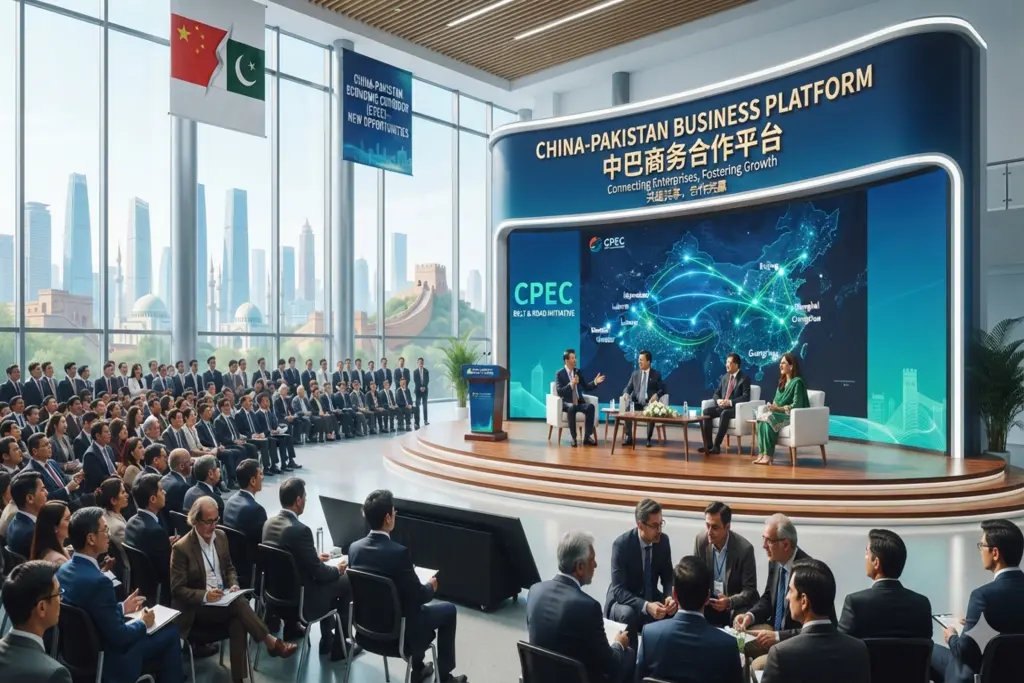
For years, small exporters in Sialkot, Faisalabad and Gujranwala have talked about the same problem. Good products, no shortage of skill, but no real way to reach Chinese buyers without going through agents who take a cut and add delays. That is exactly the gap the new China-Pakistan business platform in Beijing is trying to fill. It gives companies from both sides a more direct route into each other’s markets, and for once, it is not just another announcement that fades away in a week.
What Exactly Is This Business Center
The platform was launched during the 99 Global Business Linkage Festival 2026, which ran alongside the Fengtai District Opening-up Development Conference in Beijing. It is based in the Lize Financial Business District, an area already packed with finance and trade firms from across the world. The idea behind it is fairly straightforward. Chinese companies get a clearer view into Pakistan and the wider South Asian market, and Pakistani businesses get a proper entry point into China, instead of relying on word of mouth or unreliable middlemen.
Why This Actually Matters on the Ground
Anyone who has tried to export from Pakistan knows the usual headaches. Banks make international payments harder than they need to be, customs paperwork is confusing, and there is often nobody on the other end who speaks the same business language, literally.
Fengtai District has also built an overseas expansion service center that pulls together finance, legal support, logistics and data services under one roof. That alone could save Pakistani traders weeks of running around trying to figure out compliance rules on their own.
Where the Real Benefit Lies for Local Traders
- A direct line to Chinese distributors instead of depending on agents who may or may not deliver
- Help with legal paperwork and customs when goods cross the border
- More visibility for Pakistani exports like leather goods, handicrafts, textiles and gemstones
- A stronger foothold for exporters already connected to the China Pakistan Economic Corridor and hoping to expand further
Not Just About Trade Numbers
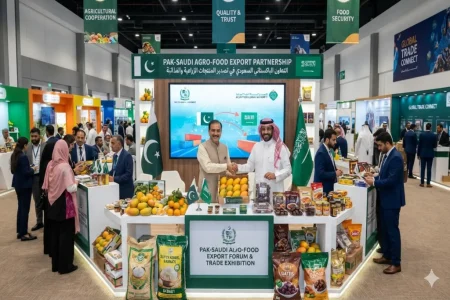
There was another side to the launch that got less attention but mattered just as much. A booth backed by the Pakistan Women’s Association Beijing and the Pakistan Embassy displayed handmade leather jackets, wooden handicrafts, carpets, scarves and traditional jewellery. A thalassemia charity initiative was also introduced at the event. It was a reminder that this relationship is not only about bilateral trade figures on a report somewhere.
A Few Practical Steps for Pakistani Businesses
- Get registered with the Trade Development Authority of Pakistan (TDAP), if that has not already been done
- Contact the Pakistan Embassy in Beijing directly to ask about accessing the platform
- Keep product catalogues ready in English, and in Mandarin if possible
- Look into digital payment tools that actually support cross-border transactions
- Follow updates from trade chambers and the commerce ministry rather than relying on rumours
Conclusion
None of this guarantees instant success for anyone. But for exporters and small manufacturers who have been stuck dealing with unreliable contacts and confusing paperwork, this center is a genuine, official door into the Chinese market. The businesses that prepare early, get their documents in order and stay in touch with the right offices will be the ones who actually benefit once things are fully up and running.