


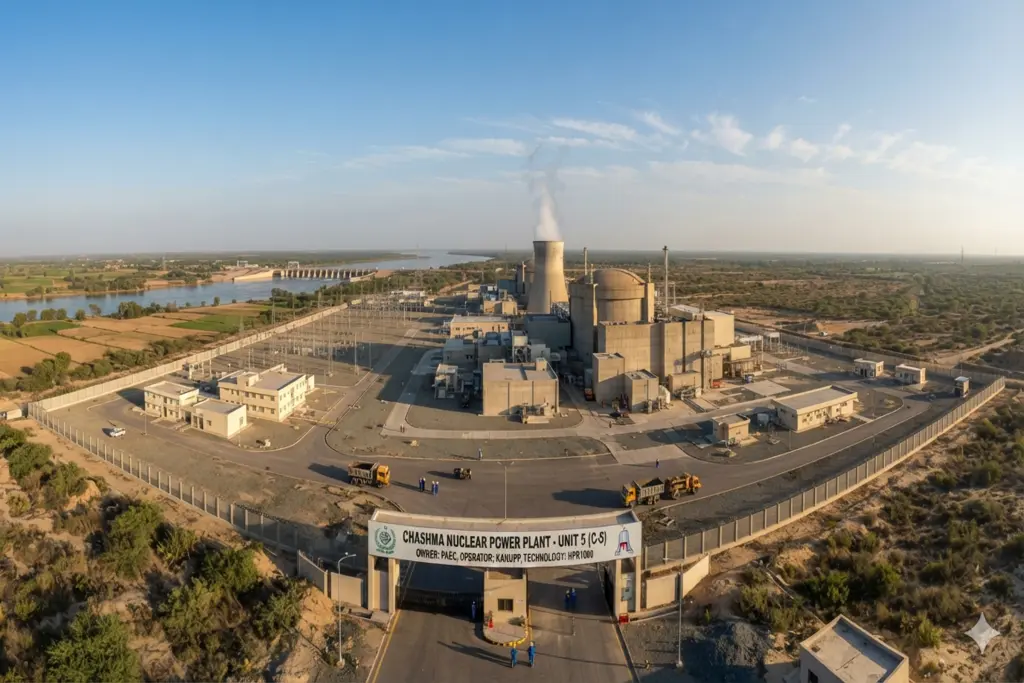
Pakistan has taken a giant leap in its energy journey. The International Atomic Energy Agency (IAEA) and Pakistan on Sept. 17 signed a safeguards agreement for the Chashma-5 nuclear power plant, a 1,200-megawatt unit under construction in Punjab. This deal matters to ordinary Pakistanis because it is directly connected to something everyone feels: the cost and reliability of electricity in their own homes.
Chashma-5 Safeguards Agreement Implications
The pact was signed in Vienna by IAEA Director General Rafael Mariano Grossi and Pakistan Atomic Energy Commission Chairman Raja Ali Raza Anwar. It was seen by China’s atomic energy chief, underlining Islamabad’s long-standing nuclear cooperation with Beijing. A safeguards deal, in layman’s terms, is an international check system. It assures that a nation’s nuclear plant is being used only for peaceful civilian purposes, not for weapons. This is important for Pakistan as it informs the world that the country adheres to global nuclear safety rules even outside the Nuclear Non-Proliferation Treaty.
Why This Matters for Pakistan’s Energy Crisis
Pakistan has been suffering from load shedding, rising fuel import bills and expensive electricity bills for years. Nuclear power is a low-carbon, low-cost alternative once built. The Chashma-5 is expected to be commissioned by 2028, adding to Pakistan’s existing nuclear fleet.
Current Nuclear Status of Pakistan
•Pakistan has six nuclear power plants with a total capacity of 3,530 megawatts.
•These plants have achieved an average capacity factor of above 90 percent, showing high reliability.
•The country has accumulated more than 100 reactor-years of safe operation.
•The reactor dome of Chashma-5 has been installed ahead of schedule.
Quick Checklist: What’s Next IAEA safeguards implementation for Unit-5 starts
•The build-out continues to the 2028 commissioning goal.
•Joint delegations renewed Pak-China cooperation on nuclear science.
•Power from Chashma-5 to feed into the national grid easing pressure on gas- and coal-based power.
Conclusion
This deal is not only diplomatic news for the average household in Lahore, Multan or Karachi. It is a step toward a more stable electricity supply and perhaps cheaper power in the coming years if the project stays on course and the transmission infrastructure keeps pace. Pakistan’s nuclear energy program is on a steady growth path and Chashma-5 is the next big milestone.