



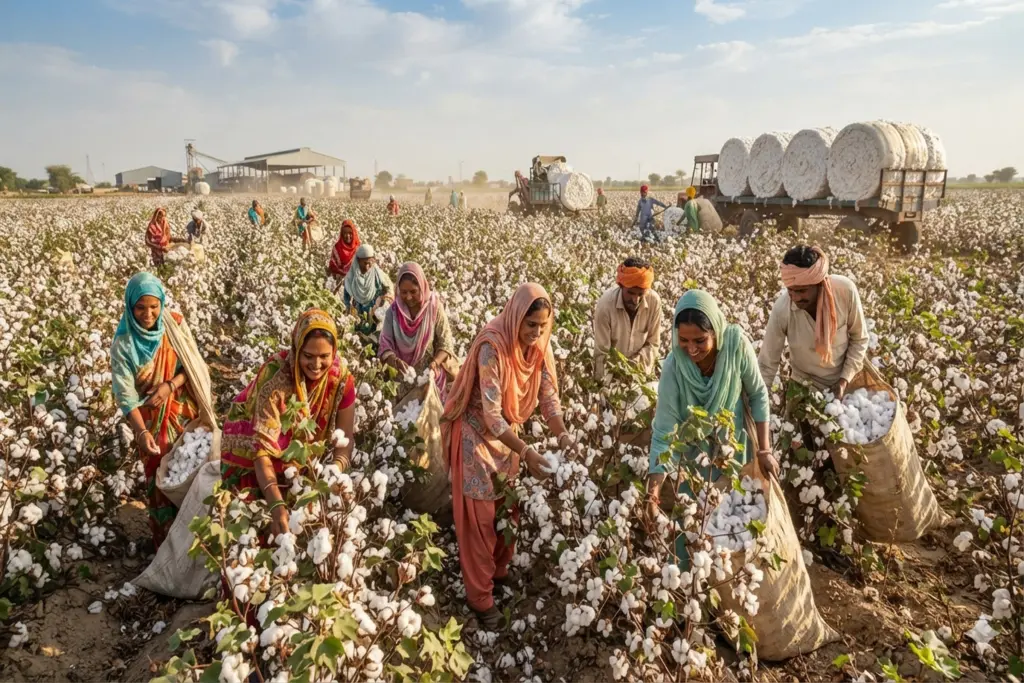
Pakistan’s cotton season started on a positive note this year. Initial estimates from the Pakistan Cotton Ginners Association indicate a healthy increase in cotton production in the two main producing provinces. This is important news for farmers, ginners and textile mills as cotton is one of the major cash crops and export earners of Pakistan.
What the Latest PCGA Figures Tell Us
By mid-September, ginning factories across the country had received nearly 2.4 million bales, well ahead of last year’s pace. Arrivals from Punjab increased by 24.7 per cent and arrivals from Sindh by 16.25 per cent. Industry sources say they believe the national output could top 6 million bales this season, up from around 5.5 million bales last year.
Why are Punjab and Sindh numbers different?
Interestingly, one single district, Sanghar in Sindh’s cotton belt, produced more cotton than all of Punjab’s ginning factories combined. Some of the slowdown in Punjab, analysts say, is because farmers are converting land to sugarcane, which many see as more lucrative in the near term.
Risks that could yet alter the picture
Experts are wary despite a strong start. There are still some concerns on the ground:
•Pink bollworm infestation reported in various districts of both provinces.
•Pressure of white fly, jassid and thrips on standing crops.
•Risk of heavy rain during the picking stage.
•Lint prices fell nearly Rs1,000 per month recently.
•Brazilian cotton gets cheaper, some mills turn to imports.
Local Grower and Mill Impact
Price swings during the picking season can hurt small farmers badly, especially those without easy access to formal credit or storage. Many track daily rates through local commission agents or mobile updates from market committees rather than banks or formal exchanges. Despite imports, good local demand has meant Textile mills across the country have already purchased more than 2 million bales.
Conclusion
Early cotton figures for the current season provide a basis for optimism in Pakistan’s textile sector, but the real results will only be known once picking and ginning are complete. The next month will decide if this promising start will be the best harvest in almost a decade, but farmers should remain alert for pest activity and local mandi rates in the coming weeks.