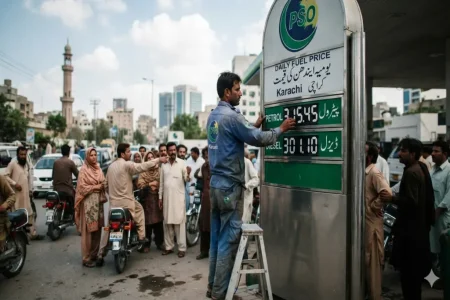



Pakistan’s automotive sector is in the midst of a big historic shift. With the almost daily increase in fuel prices, a struggling currency and the escalating environmental problems such as seasonal smogs, the average Pakistani is actively searching for alternatives to conventional combustion engines. Now the key question arises, can we practically and economically convert to EV in Pakistan by 2026?
The government’s new energy policies have breathed new life in the sector, while international brands setting their foot in the country with terms of local electric vehicle (EV) assembly plants have also added a new dimension to the industry. But, even for a middle-class consumer, there are still issues around the cost of an original purchase, charging stations and resale value. A realistic and hands-on guide to all of the aspects.
Government Policy and New Incentives
The federal government has provided significant regulatory encouragement in order to make EVs more accessible for the public. The Engineering Development Board (EDB) is an active body under the Ministry of Industries and Production to control the National Electric Vehicle (NEV) Policy.
Under these official frameworks, the state aims to transition a significant portion of local traffic to electric power. To achieve this, the government has provided deep customs duty and sales tax concessions on imported EV components to incentivize local assembly PR No. 146 Government of Pakistan Officially Launches National Electric Vehicle (NEV) Policy 2025–30 Islamabad: June 19, 2025. Financial subsidies have also targeted two-wheelers and three-wheelers via the PAVE program to accelerate mass adoption Engineering
Fuel vs. Electricity: The Cost Breakdown
The primary motivator for the average consumer is the monthly savings on operational costs. The initial price of an EV in Pakistan is still higher than that of the conventional car, but the running economics are very positive:
Running Cost: Battery cars are about 60% – 70% cheaper than petrol cars per kilometre. In households that are using a domestic solar net metering system, the cost of the daily trip comes down close to nothing.
Maintenance Expenses: EVs do away with complicated internal moving components like pistons, engine oil, fuel filters and spark plugs. As a result, there are virtually no routine workshop visits and no regular tuning costs.
Charging Infrastructure and Range Anxiety
Before, it was a huge hurdle that public charging stations weren’t available. Today, however, the ecosystem has gotten a lot more developed:
Urban Network: Commercial fast chargers are proliferating in Pakistan’s major cities such as Karachi, Lahore, and Islamabad. The National Energy Efficiency & Conservation Authority (NEECA) has strict licensing requirements to ensure commercial charging licenses and grid integration are streamlined throughout the country.
Motorway Connectivity: Charging points are now operational on some of the country’s main roads and motorways, so that standard electric vehicles can be used for inter-city and long-distance travel.
Battery Range: Low-end to mid-range electric cars are able to achieve a range of 300 to 500 kilometres from a single charge, which is more than sufficient to cover urban driving.
Current Challenges You Cannot Ignore
However, there are some areas that present certain challenges to the domestic market:
High Battery Replacement Costs: Battery Pack is the highest cost component in an EV. Despite the fact that these are provided with multi year warranties, out-of-warranty replacements are extremely expensive.
Electricity Tariffs and Grid Reliability: As electricity costs continue to rise and load-shedding becomes more commonplace, it can affect the home-charging landscape, however, it’s still more affordable than premium petrol.
Second Hand Market: In traditional Japanese or local combustion cars the second hand market is not much developed and not yet stabilized but the second hand market of an EV in Pakistan is in its initial development phase.
The Verdict: Should You Buy an EV in 2026?
In Pakistan, the decision to switch to an EV is a great and lucrative choice for urban commuters who have a fixed route, set up solar power at their homes. If you must travel often and regularly to remote and rural locations where infrastructure is not plentiful, still a plug-in hybrid (PHEV) is a more safe transitional vehicle.
READ: Today’s Latest News