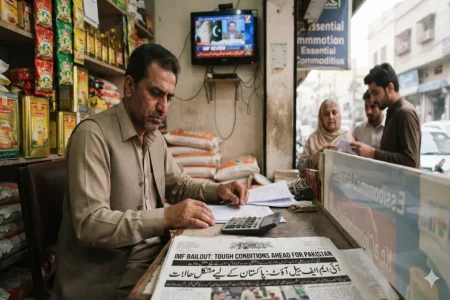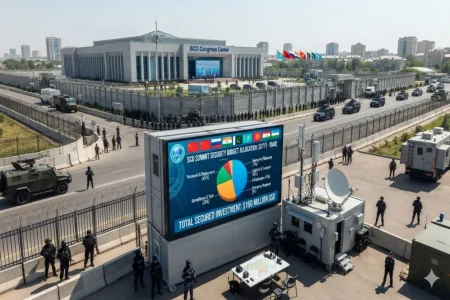



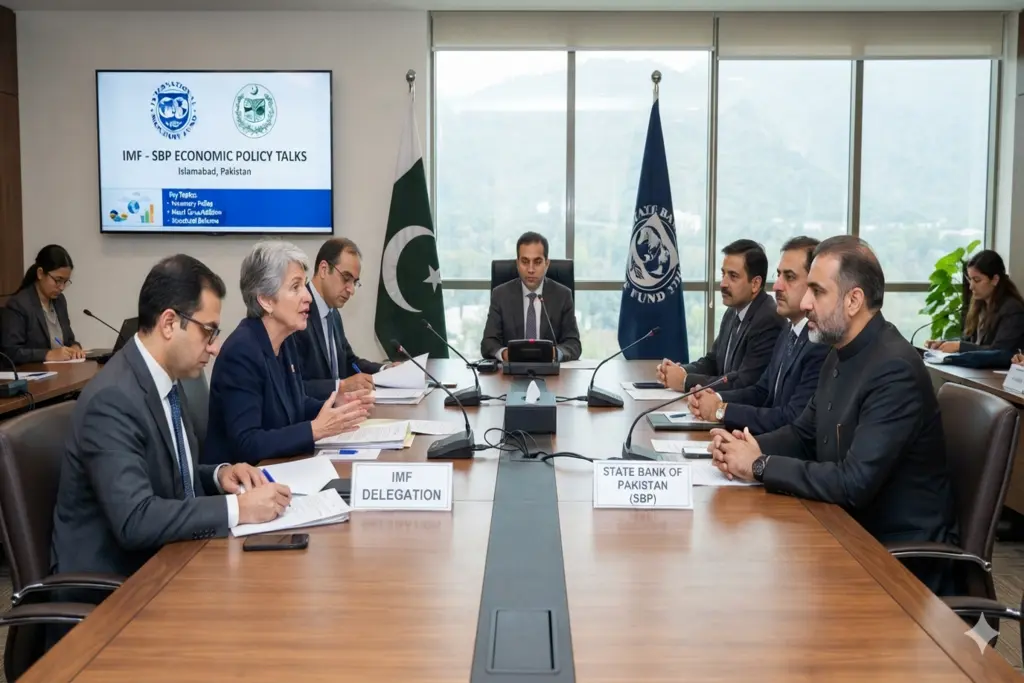
In a major geostrategic advancement for Pakistan’s financial regulatory architecture, central banking telemetry, and international market integration, the IMF and State Bank of Pakistan have officially begun high-stakes talks today on key economic issues. The comprehensive macro-prudential evaluation, launched via integrated cloud networks in Islamabad on September 23, 2026, transitions legacy manual accounting checks into a highly structured, data-driven vetting sandbox. Directed under the complete monitoring of federal treasury managers, the structural mission zeroes in on evaluating the absolute electronic compliance of localized tax-net expansions, monetary policy adjustments, quarterly power tariff indexings, and the eradication of loopholes within the country’s multi-billion rupee circular debt ledger.
As global financial frameworks and cross-border lending conditions tighten, maintaining absolute precision across national accounting matrices remains an absolute priority for Pakistan’s economic managers. The active bailout review serves as a vital liquidity buffer, reducing sovereign transaction friction and upgrading Pakistan’s sovereign credit ratings. By deploying a synchronized and automated financial tracking system, the federal cabinet aims to fulfill strict international policy covenants, stabilizing long-term market predictability and boosting the state’s soft image on the global economic stage.
Audit of FBR Revenue Pipelines and Biometric Whitelisting
According to the operational manifesto released by state fiscal managers, the entry framework for the current review completely discards old manual processing methods. International monitoring compliance officers are using automated data tracking loops to scan multi-sectoral performance sheets, verifying that state revenue targets fully align with automated projections.
The engineered fiscal stabilization sandbox focuses heavily on three primary performance layers to ensure zero vulnerability:
NADRA Integrated Anti-Evasion Triggers: Integrating automated data mining scripts between the FBR and NADRA cloud servers to seamlessly identify, track, and restrict transaction logs belonging to non-compliant, high-net-worth non-filers.
Cashless Retail Formalization: Evaluating the real-time installation metrics of automated point-of-sale (POS) software across domestic commercial marketplaces to rapidly transition cash-based operations into documented, paperless revenue lines.
Monetary Policy Stabilization: Vetting the State Bank’s localized interest rate adjustments against live consumer price indexing data to balance commercial credit accessibility with long-term inflation cooling.
Restructuring the Energy Sector Grid to Lower Sovereign Credit Risks
The commercial implications of these fiscal negotiations are highly extensive, playing a vital role in determining Pakistan’s global investment ratings and the operational pace of state-owned enterprise privatization. The IMF delegation has enforced strict statutory rules demanding automated, machine-readable tariff adjustments across energy distributions to neutralize structural power-sector cash bleed.
By driving institutional digitization and replacing legacy manual billing practices with tamper-proof automated reporting software, the federal cabinet aims to stabilize market predictability, reduce sovereign financial friction, and elevate Pakistan’s software image across the global economic landscape. Federal commerce desks have verified that achieving these benchmarks will securely unlock subsequent tranches of international capital, reinforcing macroeconomic stability and providing a predictable playground for foreign direct investment from regional partner states.
Compliance Frameworks and Future Fiscal Reporting Standards
To ensure continuous adherence to the IMF’s evolving economic guidelines, the federal administration has deployed dedicated compliance tracking portals across multiple financial ministries. Commercial banking entities, corporate tax offices, and state-run energy enterprises can now securely upload their performance logs, revenue collections, and tariff adjustment charts to verify system readiness prior to future inspection cycles.
A specialized technical help desk has been activated by the state bank to handle real-time regulatory inquiries and resolve documentation processing anomalies for registered corporate legal representatives. This collaborative sandbox bridges the gap between state policymakers and corporate executives, transforming public finance reporting into a transparent, data-driven utility. By driving institutional digitization and honoring its international commitments, Pakistan establishes a resilient blueprint for sustained, high-utility wealth and investment protection across global commercial networks.